The Hidden Link Between Your HbA1c and Heart Disease Risk: What Patients Need to Know
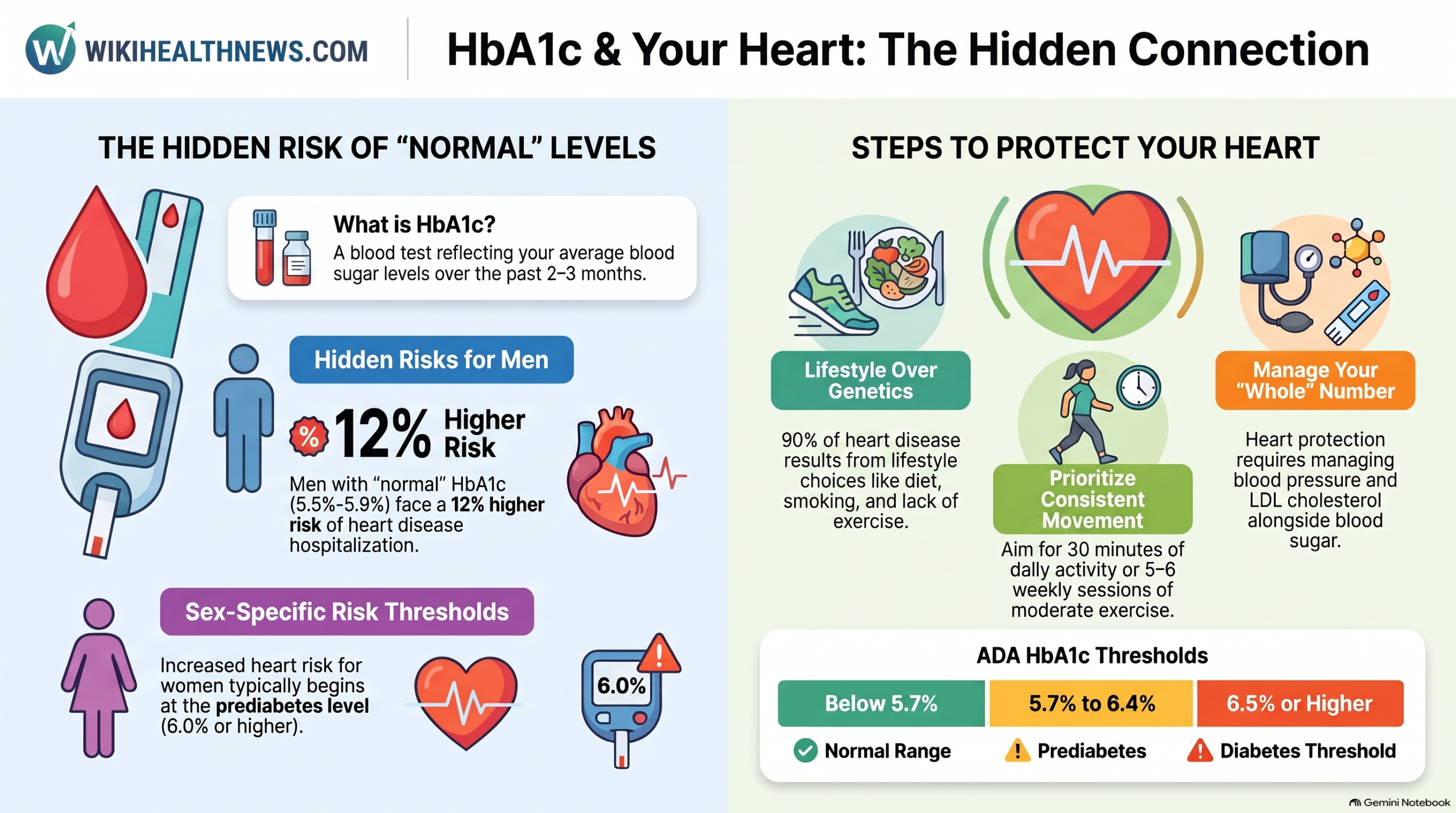
The Hidden Link Between Your HbA1c and Heart Disease Risk: What Patients Need to Know
Learn how your HbA1c level impacts your heart disease risk. Discover why even “normal” blood sugar levels can affect cardiovascular health and how to protect your heart.
When people think of the HbA1c test, they usually think of diabetes. However, as cardiologists, we look at HbA1c as a critical window into your heart disease risk.
Your HbA1c level measures your average blood glucose (sugar) over the past two to three months. While it is a standard tool for diagnosing diabetes, recent large-scale research reveals that the relationship between your blood sugar and your cardiovascular health begins long before diabetes ever develops.
How High Blood Sugar Silently Damages Your Heart
Persistent elevations in blood sugar do not just affect your energy; they physically damage your blood vessels. Over time, excess circulating glucose reacts with proteins in your bloodstream, leading to structural and functional damage:
- Advanced Glycation End-Products (AGEs): This chemical reaction stiffens the matrix of your blood vessels, making them less flexible.
- Oxidative Stress and Inflammation: Fluctuations in blood sugar trigger a rush of cell-damaging free radicals, causing chronic, localized inflammation inside your arteries.
- Endothelial Dysfunction: The delicate inner lining of your blood vessels (the endothelium) loses its ability to dilate properly, accelerating atherosclerosis (the build-up of fatty plaques).
- Arterial Stiffness: Glycemic fluctuations lead to structural stiffening of the large arteries, increasing the workload on the heart.
This quiet progression of vascular damage can lead to coronary artery disease, heart attacks, and heart failure.
The Risk Spectrum: Even “Normal” Levels Can Affect Your Heart
A landmark population study of over 608,000 adults published in the Journal of the American Heart Association examined individuals without diabetes or heart disease at baseline. The findings revealed that heart risk rises on a continuous spectrum and varies significantly by sex:
- For Men: An increased risk of cardiovascular hospitalization was observed at HbA1c levels between 5.5% and 5.9%—a range traditionally considered “normal”. Men in this group faced a 12% higher risk compared to those with lower levels. For men in the prediabetes range (6.0% to 6.4%), the risk jumped by 38%.
- For Women: An increased risk was primarily seen once HbA1c reached 6.0% or higher (prediabetes range), carrying a 17% higher risk. For women in the diabetic range (HbA1c of 6.5% or higher), the risk of hospitalization rose by 51%.
These statistics underscore that prediabetes is not benign. Vigilant cardiovascular risk reduction must begin early, before blood sugar reaches diabetic thresholds.
The “Legacy Effect” and the Power of Early Control
In diabetes care, we talk about the “legacy effect” (or metabolic memory). Long-term studies like the UK Prospective Diabetes Study (UKPDS) have shown that achieving early, tight glycemic control protects the cardiovascular system for decades to come, even if blood sugar levels fluctuate later in life (Chalmers & Cooper, 2008).
Furthermore, modern therapies have transformed how we treat blood sugar and heart risk simultaneously. Class-leading medications like SGLT-2 inhibitors and GLP-1 receptor agonists lower HbA1c while directly protecting the heart and kidneys, reducing the risk of major adverse cardiovascular events (MACE).
Your Action Plan: Protecting Your Heart
Managing your heart risk is about looking at the entire puzzle, not just one number. Alongside tracking your HbA1c, a comprehensive heart-healthy strategy includes:
- Monitor Your Blood Pressure: Aim for a target below 140/90 mmHg (or 130/80 mmHg if you have kidney or eye complications).
- Optimize Your Cholesterol: Discuss with your doctor whether a preventive statin is appropriate for your risk profile.
- Prioritize Movement: Engage in regular, doctor-approved exercise to improve vascular function and natural glucose clearance.
- Eat a Balanced Diet: Focus on high-fiber foods, lean proteins, and low-sodium choices like those in the DASH diet.
- Avoid Tobacco: Smoking dramatically amplifies blood sugar-related arterial damage.
Discuss your cardiovascular health and overall risk factors with your healthcare provider during your annual check-up.
Here are 20 key points summarizing the article’s core insights on HbA1c and cardiovascular risk:
- Dual Significance: The HbA1c test measures average blood glucose over 2 to 3 months and serves as a key indicator for both diabetes diagnosis and heart disease risk.
- Early Cardiovascular Impact: Blood sugar elevation begins damaging cardiovascular health long before clinical diabetes develops.
- Protein Reactivity: Excess circulating blood glucose reacts with proteins, triggering functional and structural blood vessel damage.
- Formation of AGEs: Glycation produces Advanced Glycation End-Products, which stiffen the extracellular matrix of blood vessels.
- Oxidative Stress & Inflammation: Fluctuations in blood glucose generate cell-damaging free radicals, fueling chronic vascular inflammation.
- Endothelial Impairment: Excess glucose disrupts the endothelial lining, preventing blood vessels from dilating properly.
- Accelerated Atherosclerosis: Impaired vascular dilation accelerates the accumulation of fatty plaques within arterial walls.
- Increased Cardiac Workload: Structural stiffening of large arteries forces the heart to work significantly harder.
- Severe Outcomes: Progressive arterial damage increases the risk of coronary artery disease, heart attacks, and heart failure.
- Continuous Risk Spectrum: Cardiovascular risk rises continuously along a spectrum rather than beginning suddenly at a diagnostic threshold.
- Elevated Risk at “Normal” Levels for Men: Men exhibit a 12% higher hospitalization risk at HbA1c levels between 5.5% and 5.9%.
- Substantial Prediabetes Risk in Men: Men with prediabetes (HbA1c 6.0%–6.4%) experience a 38% increase in cardiovascular hospitalization risk.
- Prediabetes Risk Threshold for Women: Women show a noticeable risk increase (17%) once HbA1c reaches 6.0% or higher.
- High Diabetic Risk in Women: Women in the diabetic range (HbA1c ≥6.5%) face a 51% increased risk of cardiovascular hospitalization.
- Prediabetes Is Not Benign: The findings confirm that prediabetic blood sugar levels require active risk reduction strategies.
- The “Legacy Effect”: Achieving early, strict glycemic control provides long-term cardiovascular protection decades later (metabolic memory).
- Cardioprotective Medications: Modern therapies such as SGLT-2 inhibitors and GLP-1 receptor agonists lower HbA1c while directly protecting heart and kidney function.
- Multi-Factorial Prevention: Comprehensive prevention requires managing blood pressure, cholesterol, diet, exercise, and tobacco exposure alongside blood sugar.
- Specific Target Metrics: General recommendations suggest maintaining blood pressure below 140/90 mmHg (or 130/80 mmHg with eye or kidney complications).
- Regular Clinical Assessment: Annual check-ups with healthcare providers are vital to evaluate overall risk factors and tailor prevention strategies.
1. What is an HbA1c test?
The HbA1c test measures your average blood sugar (glucose) levels over the past 2 to 3 months by assessing the percentage of hemoglobin coated with sugar.
2. Why do cardiologists care about HbA1c levels?
Cardiologists look at HbA1c because elevated blood sugar damages blood vessels and accelerates arterial stiffening, making it a powerful predictor of heart disease risk—even in people without diabetes.
3. Can blood sugar affect my heart if I don’t have diabetes?
Yes. Studies show that cardiovascular risk begins rising at HbA1c levels traditionally considered “normal” (around 5.5%), long before reaching the threshold for diabetes.
4. What are Advanced Glycation End-Products (AGEs)?
AGEs are harmful compounds formed when excess circulating glucose reacts with proteins. They cause the structural matrix of your blood vessels to stiffen and lose elasticity.
5. How does high blood sugar cause arterial inflammation?
Frequent glucose spikes trigger a rapid release of free radicals (oxidative stress), which inflames the delicate inner lining of your arteries over time.
6. What is endothelial dysfunction?
It is the impairment of the endothelium (the inner lining of blood vessels), causing vessels to lose their natural ability to dilate and accelerating the build-up of fatty plaque (atherosclerosis).
7. How does high blood sugar increase heart workload?
As blood sugar stiffens major arteries, your heart must pump with greater force to circulate blood, increasing strain on the heart muscle.
8. What heart conditions can elevated HbA1c lead to?
Long-term vascular damage from high blood sugar increases the risk of coronary artery disease, heart attacks, and heart failure.
9. What is the cardiovascular risk for men with “normal” HbA1c (5.5%–5.9%)?
Research indicates that men with HbA1c levels between 5.5% and 5.9% face a 12% higher risk of cardiovascular hospitalization compared to those with lower levels.
10. How much does prediabetes increase heart risk for men?
For men in the prediabetes range (HbA1c 6.0%–6.4%), the risk of cardiovascular-related hospitalization jumps by 38%.
11. At what HbA1c level does heart risk noticeably rise for women?
For women, a significant risk elevation (17%) is typically seen once HbA1c reaches 6.0% or higher (the prediabetes range).
12. How much does diabetic-range HbA1c increase risk for women?
Women with an HbA1c of 6.5% or higher face a 51% increased risk of cardiovascular hospitalization.
13. What is the “Legacy Effect” or metabolic memory?
It is the proven medical phenomenon where early, strict blood sugar control protects your cardiovascular system for decades to come, even if blood sugar fluctuates later in life.
14. What are SGLT-2 inhibitors and GLP-1 receptor agonists?
They are modern classes of medications that lower HbA1c while offering direct protection to the heart and kidneys, reducing major cardiovascular events.
15. What blood pressure target is recommended for heart protection?
General guidance recommends keeping blood pressure below 140/90 mmHg, or below 130/80 mmHg if you have kidney or eye complications.
16. How does exercise help lower heart risk related to HbA1c?
Regular physical activity improves vascular function and enhances your body’s natural ability to clear glucose from the bloodstream without overtaxing insulin production.
17. What dietary approach helps protect both blood sugar and heart health?
Diets rich in fiber, lean proteins, and low-sodium choices—such as the DASH diet—help stabilize glucose levels and maintain healthy blood pressure.
18. Why is smoking especially dangerous if you have elevated HbA1c?
Tobacco smoke directly damages arterial walls, multiplying the inflammatory and oxidative harm already caused by elevated blood sugar.
19. Is prediabetes considered a benign condition?
No. Prediabetes carries clear cardiovascular risks, and preventive heart-healthy steps should begin immediately rather than waiting for a diabetes diagnosis.
20. How often should I discuss HbA1c and heart risk with my doctor?
You should review your HbA1c, blood pressure, lipid profile, and overall cardiovascular risk profile during your annual wellness check-up or routine medical evaluations.
Medical Disclaimer:The content presented in this article is intended strictly for educational and informational purposes and does not constitute medical advice, diagnosis, or treatment. Always consult with a qualified healthcare professional regarding any medical condition, cardiovascular risk assessment, or changes to your medication and lifestyle routine.
About the Authors & Key References
References
- Clinical Cardiovascular Insights: Reviewed by board-certified cardiovascular specialists focusing on preventive cardiology and metabolic heart risk reduction.
- Key Literature:
- Journal of the American Heart Association (JAHA) — Landmark research detailing HbA1c levels and continuous cardiovascular risk spectrum.
- UK Prospective Diabetes Study (UKPDS) Overview — Radcliffe Department of Medicine, University of Oxford.
- Chalmers, J., & Cooper, M. E. (2008). UKPDS and the Legacy Effect. New England Journal of Medicine, 359(15), 1618–1620. https://doi.org/10.1056/nejme0807625 Cited by: 358
Managing your HbA1c is critical for reducing cardiovascular risk while simultaneously protecting reproductive vitality. Landmark clinical research highlights how elevated blood sugar silently damages blood vessels, accelerating arterial stiffness and localized inflammation. To learn more about this crucial heart-fertility connection, explore the expert medical editorials at Wiki Health News, edited by board-certified specialists. For comprehensive guidance on how metabolic health impacts family planning and IVF success, consult the clinical team at Femelife Fertility. Addressing these metabolic risks early, in alignment with clinical CDC cardiovascular guidelines and National Institutes of Health evidence-based standards, effectively ensures patient long-term heart and reproductive wellness.
Author Card
Dr. Sujit Kumar Sahu
MBBS, MD (Medicine), DrNB (Cardiology), Fellowship – FSCAI, FESC, FACC, ICCPR-CRFC
Dr. Sujit Kumar Sahu is a distinguished Consultant Interventional Cardiologist. He has formerly served patients at the prestigious Apollo Hospital in Chennai and the KIMS-Super Speciality Hospital in Bhubaneswar. He specializes in advanced interventional cardiac procedures and the primary prevention of metabolic-related cardiovascular disease.
Read more about Dr. Sujit Kumar Sahu’s background and publications.