HDL Cholesterol: Normal Levels, Benefits, Low HDL and How to Improve It
HDL Cholesterol: Normal Levels, Benefits, Low HDL and How to Improve It
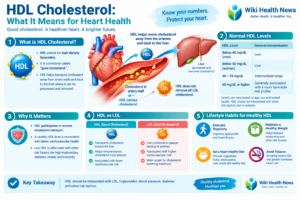
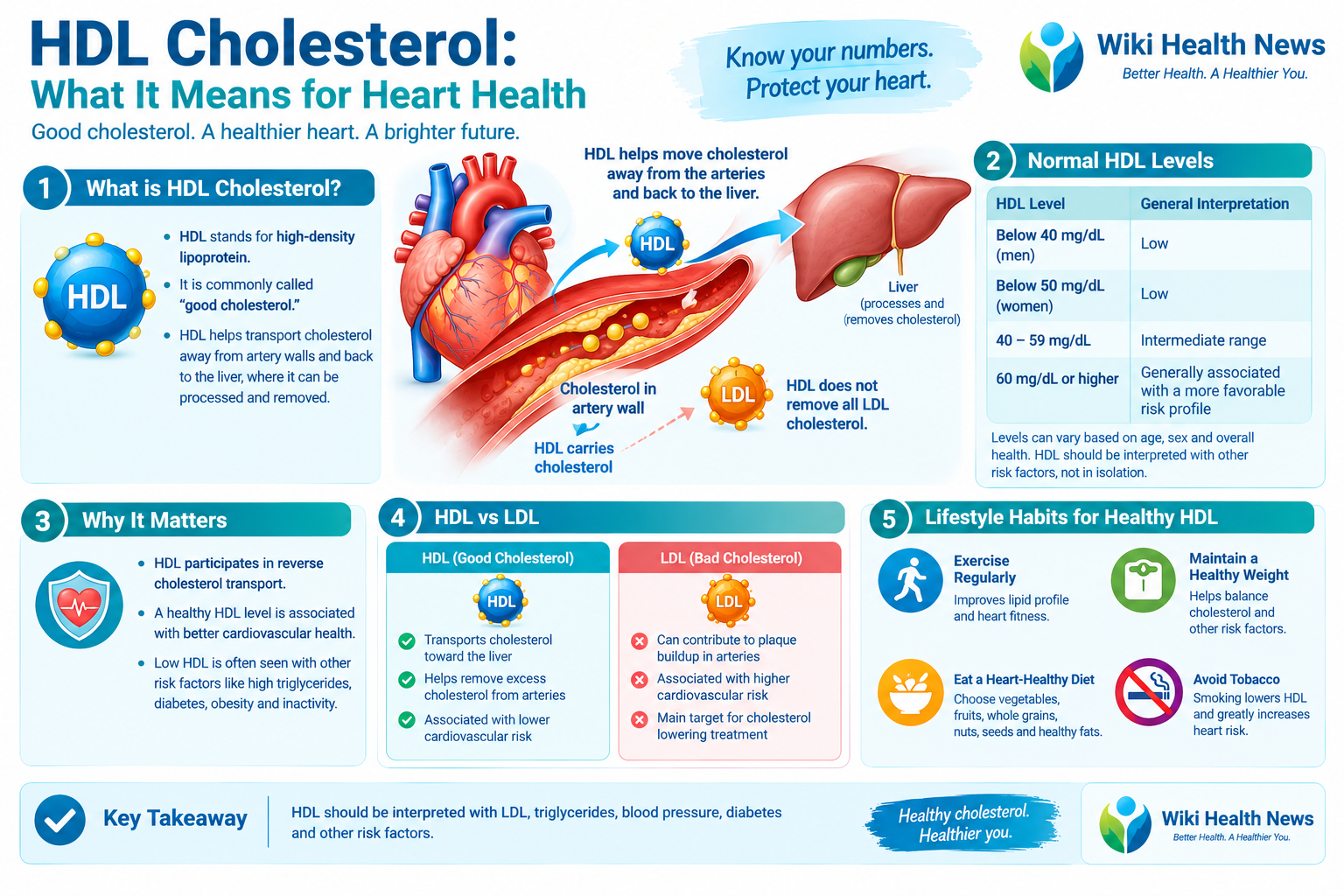
HDL cholesterol, or high-density lipoprotein cholesterol, is commonly known as “good cholesterol.” HDL helps transport cholesterol away from the artery walls and back to the liver for processing. A healthy HDL level is associated with better cardiovascular health, but HDL is only one part of the overall cholesterol and heart-risk picture.
What Is HDL Cholesterol?
HDL stands for high-density lipoprotein. Lipoproteins transport cholesterol through the bloodstream because cholesterol itself does not dissolve in blood.
HDL is often called “good cholesterol” because it participates in transporting excess cholesterol away from the arteries and back to the liver, where it can be processed and removed from the body.
However, having a higher HDL number does not cancel out high LDL cholesterol . Both HDL and LDL need to be considered as part of an individual’s overall cardiovascular risk.
What Is a Normal HDL Cholesterol Level?
HDL levels are measured with a blood test, usually as part of a lipid panel. The meaning of an HDL result depends on factors such as age, sex, overall cardiovascular risk and other lipid values.
| HDL Level | General Interpretation |
|---|---|
| Below 40 mg/dL in men | Generally considered low |
| Below 50 mg/dL in women | Generally considered low |
| 40–59 mg/dL | Intermediate range; interpretation depends on overall risk |
| 60 mg/dL or higher | Generally associated with a more favorable risk profile |
These numbers should not be interpreted in isolation. The American Heart Association notes that HDL is not itself a treatment target for reducing cardiovascular risk.
Why Is HDL Cholesterol Important?
HDL participates in reverse cholesterol transport, helping move cholesterol from peripheral tissues and artery walls toward the liver.
Low HDL is frequently seen together with other metabolic risk factors, including high triglycerides, insulin resistance, diabetes, excess weight and physical inactivity.
For this reason, a low HDL level can be a marker of an unfavorable overall cardiovascular risk profile rather than simply a number that needs to be raised.
Understanding your HDL alongside your other cardiovascular risk factors is particularly important if you have heart disease risk factors .
What Causes Low HDL Cholesterol?
Several factors can contribute to a low HDL level. These may include:
- Physical inactivity
- Smoking and tobacco exposure
- Excess body weight
- Type 2 diabetes and insulin resistance
- High triglyceride levels
- Genetic factors
- Some medications and medical conditions
- An overall diet pattern high in refined carbohydrates and unhealthy fats
Diabetes can be associated with a pattern of low HDL, elevated triglycerides and changes in LDL cholesterol. Read more about diabetes and heart disease .
How Can You Improve HDL Cholesterol Naturally?
There is no need to focus exclusively on increasing the HDL number. Instead, lifestyle measures should aim to improve the overall cardiovascular risk profile.
1. Exercise Regularly
Regular physical activity can support healthier cholesterol levels and cardiovascular fitness. Choose activities that can be performed consistently, such as brisk walking, cycling, swimming or other aerobic exercise.
2. Maintain a Healthy Weight
If you are overweight, gradual weight loss can improve several cardiovascular risk factors, including triglycerides, blood pressure and blood sugar.
3. Avoid Smoking
Smoking can lower HDL cholesterol and substantially increases cardiovascular risk. Stopping tobacco use is an important part of heart-health prevention.
4. Follow a Heart-Healthy Diet
Build meals around vegetables, fruits, whole grains, legumes, nuts, seeds and healthy sources of unsaturated fats.
Our guide to a heart-healthy diet provides practical dietary strategies for cardiovascular prevention.
5. Reduce Excess Refined Carbohydrates and Added Sugars
A diet high in refined carbohydrates and added sugars can contribute to elevated triglycerides and an unfavorable lipid profile.
If triglycerides are also elevated, see: How to Reduce Triglycerides Naturally .
6. Choose Healthier Fats
Replacing foods high in saturated fat with sources of unsaturated fats can help improve the overall cholesterol profile.
You can also explore these practical resources: best foods to lower cholesterol naturally and low-cholesterol diet tips for heart health .
Is Higher HDL Always Better?
HDL has traditionally been described as “good cholesterol,” and higher HDL levels are generally associated with a lower risk of cardiovascular disease. However, this does not mean that simply raising HDL will necessarily reduce cardiovascular events.
The American Heart Association emphasizes that HDL should not be considered a standalone treatment target. Cardiovascular risk should be assessed using the complete clinical picture.
Therefore, treatment decisions should not be based solely on the HDL number.
HDL vs LDL Cholesterol
| Feature | HDL | LDL |
|---|---|---|
| Full name | High-density lipoprotein | Low-density lipoprotein |
| Common description | “Good” cholesterol | “Bad” cholesterol |
| Main role | Helps transport cholesterol toward the liver | Can contribute to cholesterol buildup in arteries |
| Clinical importance | One component of cardiovascular risk assessment | A major target of cardiovascular risk reduction |
How Is HDL Cholesterol Measured?
HDL cholesterol is measured using a blood test, usually as part of a lipid profile or lipid panel.
A standard lipid panel may include:
- Total cholesterol
- LDL cholesterol
- HDL cholesterol
- Triglycerides
Your healthcare professional may recommend cholesterol testing at intervals based on your age, risk factors, medical history and previous test results.
For more information about prevention and screening, see Recommended Heart Health Screenings .
HDL Cholesterol and Heart Disease
Low HDL cholesterol is associated with a higher risk of cardiovascular disease, particularly when it occurs together with other unfavorable risk factors such as high LDL cholesterol, elevated triglycerides, diabetes, hypertension, smoking or physical inactivity.
However, HDL should not be used alone to determine whether someone has heart disease or to decide whether treatment is necessary.
A comprehensive approach that addresses cholesterol, blood pressure, diabetes, smoking, physical activity, diet and other risk factors is more useful for long-term prevention.
Learn more about heart disease prevention and the Mediterranean diet for heart health .
Key Takeaway
HDL cholesterol is an important part of your lipid profile, but it is not the whole story. A healthy HDL level is generally associated with better cardiovascular health, but HDL should be interpreted together with LDL cholesterol, triglycerides, blood pressure, diabetes status, smoking, family history and other risk factors.
Rather than focusing only on increasing HDL, prioritize regular physical activity, a heart-healthy diet, maintaining a healthy weight, avoiding tobacco and controlling other cardiovascular risk factors.
Frequently Asked Questions About HDL Cholesterol
What does HDL cholesterol mean?
HDL stands for high-density lipoprotein. It is commonly called “good cholesterol” because it helps transport cholesterol away from the arteries toward the liver.
What is a good HDL cholesterol level?
A higher HDL level is generally associated with a more favorable cardiovascular risk profile, but there is no single HDL number that should be interpreted as a treatment target for everyone.
Is low HDL dangerous?
Low HDL is associated with increased cardiovascular risk, particularly when it occurs with other risk factors such as high LDL cholesterol, high triglycerides, diabetes, smoking or hypertension.
Can exercise increase HDL?
Regular physical activity can support a healthier lipid profile and overall cardiovascular health.
Does HDL remove LDL cholesterol?
HDL participates in transporting cholesterol toward the liver. However, HDL does not simply “remove” all LDL cholesterol, and higher HDL does not cancel out high LDL cholesterol.
Can I increase HDL naturally?
Healthy lifestyle habits such as regular physical activity, avoiding tobacco, maintaining a healthy weight and following a heart-healthy dietary pattern can support healthy HDL levels and overall cardiovascular health.
References
- American Heart Association – HDL (Good), LDL (Bad) Cholesterol and Triglycerides
- American Heart Association – What Your Cholesterol Levels Mean
- American Heart Association – Understanding Cholesterol and Lipids
- American Heart Association – How to Control Cholesterol
- MedlinePlus – Cholesterol Levels: What You Need to Know
- MedlinePlus – Lipid Panel
This article is intended for general health education and does not replace personalized medical advice, diagnosis or treatment. Cholesterol results should be interpreted in the context of your overall cardiovascular risk. Speak with a qualified healthcare professional about your individual results and treatment options.
Simple Ways to Increase Good Cholesterol (HDL) and Improve Heart Health
HDL (high-density lipoprotein) is commonly called “good cholesterol” because it participates in transporting cholesterol away from tissues. However, improving heart health is not simply about increasing the HDL number. Managing LDL cholesterol, triglycerides, blood pressure, blood sugar, body weight, physical activity and tobacco exposure is also important.
30 Frequently Asked Questions About HDL Cholesterol
1. What is HDL cholesterol?
HDL stands for high-density lipoprotein. It helps transport cholesterol from tissues and blood vessels toward the liver, where it can be processed and removed from the body.
2. Why is HDL called good cholesterol?
HDL is traditionally called “good cholesterol” because higher HDL levels have been associated with lower cardiovascular risk. However, HDL concentration alone does not determine heart disease risk.
3. What is a healthy HDL level?
HDL levels are interpreted according to sex, age and overall cardiovascular risk. In general, higher HDL has historically been considered favorable, but there is no single HDL value that guarantees protection from heart disease.
4. Can exercise increase HDL?
Regular physical activity can modestly increase HDL and provides many other cardiovascular benefits. It can also improve blood pressure, insulin sensitivity, fitness and triglyceride levels.
5. How much exercise should I do for heart health?
A common goal for adults is at least 150 minutes of moderate-intensity aerobic activity per week, together with muscle-strengthening activity on at least two days each week.
6. Does walking increase HDL?
Brisk walking and other moderate aerobic activities can support a healthier lipid profile. Regularity is more important than occasional intense exercise.
7. Can running improve HDL?
Running can improve cardiovascular fitness and may modestly increase HDL. The appropriate intensity should depend on an individual’s age, fitness level and medical conditions.
8. Can weight loss improve HDL?
Weight loss in people who are overweight or obese can improve several cardiovascular risk factors. HDL may increase modestly, while triglycerides, blood pressure and blood sugar may also improve.
9. Which foods can help improve cholesterol?
Heart-healthy choices include vegetables, fruits, whole grains, beans, lentils, nuts, seeds, fish and sources of unsaturated fats. The overall dietary pattern is more important than one specific food.
10. Are nuts good for HDL and heart health?
Nuts contain unsaturated fats, fiber and other nutrients that can support cardiovascular health when eaten in appropriate portions.
11. Is olive oil good for HDL?
Olive oil is rich in monounsaturated fat. Using it in place of saturated fats can contribute to a heart-healthy dietary pattern.
12. Can eating fish improve heart health?
Fish, particularly oily fish, provides unsaturated fats including omega-3 fatty acids. Replacing processed or fatty meats with fish can be part of a heart-healthy eating pattern.
13. Are oats good for cholesterol?
Oats provide soluble fiber, including beta-glucan, which can help lower LDL cholesterol when consumed regularly as part of a healthy diet.
14. Can fiber improve cholesterol levels?
Yes. Soluble fiber can help reduce LDL cholesterol. Good sources include oats, barley, beans, lentils, fruits and some vegetables.
15. Should I eat more fat to increase HDL?
Not necessarily. Instead of deliberately increasing total fat, replace saturated fats with healthier unsaturated fats from foods such as nuts, seeds, fish and plant oils.
16. Should I avoid saturated fat?
Reducing excessive saturated fat can help lower LDL cholesterol. Foods high in saturated fat should generally be replaced with sources of unsaturated fat or other nutrient-rich foods.
17. Can sugar affect HDL and triglycerides?
High consumption of added sugars can contribute to elevated triglycerides and excess calorie intake. Reducing sugary drinks and highly processed sweets can support better metabolic health.
18. Can quitting smoking improve HDL?
Yes. Smoking is associated with lower HDL and substantially increases cardiovascular risk. Quitting smoking provides major benefits for the heart and blood vessels.
19. Does alcohol increase HDL?
Alcohol can raise HDL, but this does not mean that people should start drinking alcohol for cardiovascular protection. Alcohol consumption carries other health risks, so it should not be used as a strategy to increase HDL.
20. Can stress affect cholesterol?
Chronic stress can contribute indirectly to cardiovascular risk through sleep problems, inactivity, unhealthy eating, smoking and other behaviors. Stress management can therefore be part of a heart-healthy lifestyle.
21. Does sleep affect cholesterol?
Poor or irregular sleep is associated with several cardiovascular risk factors. Maintaining a consistent sleep schedule and getting adequate sleep can support overall heart health.
22. Can diabetes affect HDL?
Diabetes and insulin resistance are commonly associated with lower HDL and higher triglycerides. Good glucose control, physical activity, weight management and a healthy diet can improve overall cardiovascular risk.
23. Can high triglycerides occur with low HDL?
Yes. Low HDL and elevated triglycerides commonly occur together, particularly with metabolic syndrome, insulin resistance, obesity and type 2 diabetes.
24. Is a high HDL always protective?
No. HDL should not be interpreted in isolation. Very high HDL does not necessarily mean that cardiovascular risk is low, and increasing HDL pharmacologically has not consistently reduced cardiovascular events.
25. Should I take medicine just to increase HDL?
Generally, treatment decisions are not based simply on raising HDL. Cardiovascular prevention focuses particularly on managing LDL cholesterol and other established risk factors.
26. Do HDL-raising supplements prevent heart attacks?
There is no strong evidence that taking a supplement simply to raise HDL prevents heart attacks. Supplements should not replace evidence-based lifestyle measures or prescribed treatment.
27. Is low HDL a sign of heart disease?
Low HDL can be associated with increased cardiovascular risk, but it does not by itself diagnose heart disease. A complete cardiovascular risk assessment is more informative.
28. Which cholesterol number should I focus on most?
LDL cholesterol and other atherogenic lipoproteins are important treatment targets. Your doctor may also consider non-HDL cholesterol, triglycerides, blood pressure, diabetes, smoking, family history and overall cardiovascular risk.
29. How often should cholesterol be checked?
The appropriate testing interval depends on age, existing cholesterol levels, cardiovascular risk factors and whether treatment is being used. Your healthcare professional can recommend an appropriate schedule.
30. What is the simplest way to improve HDL and heart health?
Focus on the overall lifestyle rather than chasing a particular HDL number: exercise regularly, maintain a healthy weight, avoid tobacco, choose unsaturated fats, eat plenty of fiber-rich foods, limit added sugars and processed foods, sleep adequately, and manage blood pressure, diabetes and LDL cholesterol.