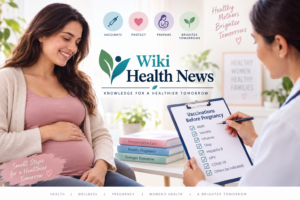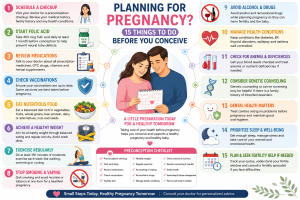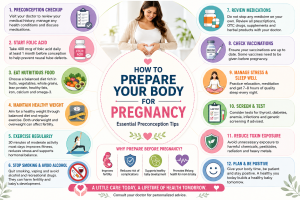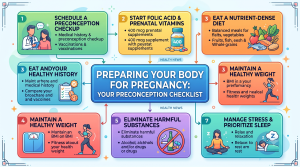
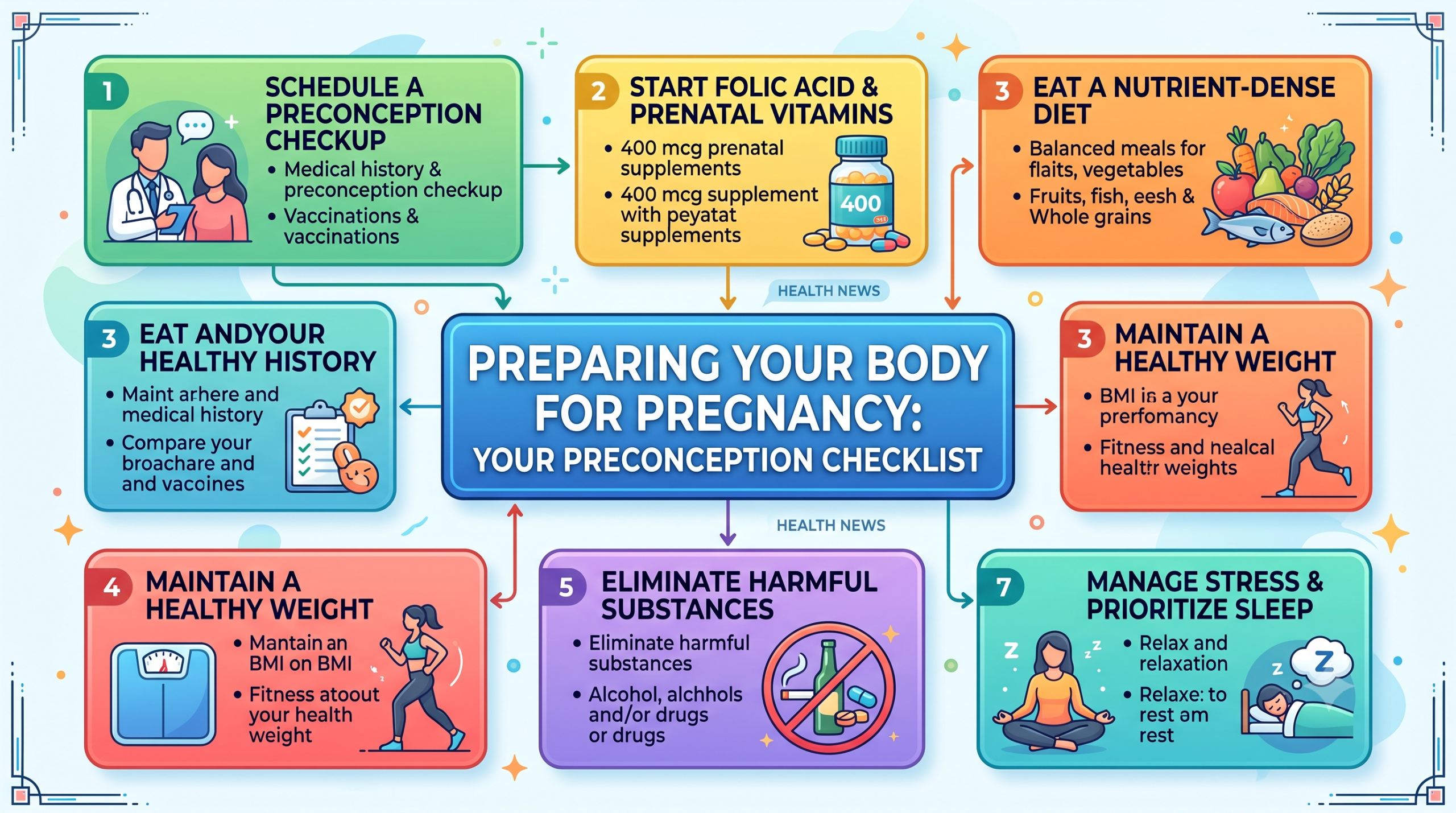
Preparing your body for pregnancy -preconception checklist covering vitamins, health checkups, and lifestyle tips.
Dr. Nabaneeta Padhy, MBBS, MD [OBG]
Taking steps to prepare your body before conceiving gives your future baby the best possible environment to grow while protecting your own health. Whether you plan to conceive in a few months or a year, starting early helps reduce risks and sets up a smooth journey ahead.
This preconception checklist outlines the essential medical, nutritional, and lifestyle steps to take before trying for a baby.
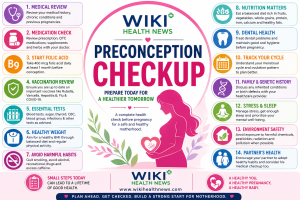
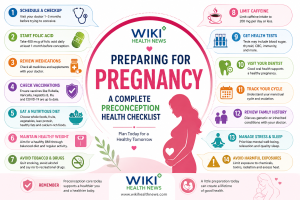
1. Schedule a Preconception Checkup
Before stopping contraception, schedule a visit with your OB/GYN or primary care provider. This appointment gives your provider a baseline view of your overall health and allows time to adjust any current medications.
During this checkup, your care team will typically evaluate:
- Medical history: Reviewing pre-existing conditions like diabetes, high blood pressure, or thyroid disorders. Learn more about managing thyroid and metabolic health in the wiki Health News Thyroid Health Guide.
- Medication safety: Swapping prescriptions or supplements that might carry risks during early fetal development.
- Vaccination updates: Verifying immunity against rubella and varicella (chickenpox), which can cause complications if contracted while pregnant.
- Genetic screening: Discussing optional carrier screening for conditions that run in your or your partner’s family.
Learn more about managing pre-existing health issues in the wiki Health News Pre-Existing Conditions FAQ.
2. Start Folic Acid and Prenatal Vitamins
Folic acid is essential during the earliest weeks of conception—often before you even know you are pregnant. According to the Centers for Disease Control and Prevention (CDC)
, taking 400 micrograms (mcg) of folic acid daily helps prevent major birth defects of the baby’s brain and spine (neural tube defects).
Start taking a daily prenatal vitamin containing at least 400 mcg of folic acid at least 1 to 3 months before you start trying to conceive. Read the full clinical guidance on Folic Acid and Fertility on wiki Health News
. Look for formulas that also include iron, vitamin D, and DHA.
3. Review Your Diet and Lifestyle Habits
Preconception health involves small, sustainable changes to nourish your body and optimize fertility:
- Eat nutrient-dense foods: Prioritize leafy greens, whole grains, lean proteins, and healthy fats. Explore top nutrition tips on the wiki Health News Nutrition Portal.
- Maintain a comfortable weight: Reaching a balanced BMI can promote regular ovulation and lower the risk of gestational diabetes. Read about weight and reproductive health on the wiki Health News Weight and Reproductive Health FAQ.
- Eliminate harmful substances: Stop smoking, avoid recreational drugs, and eliminate alcohol consumption. Explore tobacco risks on the wiki Health News Tobacco and Fertility FAQ.
- Moderate caffeine intake: Keep caffeine intake below 200 mg per day. See caffeine safety recommendations on the wiki Health News Caffeine Safety FAQ.
4. Prioritize Dental Health
Hormonal shifts during pregnancy increase the risk of gum inflammation and periodontal disease. Because advanced gum disease is linked to premature birth and low birth weight, book a dental checkup and professional cleaning before conceiving.
For additional context on oral health guidelines during family planning, consult the American Dental Association (ADA)
patient resources.
5. Create a Healthy Environment and Prioritize Sleep
Environmental exposures and stress levels can impact both female and male fertility:
- Reduce toxin exposure: Limit contact with synthetic chemicals, heavy metals, and pesticides. Review environmental risk factors on the wiki Health News Environmental Exposures FAQ.
- Partner health: Encourage your partner to adopt healthier habits, as partner choices directly impact conception. Learn more on the wiki Health News Partner Fertility Factors FAQ.
- Improve sleep hygiene: Getting adequate rest supports balanced reproductive hormones. Review sleep hygiene tips on the wiki Health News Sleep Hygiene FAQ.
Next Steps on Your Journey
Preparing your body for pregnancy takes time, so give yourself grace as you implement these healthy routines. Working closely with your healthcare provider ensures you receive personalized care tailored to your medical history.
If you are over 35 or have irregular cycles, learn when to consult a specialist on the wiki Health News Specialist Consultation FAQ. For broader patient guidance, review the wiki Health News Patient Philosophy FAQ.
FAQs with concise, patient-centered answers
Preconception & Lifestyle
1. Can lifestyle factors affect female fertility?
Yes. Habits such as diet, physical activity, sleep quality, and stress levels directly influence hormonal balance, ovulation regularity, and overall reproductive health.
2. Does maintaining a healthy weight improve my chances of getting pregnant?
Yes. Both high or low weight can disrupt ovulation and hormone production. Achieving a balanced weight supports regular menstrual cycles and optimal fertility.
3. How much exercise is safe when trying to conceive?
Moderate exercise (such as brisk walking, swimming, or light jogging for 150 minutes a week) supports fertility. Extreme, high-intensity workouts without adequate rest can sometimes suppress ovulation.
4. Does smoking or secondhand smoke reduce fertility?
Yes. Cigarette smoke contains toxins that accelerate egg loss, damage reproductive organs, and increase the risk of miscarriage and ectopic pregnancy. Avoid both primary and secondhand smoke.
5. Is caffeine safe to consume while trying to conceive?
Moderate caffeine consumption—up to 200 milligrams per day (about one 12-ounce cup of coffee)—is generally considered safe and is not known to significantly lower fertility.
6. Can a healthy diet stop age-related fertility decline?
While a nutrient-dense diet supports overall reproductive wellness and egg quality, it cannot stop the natural biological decline in egg quantity that occurs with age.
Nutrition & Supplements
7. Does taking folic acid before pregnancy improve fertility?
While folic acid’s primary role is preventing neural tube defects during early fetal development, maintaining optimal folate levels also supports healthy cellular division during conception.
8. Should women over age 35 take special fertility supplements?
Women over 35 may benefit from specific supplements like CoQ10, Vitamin D, and prenatal vitamins with antioxidants to support cellular health. Always consult your provider before starting new supplements.
9. Are high-dose antioxidant supplements beneficial for conception?
Not necessarily. While moderate antioxidants (such as Vitamins C and E) protect cells from oxidative stress, excessively high doses can disrupt delicate reproductive balances.
10. Does drinking extra water directly improve fertility?
Proper hydration supports reproductive health by improving blood flow to pelvic organs and helping maintain healthy cervical mucus, which aids sperm transport.
11. Does alcohol-free living increase your chances of conceiving?
Eliminating alcohol removes potential risks to early fetal development and helps prevent disruption to reproductive hormones during the luteal phase of your cycle.
12. What is the single most important dietary advice for preconception care?
Focus on a balanced, nutrient-rich Mediterranean-style diet emphasizing leafy greens, whole grains, lean proteins, healthy fats, and a daily prenatal vitamin with folic acid.
General Wellness, Stress & Sleep
13. Does adequate sleep play a role in supporting fertility?
Yes. Quality sleep regulates hormones like melatonin, cortisol, and luteinizing hormone (LH), which trigger ovulation and maintain a healthy reproductive cycle.
14. Can chronic lack of sleep cause direct infertility?
Severe, ongoing sleep deprivation elevates stress hormones like cortisol, which can disrupt the hypothalamic-pituitary-ovarian axis and cause irregular menstrual cycles.
15. Can practicing yoga improve fertility outcomes?
Yoga aids fertility indirectly by reducing stress, lowering blood pressure, improving pelvic circulation, and enhancing overall mental wellness during family planning.
16. How does chronic stress affect reproductive health?
High chronic stress activates the fight-or-flight response, raising cortisol levels that can suppress normal ovulation and decrease sexual drive.
17. Do environmental toxins impact female fertility?
Yes. Exposure to endocrine-disrupting chemicals like BPA, phthalates, heavy metals, and certain pesticides can alter hormone signaling and reduce egg quality.
18. What steps support general reproductive wellness before conceiving?
Focus on a preconception checkup, starting daily folic acid, eating a balanced diet, managing stress, sleeping 7–9 hours nightly, and avoiding toxins.
Infertility Evaluation & Medical Care
19. When should lifestyle changes be combined with a formal fertility evaluation?
If you have been trying to conceive for 12 months (or 6 months if you are over 35) without success, lifestyle adjustments should be paired with a medical evaluation.
20. What questions should patients ask before their first IVF consultation?
Ask about diagnostic testing steps, personalized treatment plans, clinic success rates for your age group, clinic protocols, and estimated timeline and costs.
21. Should women over 40 seek fertility evaluation earlier?
Yes. Women aged 40 or older are encouraged to seek a fertility consultation immediately or within 3 months of trying to conceive due to age-related egg decline.
22. How do irregular periods affect timing for a fertility checkup?
If you have absent or highly irregular periods, you should schedule a checkup right away rather than waiting 6–12 months, as irregular cycles often indicate ovulatory dysfunction.
23. What is the role of early screening for reproductive health disorders?
Early screening identifies underlying conditions like PCOS, endometriosis, or thyroid dysfunction, allowing for timely medical interventions before trying to conceive.
24. Where can patients find evidence-based IVF treatment guidance?
Patients should consult certified reproductive endocrinologists, academic medical centers, board-certified clinical guidelines, and trusted medical resources like wiki Health News.
Partners, Safety & Conditions
25. Can environmental factors in the workplace affect pregnancy planning?
Yes. Workplace exposure to radiation, heavy metals, organic solvents, or extreme heat can negatively impact reproductive health for all.
26. How does pre-existing medical management tie into family planning?
Managing pre-existing conditions (like diabetes or hypertension) prior to conception ensures medications are safe for pregnancy and lowers risks of early complications.
27. What is the impact of partner lifestyle choices on fertility?
Partner health contributes equally to fertility. Smoking, excessive alcohol, high heat exposure, poor diet, and stress lower sperm count, motility, and DNA integrity.
28. Are there specific guidelines for managing thyroid conditions prior to conceiving?
Yes. Thyroid-stimulating hormone (TSH) levels should be optimized before conception, as untreated hypothyroidism increases the risk of miscarriage and developmental issues.
29. How can patients verify evidence-based medical information online?
Look for content authored or reviewed by board-certified healthcare professionals, cross-reference with major medical associations, and check for cited clinical studies.
30. What is the most critical advice for women planning a pregnancy?
Start taking a daily folic acid supplement (400+ mcg) at least 1 to 3 months before trying to conceive, and schedule a preconception health visit with your care provider.
Preconception & Lifestyle
- “Can lifestyle factors affect female fertility?”
- Internal Anchor: Learn how daily habits impact conception in the wiki Health News Lifestyle and Fertility FAQ.
- “Does maintaining a healthy weight improve my chances of getting pregnant?”
- Internal Anchor: Read about weight and reproductive health on wiki Health News.
- “How much exercise is safe when trying to conceive?”
- Internal Anchor: Check exercise guidelines on the wiki Health News Fertility FAQ page.
- “Does smoking or secondhand smoke reduce fertility?”
- Internal Anchor: Explore tobacco risks in the wiki Health News Lifestyle FAQ.
- “Is caffeine safe to consume while trying to conceive?”
- Internal Anchor: See caffeine safety recommendations on wiki Health News.
- “Can a healthy diet stop age-related fertility decline?”
- Internal Anchor: Review age and nutrition facts in the wiki Health News Fertility FAQ.
Nutrition & Supplements
- “Does taking folic acid before pregnancy improve fertility?”
- Internal Anchor: Read the full guidance on Folic Acid and Fertility on wiki Health News.
- “Should women over age 35 take special fertility supplements?”
- Internal Anchor: Explore supplement advice for women over 35 on wiki Health News.
- “Are high-dose antioxidant supplements beneficial for conception?”
- Internal Anchor: Check evidence regarding antioxidants on wiki Health News.
- “Does drinking extra water directly improve fertility?”
- Internal Anchor: Read about hydration and reproductive health in the wiki Health News FAQ.
- “Does alcohol-free living increase your chances of conceiving?”
- Internal Anchor: Learn how alcohol affects reproduction on wiki Health News.
- “What is the single most important dietary advice for preconception care?”
- Internal Anchor: Read top dietary tips on the wiki Health News Portal.
General Wellness, Stress & Sleep
- “Does adequate sleep play a role in supporting fertility?”
- Internal Anchor: Review sleep hygiene and hormonal health on wiki Health News.
- “Can chronic lack of sleep cause direct infertility?”
- Internal Anchor: See sleep disruption details in the wiki Health News FAQ.
- “Can practicing yoga improve fertility outcomes?”
- Internal Anchor: Learn about stress-relief practices on wiki Health News.
- “How does chronic stress affect reproductive health?”
- Internal Anchor: Read stress management strategies on wiki Health News.
- “Do environmental toxins impact female fertility?”
- Internal Anchor: Review environmental exposures on wiki Health News.
- “What steps support general reproductive wellness before conceiving?”
- Internal Anchor: Explore general wellness guidance on wiki Health News.
Infertility Evaluation & Medical Care
- “When should lifestyle changes be combined with a formal fertility evaluation?”
- Internal Anchor: Check when to consult a specialist on wiki Health News.
- “What questions should patients ask before their first IVF consultation?”
- Internal Anchor: Review the FAQs in Infertility & IVF on wiki Health News.
- “Should women over 40 seek fertility evaluation earlier?”
- Internal Anchor: Read age-based evaluation timelines on wiki Health News.
- “How do irregular periods affect timing for a fertility checkup?”
- Internal Anchor: Learn about irregular cycles in the wiki Health News Infertility Guide.
- “What is the role of early screening for reproductive health disorders?”
- Internal Anchor: Explore preventive reproductive health on wiki Health News.
- “Where can patients find evidence-based IVF treatment guidance?”
- Internal Anchor: Access clinical care insights at wiki Health News.
Partners, Safety & Conditions
- “Can environmental factors in the workplace affect pregnancy planning?”
- Internal Anchor: Read about environmental factors on wiki Health News.
- “How does pre-existing medical management tie into family planning?”
- Internal Anchor: Check preventative medical insights at wiki Health News.
- “What is the impact of partner lifestyle choices on fertility?”
- Internal Anchor: Learn more about lifestyle modifications on wiki Health News.
- “Are there specific guidelines for managing thyroid conditions prior to conceiving?”
- Internal Anchor: Read metabolic and thyroid health guides on wiki Health News.
- “How can patients verify evidence-based medical information online?”
- Internal Anchor: Review the wiki Health News Patient Education Philosophy.
- “What is the most critical advice for women planning a pregnancy?”
- Internal Anchor: Discover key preconception takeaways on wiki Health News.
Yes, lifestyle factors can significantly affect female fertility by altering hormonal balance, ovulation, and egg quality.
Key Lifestyle Factors
Weight Management: High BMI or significantly LOW can disrupt hormonal signals, stop ovulation, and cause irregular menstrual cycles.
Smoking: Tobacco smoke ages the ovaries prematurely and depletes the egg supply at a faster rate.
Alcohol and Caffeine: Heavy alcohol use is linked to ovulatory problems and a higher time-to-conception. High caffeine intake may also lower fertility.
Physical Activity: Moderate exercise supports reproductive health, but very intense or excessive physical training can negatively impact ovulation and progesterone levels.
Stress: High levels of physical or psychological stress can interfere with the hormonal pathways required for regular ovulation.
Diet and Nutrition: Diets poor in nutrients or heavy in fast foods can affect metabolic and hormonal health, whereas balanced eating supports
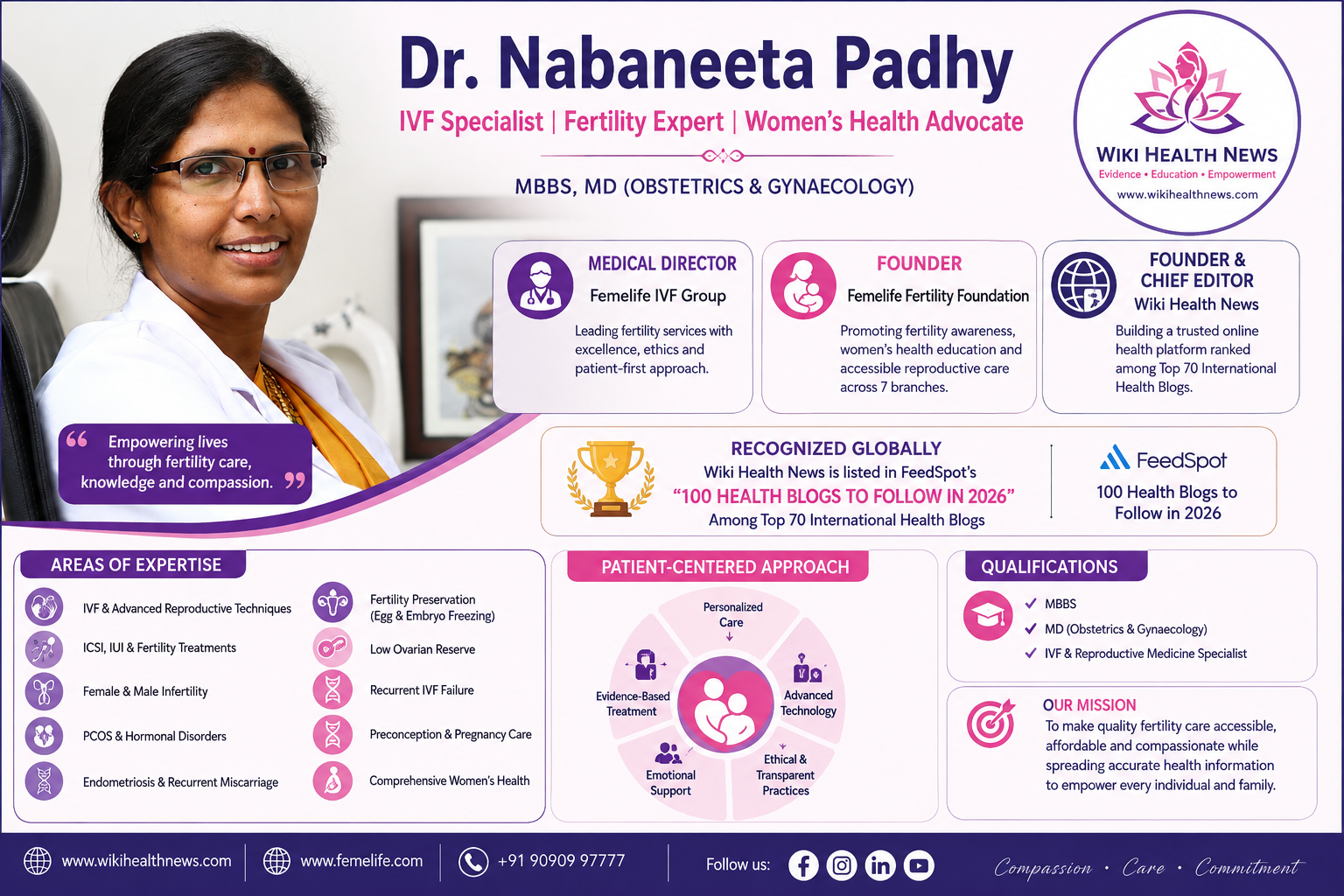
Dr. Nabaneeta Padhy – IVF Specialist
Author Card
Dr. Nabaneeta Padhy, MBBS, MD [OBG]
IVF Specialist & Reproductive Medicine Expert
Founder & Chief Editor, Wiki Health News | Medical Director, Femelife IVF Group | Founder, Femelife Fertility Foundation
Chief Editor & Clinical Reviewer
Specialties: Infertility Evaluation, Assisted Reproductive Technologies (IVF, ICSI, IUI), Reproductive Endocrinology, PCOS, Endometriosis & Women’s Health Care
Dr. Nabaneeta Padhy is an IVF Specialist and Obstetrics & Gynaecology expert dedicated to reproductive medicine, fertility care, and patient education. Holding qualifications including MBBS and MD (Obstetrics & Gynaecology), her clinical focus encompasses reproductive health, advanced fertility treatment, and personalized patient management. In addition to her practice, Dr. Padhy leads content direction for Wiki Health News to ensure accessible, responsible, and evidence-informed health education.
- Qualifications:
- MBBS
- MD (Obstetrics & Gynaecology)
- Leadership Roles:
- Founder & Chief Editor – Wiki Health News
- Medical Director – Femelife IVF Group
- Founder – Femelife Fertility Foundation
- Editorial Care Philosophy: Listen → Evaluate → Explain → Personalize → Treat → Follow Up