Essential Thyroid Function Test Markers
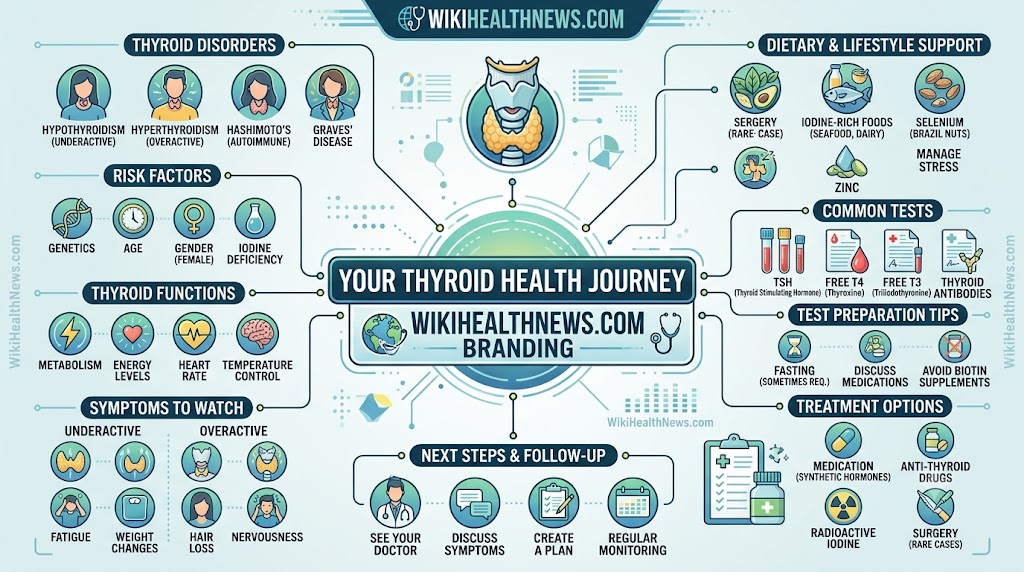
Essential Thyroid Function Test Markers
| Marker | Full Name | Primary Clinical Role |
| TSH | Thyroid Stimulating Hormone | Pituitary signal prompting hormone production |
| Free T4 | Free Thyroxine | Main inactive circulating hormone |
| Free T3 | Free Triiodothyronine | Active hormone directly driving cell metabolism |
| TPO Antibodies | Thyroid Peroxidase Antibodies | Detects underlying autoimmune conditions like Hashimoto’s |
Decoding Your Blood Test Markers
When reviewing a diagnostic panel, clinicians look at the balance between your pituitary signals and active thyroid hormones.
- TSH (Thyroid Stimulating Hormone): Produced by the pituitary gland, TSH acts as the brain’s thermostat. When thyroid activity drops, TSH spikes to signal the gland to work harder. High TSH generally points toward an underactive thyroid.
- Free T4 (Thyroxine) & Free T3 (Triiodothyronine): T4 is the primary storage hormone released into circulation, while T3 is the active molecule used by your cells. “Free” markers measure unbound hormones available for immediate cellular use.
- Thyroid Antibody Tests (TPOAb & TgAb): Elevated antibody markers indicate autoimmune activity where the body targets its own gland tissue.
What Do Your Lab Results Mean?
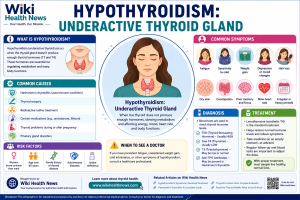
- High TSH + Low Free T4: Typically indicates hypothyroidism (underactive thyroid). Symptoms often include fatigue, unexpected weight gain, dry skin, and cold intolerance.
- Low TSH + High Free T4 or T3: Suggests hyperthyroidism (overactive thyroid). Common warning signs include rapid heart rate, sudden weight loss, anxiety, and heat sensitivity.
- Elevated TPO Antibodies: Points to an autoimmune cause like Hashimoto’s thyroiditis or Graves’ disease.
According to the National Institute of Diabetes and Digestive and Kidney Diseases (NIDDK), blood tests offer the standard diagnostic method for identifying thyroid imbalances early before severe complications develop. Additional guidelines from the American Thyroid Association (ATA) recommend routine TSH screening for individuals experiencing systemic metabolic changes.
Preparing for Your Lab Draw
- Morning Testing: Fasting morning draws provide consistent baseline TSH readings, as hormone levels fluctuate throughout the day.
- Supplement Precautions: Stop taking high-dose Biotin (Vitamin B7) supplements at least 48 to 72 hours before testing, as it can cause artificially high T3/T4 or falsely low TSH readings in laboratory assays.
- Medication Timing: If you take daily synthetic hormone replacements like levothyroxine, consult your provider on whether to delay your daily dose until after blood sampling.
Managing thyroid conditions extends beyond medication alone; daily dietary habits also support overall metabolic balance. To optimize your lifestyle along with treatment, review guidelines on thyroid disease: foods to eat and avoid to ensure proper nutrient absorption.
Frequently Asked Questions (FAQs)
Basics & Purpose
A thyroid function test is a group of blood evaluations that measure hormone levels (TSH, T4, T3) and specific antibodies to evaluate how well your thyroid gland regulates metabolism.
TSH (Thyroid Stimulating Hormone) is the most sensitive marker produced by the pituitary gland.Small changes in circulating thyroid hormones prompt significant shifts in TSH, making it the ideal initial screening marker.
- 3. What is the difference between Total T4 and Free T4?
Total T4 includes both bound (inactive storage) and unbound hormones in blood.Free T4 measures only the unbound, active hormone available for immediate tissue consumption. - 4. What does Free T3 measure?
Free T3 measures the active triiodothyronine hormone directly responsible for cellular energy production and metabolic output. - 5. Why are thyroid antibody tests performed?
Tests for antibodies like TPO (Thyroid Peroxidase) identify underlying autoimmune responses, such as Hashimoto’s thyroiditis or Graves’ disease, where immune cells attack gland tissue.
Understanding Results
- 6. What does a high TSH level indicate?
A high TSH reading usually signals an underactive thyroid (hypothyroidism), indicating that the pituitary gland is working overtime to stimulate hormone production. - 7. What does a low TSH level mean?
A low TSH level typically indicates hyperthyroidism (overactive thyroid), where excess thyroid hormone suppresses pituitary TSH secretion. - 8. Can TSH be normal while Free T4 is abnormal?
Yes, early stages of thyroid dysfunction or central pituitary issues can cause discrepancies between TSH and Free T4 levels. - 9. What is subclinical hypothyroidism?
Subclinical hypothyroidism occurs when TSH levels are mildly elevated, but Free T4 levels remain within the normal reference range. - 10. What is subclinical hyperthyroidism?
This occurs when TSH levels drop below normal while Free T4 and Free T3 remain within baseline limits. - 11. What does it mean if TPO antibodies are high?
Elevated TPO antibodies confirm autoimmune activity affecting the thyroid, most commonly Hashimoto’s disease. - 12. What does a high Free T3 level with normal T4 mean?
This pattern, known as T3-toxicosis, occurs when the gland overproduces active T3 while keeping T4 output within normal limits. - 13. Can normal lab results happen even if I feel symptoms?
Yes. Symptoms like fatigue or weight changes overlap with many non-thyroid conditions, or your levels may sit at the edge of normal reference ranges.
Preparation & Factors Affecting Results
- 14. Do I need to fast before a thyroid blood test?
Fasting is generally not required for basic thyroid panels, though morning testing is preferred to account for natural diurnal hormone fluctuations. - 15. Why should I stop Biotin (Vitamin B7) before testing?
High doses of Biotin interfere with laboratory assay methods, falsely skewing TSH, T3, and T4 readings without changing actual blood levels. - 16. How far in advance should I hold Biotin?
Most clinical guidelines advise stopping high-dose Biotin supplements 48 to 72 hours before taking a thyroid blood draw. - 17. Should I take my levothyroxine before or after the blood draw?
It is generally recommended to hold synthetic thyroid medication on the morning of the test until after blood sampling to avoid a temporary spike in T4 results. - 18. Can pregnancy affect thyroid test results?
Yes, pregnancy hormones like hCG and increased estrogen alter binding proteins, elevating Total T4 while shifting standard TSH reference ranges. - 19. Do common medications alter thyroid panels?
Certain drugs—including steroids, oral contraceptives, lithium, and amiodarone—can alter hormone levels or binding protein concentrations. - 20. Can acute illness or stress impact results?
Yes, severe non-thyroidal illness or extreme physiological stress can temporarily suppress T3 levels, a condition known as Euthyroid Sick Syndrome.
Conditions & Monitoring
- 21. How often should thyroid levels be monitored on medication?
Levels are typically rechecked 6 to 8 weeks after starting or adjusting synthetic thyroid hormone doses until stable, then annually. - 22. What causes thyroid hormone fluctuations?
Factors include dosage inconsistencies, gastrointestinal absorption issues, diet, medication interactions, and progression of underlying autoimmune conditions. - 23. What additional tests are ordered if blood tests are abnormal?
Clinicians may order thyroid ultrasounds, radioactive iodine uptake scans, or fine-needle aspiration biopsies if nodules or physical enlargement are detected. - 24. What is a Thyroglobulin (Tg) test used for?
Thyroglobulin tests serve primarily as a tumor marker to monitor patients treated for differentiated thyroid cancer. - 25. What are Thyroid Stimulating Immunoglobulins (TSI)?
TSI are antibodies that stimulate the TSH receptor, confirming a diagnosis of Graves’ disease.
Special Considerations
- 26. Is an at-home thyroid test as accurate as a lab test?
At-home finger-prick kits offer useful baseline information, but diagnostic confirmation requires a formal venous blood draw evaluated by a clinical laboratory. - 27. Does age affect normal thyroid reference ranges?
Yes, baseline TSH levels naturally rise in older adults, requiring age-adjusted interpretation to prevent overdiagnosis. - 28. How does diet affect thyroid test outcome?
Extreme nutritional deficiencies, high soy intake, or severe iodine excess/deficiency can influence hormone synthesis and test outcomes. - 29. Can exercise alter my thyroid results?
Strenuous physical exercise immediately prior to blood collection can temporarily shift thyroid hormone concentrations. - 30. When should I consult an Endocrinologist?
Referral to a specialist is recommended if lab results are difficult to balance, if pregnancy occurs alongside thyroid disease, or if nodules and suspicious structural changes are present.
Medical References & Primary Sources
- National Institute of Diabetes and Digestive and Kidney Diseases (NIDDK):Thyroid Tests Overview
- American Thyroid Association (ATA):Thyroid Function Tests Clinical Guidelines
- Cleveland Clinic:Thyroid Panel: Purpose, Procedure & Results
- National Center for Biotechnology Information (NCBI):Understanding Thyroid Tests & Diagnostic Protocols
- Wiki Health News:Hypothyroidism and Underactive Thyroid Management
About the Author
Medical Reviewer & Chief Editor
Dr. Sujit Kumar Sahu
Consultant Interventional Cardiologist | Founder & Chief Editor, Wiki Health News
Qualifications: MBBS, MD (Medicine), DrNB (Cardiology), FESC, FACC, FSCAI, ICCPR-CRFC
Dr. Sujit Kumar Sahu is a Senior Consultant Interventional Cardiologist and clinical leader dedicated to evidence-based medical journalism and patient education throughWiki Health News.