Potassium and Heart Disease: Benefits, Foods, Risks and Safe Intake
Potassium and Heart Disease: What Every Heart Patient Should Know
Potassium and heart disease are closely connected because this essential mineral plays an important role in blood pressure regulation, muscle function and the normal electrical activity of the heart. For most healthy adults, getting enough potassium from nutritious foods can support cardiovascular health. However, too much potassium can also be dangerous, particularly for people with kidney disease or those taking certain medicines.
How Does Potassium Affect Heart Health?
Potassium helps balance the effects of sodium in the body. A diet containing adequate potassium can help the kidneys remove more sodium through urine and may help relax blood vessel walls. These effects can contribute to healthier blood pressure levels. The World Health Organization recommends increasing potassium intake from food to help reduce blood pressure and the risk of cardiovascular disease, stroke and coronary heart disease in adults. (World Health Organization)
High blood pressure is one of the major risk factors for heart attack, stroke and other cardiovascular conditions. Therefore, maintaining a healthy balance of sodium and potassium can be an important part of a heart-healthy lifestyle.
Read more: [High Blood Pressure and Heart Disease]
Related: [How to Reduce Salt for a Healthy Heart]
How Much Potassium Do You Need?
WHO suggests that adults consume at least 3,510 mg of potassium per day, preferably from food. (World Health Organization)
The American Heart Association notes that most women should get approximately 2,600 mg and men approximately 3,400 mg of potassium daily, while its guidance for blood-pressure management emphasizes a potassium-rich dietary pattern. Individual requirements can vary depending on health conditions, medications and kidney function. (www.heart.org)
Instead of focusing only on a number, patients should aim for a balanced diet containing a variety of fruits, vegetables, beans, whole grains and other minimally processed foods.
Potassium-Rich Foods for Heart Health
Good natural sources of potassium include:
- Bananas
- Oranges and other citrus fruits
- Papaya and dates
- Potatoes and sweet potatoes
- Spinach and other leafy vegetables
- Beans and peas
- Tomatoes
- Yogurt and milk
- Nuts and seeds
- Avocado
For example, the American Heart Association reports that a medium banana contains about 450 mg of potassium, while a medium sweet potato contains more than 500 mg. (www.heart.org)
A heart-healthy eating pattern should not focus on potassium alone. Reducing excessive sodium, eating more vegetables and fruits, choosing whole grains and limiting highly processed foods are also important for cardiovascular health. The American Heart Association’s 2026 dietary guidance continues to emphasize vegetables, fruits, whole grains, healthy protein sources and lower-sodium foods as components of a heart-healthy dietary pattern. (professional.heart.org)
Read more: [Heart-Healthy Diet: Foods That Protect Your Heart]
Related: [Best Foods for High Blood Pressure]
Can Too Much Potassium Be Dangerous?
Yes. High blood potassium, known as hyperkalemia, can cause serious heart problems. Healthy kidneys normally remove excess potassium. When kidney function is impaired, potassium can accumulate in the blood. Certain medicines and medical conditions can also increase potassium levels. (National Kidney Foundation)
Severe hyperkalemia may cause muscle weakness, palpitations, abnormal heart rhythms, chest pain or shortness of breath and can require urgent medical treatment. (National Kidney Foundation)
Patients with kidney disease, heart failure or other medical conditions affecting potassium balance should not start potassium supplements or potassium-based salt substitutes without discussing them with their doctor.
Potassium and Heart Disease: The Bottom Line
Potassium is an important nutrient for cardiovascular health and can help support healthy blood pressure when consumed as part of a balanced diet. However, more potassium is not always better. The right amount depends on your overall health, kidney function and medications.
For most people, the safest approach is to obtain potassium naturally from a varied, minimally processed diet and combine it with lower sodium intake, regular physical activity, healthy weight management and appropriate medical care.
If you have heart disease, high blood pressure or kidney disease, ask your healthcare professional whether you need to increase or restrict potassium.
Medical Disclaimer
This article is intended for general patient education and does not replace personalized medical advice, diagnosis or treatment. Patients with heart disease, kidney disease or abnormal potassium levels should consult their healthcare professional before changing their diet or taking potassium supplements.
References
- World Health Organization. Guideline: Potassium Intake for Adults and Children. (World Health Organization)
- World Health Organization. Increasing Potassium Intake to Reduce Blood Pressure and Risk of Cardiovascular Diseases in Adults. (World Health Organization)
- American Heart Association. A Primer on Potassium. (www.heart.org)
- American Heart Association. How Potassium Can Help Prevent or Treat High Blood Pressure. (www.heart.org)
- National Kidney Foundation. High Potassium (Hyperkalemia): Causes, Symptoms, and Treatment. (National Kidney Foundation)
- American Heart Association. 2026 Dietary Guidance to Improve Cardiovascular Health. (professional.heart.org)
Potassium and Heart Disease: Benefits, Foods, Risks and Safe Intake
Learn how potassium affects heart health, blood pressure and heart disease. Discover potassium-rich foods, recommended intake and why too much potassium can be dangerous.
potassium-and-heart-disease/
potassium and heart disease
potassium for heart health, potassium and blood pressure, potassium-rich foods, high potassium and heart disease, hyperkalemia, potassium intake
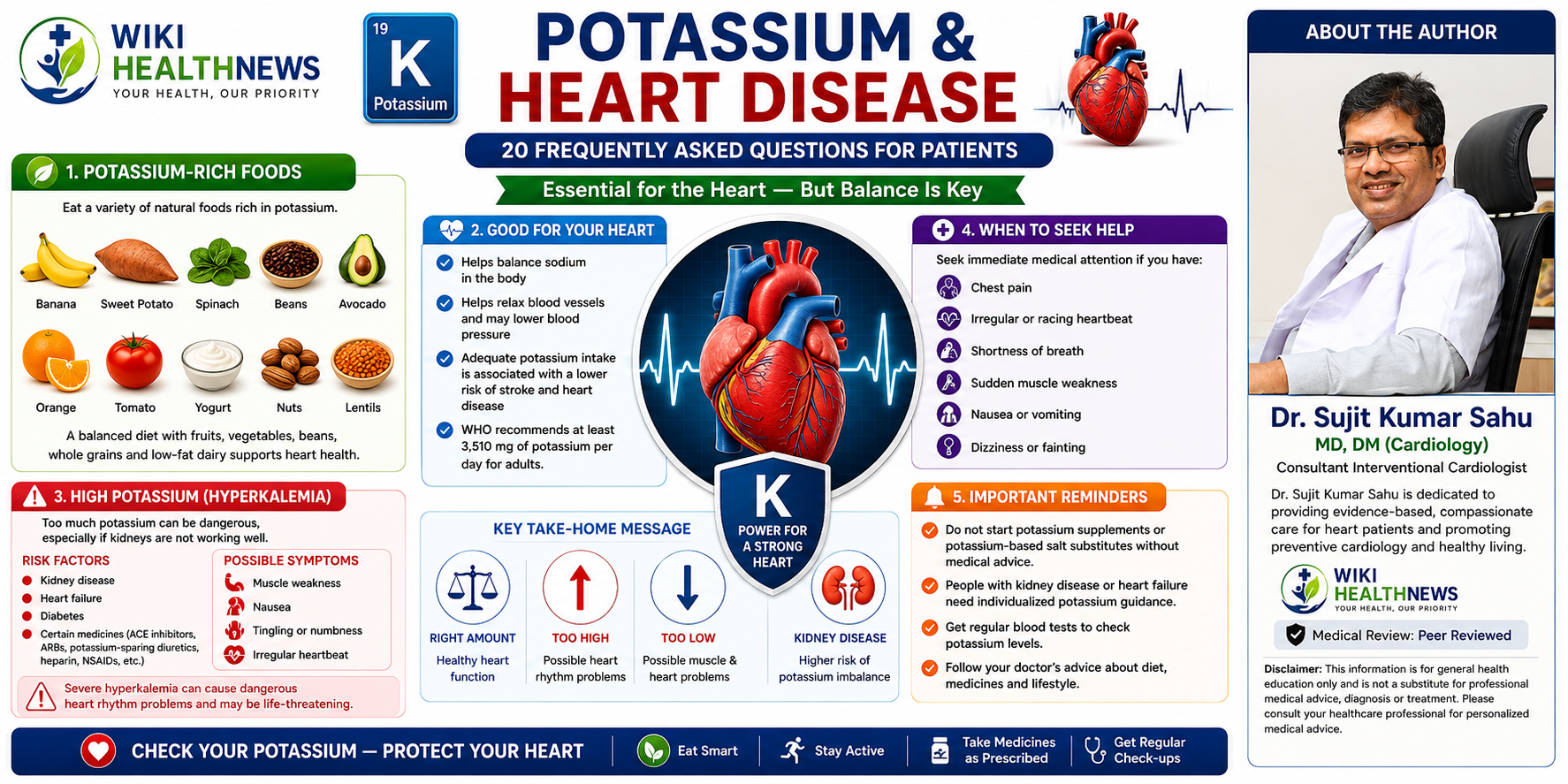
Absolutely. Here is a WikiHealthNews-ready package with 20 patient-friendly FAQs, an author-card section, and a central-caption infographic concept. The medical points are aligned with current American Heart Association and National Kidney Foundation patient guidance. (www.heart.org)
20 FAQs — Potassium & Heart Disease
WIKI HEALTHNEWS
POTASSIUM & HEART DISEASE
20 Frequently Asked Questions for Patients
Central Caption:
“Potassium: Essential for the Heart — But Balance Is Key”
1. What is potassium?
Potassium is an essential mineral and electrolyte that helps nerves, muscles and the heart function properly.
2. Why is potassium important for the heart?
Potassium helps maintain the electrical activity responsible for a regular heartbeat. Both excessively high and excessively low potassium levels can affect the heart.
3. Can potassium lower blood pressure?
Adequate potassium intake can help counter some of sodium’s effects and may support healthier blood pressure. (www.heart.org)
4. Does potassium prevent heart disease?
Potassium is part of a heart-healthy dietary pattern, but potassium alone does not prevent heart disease. Blood pressure, cholesterol, diabetes, smoking, weight, exercise and overall diet also matter.
5. Which foods are rich in potassium?
Bananas, potatoes, sweet potatoes, spinach, tomatoes, beans, lentils, oranges, avocado, yogurt, nuts and several other foods contain potassium. (www.heart.org)
6. Is eating a banana every day safe?
For most healthy people, bananas can be part of a balanced diet. However, people with kidney disease or certain medical conditions may need individualized potassium advice.
7. Can heart patients eat potassium-rich foods?
Many can, but there is no single potassium diet suitable for every heart patient. Kidney function, blood potassium levels and medications should be considered.
8. What is hyperkalemia?
Hyperkalemia means the potassium level in the blood is higher than it should be. Severe hyperkalemia can cause dangerous heart rhythm problems. (National Kidney Foundation)
9. Who is at greater risk of high potassium?
People with kidney disease are particularly vulnerable because the kidneys normally remove excess potassium. Diabetes, heart disease and certain medicines can also increase risk. (National Kidney Foundation)
10. Can heart failure cause high potassium?
Heart failure can be associated with increased risk of high potassium, particularly when kidney function is reduced or certain medicines affecting potassium are used. (National Kidney Foundation)
11. What are symptoms of high potassium?
Many people have few or no symptoms. Possible symptoms include muscle weakness, numbness, tingling, nausea and unusual heart sensations.
12. Can high potassium cause an irregular heartbeat?
Yes. Significant hyperkalemia can interfere with the heart’s electrical activity and may cause serious arrhythmias. (National Kidney Foundation)
13. When is high potassium an emergency?
Sudden or severe hyperkalemia accompanied by chest pain, shortness of breath, palpitations, an irregular heartbeat, nausea or vomiting requires immediate medical attention. (National Kidney Foundation)
14. Can low potassium also affect the heart?
Yes. Potassium that is too low can also cause health problems and may affect muscles and heart rhythm. Maintaining the appropriate level is more important than simply having “more potassium.” (National Kidney Foundation)
15. Can blood pressure medicines increase potassium?
Some medicines used for cardiovascular and kidney conditions can increase blood potassium. Never stop a prescribed medicine without speaking with your doctor.
16. Are potassium supplements safe for heart patients?
Not necessarily. Potassium supplements should only be taken when recommended by a healthcare professional, particularly if you have kidney disease or take medicines that affect potassium. (www.heart.org)
17. Are potassium-based salt substitutes safe?
They may be helpful for some people trying to reduce sodium, but they can raise potassium levels. People with kidney disease or those taking potassium-affecting medicines should ask their healthcare professional before using them. (www.heart.org)
18. How is potassium level checked?
A blood test measures potassium in the bloodstream. Your doctor may recommend regular testing if you have kidney disease, heart failure or other risk factors.
19. Should people with kidney disease avoid all potassium-rich foods?
No. Dietary potassium restrictions should be individualized. Some patients may need to limit potassium, while others may not. A doctor or dietitian can determine the appropriate amount. (National Kidney Foundation)
20. What is the most important message about potassium and heart disease?
Balance is the key. Too little potassium can be harmful, while too much can be dangerous, especially when kidney function is impaired. Follow your healthcare professional’s advice rather than taking potassium supplements or changing your diet on your own.
PATIENT TAKE-HOME MESSAGE
❤️ POTASSIUM + HEART HEALTH
RIGHT AMOUNT → HEALTHY HEART FUNCTION
TOO HIGH → POSSIBLE HEART RHYTHM PROBLEMS
TOO LOW → POSSIBLE MUSCLE & HEART PROBLEMS
KIDNEY DISEASE → HIGHER RISK OF POTASSIUM IMBALANCE
Never start potassium supplements or potassium-based salt substitutes without medical advice if you have kidney disease, heart failure or take medicines that affect potassium.
This information is for patient education and does not replace personalized medical advice.
AUTHOR CARD
AUTHOR
Dr.Sujit Kumar Sahu
MBBS, MD / DrNB, [Cardiology]
Medical Writer & Healthcare Educator
WikiHealthNews
Dr. Dr.Sujit Kumar Sahu is a medical professional dedicated to providing evidence-based, easy-to-understand health information for patients and families.
Medical Review: wiki Health News Editorial Team
Published by: WikiHealthNews

Dr. Sujit Kumar Sahu – Consultant Interventional Cardiologist
High potassium can sometimes have few symptoms yet cause serious cardiac complications. (National Kidney Foundation)