DASH Diet and High Blood Pressure: A Complete Guide to Lowering Blood Pressure Naturally
Meta Title: DASH Diet and High Blood Pressure: Best Foods to Lower Blood Pressure Naturally
Meta Description: Learn how the DASH diet helps reduce high blood pressure naturally. Discover foods to eat, foods to avoid, meal tips, and heart-healthy lifestyle advice.
Focus Keyword: DASH Diet and High Blood Pressure
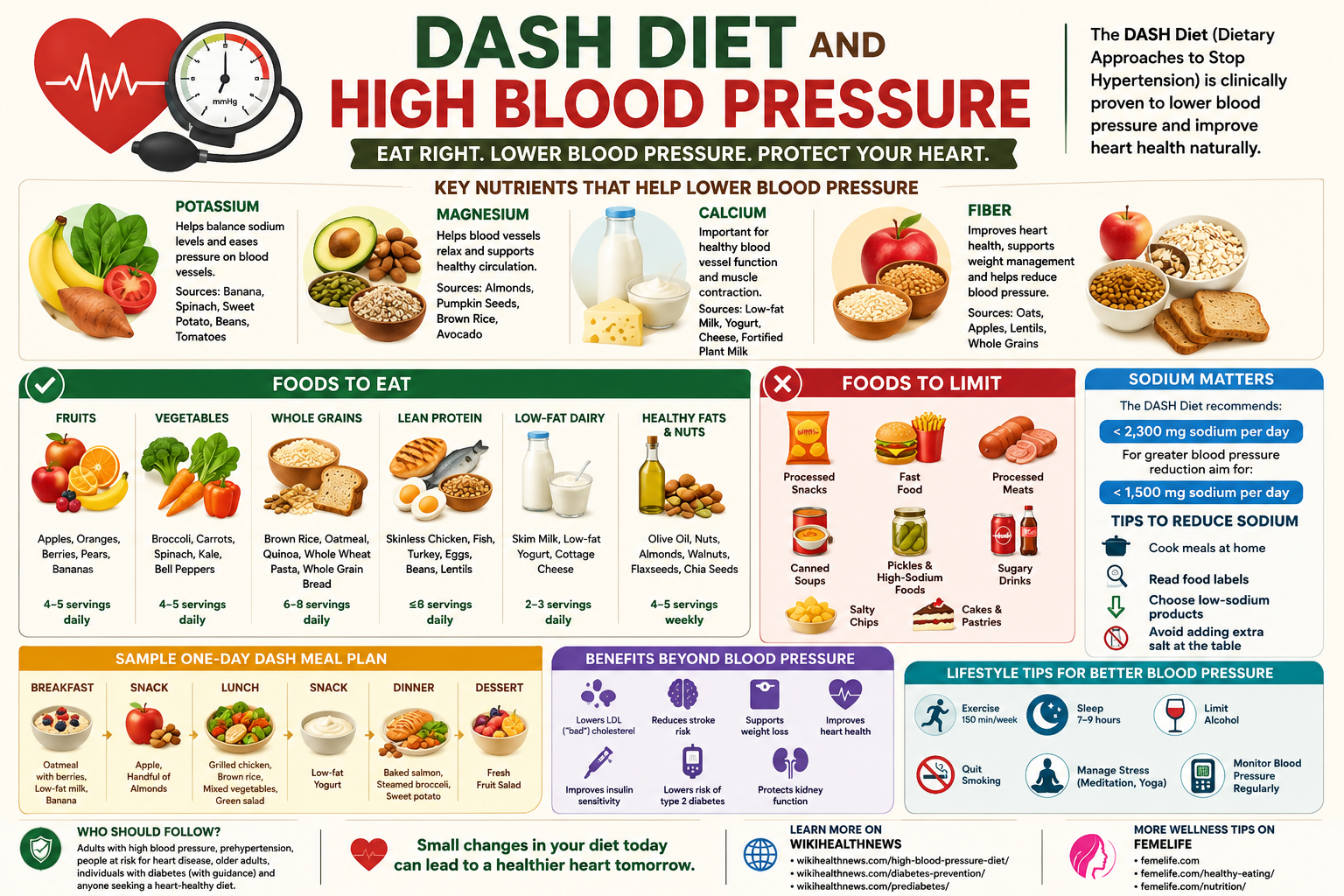
High blood pressure (hypertension) affects millions of people worldwide and is one of the leading risk factors for heart disease, stroke, and kidney disease. Fortunately, one of the most effective ways to control blood pressure naturally is by following the DASH Diet (Dietary Approaches to Stop Hypertension).
The DASH diet is scientifically proven to lower blood pressure without requiring drastic lifestyle changes. It emphasizes nutrient-rich foods while limiting sodium, unhealthy fats, and added sugars.
What Is the DASH Diet?
The DASH diet was developed by researchers funded by the U.S. National Institutes of Health (NIH) to help prevent and manage hypertension.
Unlike restrictive diets, DASH focuses on balanced nutrition by encouraging:
- Fruits
- Vegetables
- Whole grains
- Low-fat dairy products
- Lean proteins
- Nuts and seeds
- Legumes
It also recommends reducing:
- Sodium
- Saturated fat
- Processed foods
- Sugary beverages
- Red meat
How Does the DASH Diet Lower Blood Pressure?
The DASH diet works by providing nutrients that help relax blood vessels and improve heart function.
1. Rich in Potassium
Potassium helps counteract the effects of sodium and supports healthy blood pressure.
Good sources include:
- Bananas
- Sweet potatoes
- Spinach
- Tomatoes
- Beans
2. High in Magnesium
Magnesium helps blood vessels relax and supports healthy circulation.
Foods include:
- Almonds
- Pumpkin seeds
- Brown rice
- Avocados
3. Adequate Calcium
Calcium plays an important role in maintaining normal blood vessel function.
Sources include:
- Low-fat milk
- Yogurt
- Cheese
- Fortified plant milk
4. High Fiber Intake
Fiber improves heart health, supports weight loss, and may reduce blood pressure.
Excellent sources:
- Oats
- Apples
- Lentils
- Whole wheat bread
Foods to Eat on the DASH Diet
Fruits
- Apples
- Oranges
- Berries
- Pears
- Bananas
Aim for 4–5 servings daily.
Vegetables
- Broccoli
- Carrots
- Kale
- Spinach
- Bell peppers
Aim for 4–5 servings daily.
Whole Grains
- Brown rice
- Oatmeal
- Whole wheat pasta
- Quinoa
- Whole grain bread
Lean Protein
- Skinless chicken
- Turkey
- Fish
- Eggs
- Beans
Low-Fat Dairy
- Skim milk
- Low-fat yogurt
- Cottage cheese
Healthy Fats
- Olive oil
- Walnuts
- Almonds
- Flaxseeds
- Chia seeds
Foods to Limit
To maximize the benefits of the DASH diet, reduce:
- Processed snacks
- Fast food
- Processed meats
- Canned soups
- Pickles
- Salty chips
- Sugary drinks
- Cakes and pastries
These foods often contain excessive sodium and unhealthy fats.
Recommended Sodium Intake
The standard DASH diet recommends:
- Less than 2,300 mg sodium daily
For better blood pressure control:
Simple ways to reduce sodium:
- Cook meals at home
- Read food labels
- Choose low-sodium products
- Avoid adding extra salt at the table
Sample One-Day DASH Meal Plan
Breakfast
- Oatmeal with berries
- Low-fat milk
- Banana
Morning Snack
Lunch
- Grilled chicken breast
- Brown rice
- Mixed vegetables
- Green salad
Afternoon Snack
Dinner
- Baked salmon
- Steamed broccoli
- Sweet potato
Dessert
Benefits Beyond Blood Pressure
Research shows the DASH diet may also help:
- Lower LDL (“bad”) cholesterol
- Improve heart health
- Reduce stroke risk
- Support weight loss
- Improve insulin sensitivity
- Lower risk of type 2 diabetes
- Protect kidney function
DASH Diet and Weight Loss
Although the DASH diet wasn’t designed specifically for weight loss, many people lose weight because it emphasizes:
- High-fiber foods
- Lower-calorie meals
- Better portion control
- Reduced processed foods
Maintaining a healthy weight further reduces blood pressure and improves cardiovascular health.
Lifestyle Tips for Better Blood Pressure
Combine the DASH diet with healthy habits:
- Exercise at least 150 minutes per week
- Sleep 7–9 hours nightly
- Limit alcohol intake
- Quit smoking
- Manage stress through meditation or yoga
- Monitor blood pressure regularly
Who Should Follow the DASH Diet?
The DASH diet is ideal for:
- Adults with hypertension
- People with prehypertension
- Individuals at risk for heart disease
- Older adults
- People with diabetes (with personalized guidance)
- Anyone seeking a healthier eating pattern
People with kidney disease or those who need to restrict potassium should consult their healthcare provider before making significant dietary changes.
Internal Links
Learn more about heart health and nutrition on WikiHealthNews:
External Links
Explore additional wellness resources on Femelife:
Conclusion
The DASH Diet and High Blood Pressure go hand in hand when it comes to improving heart health naturally. By focusing on fruits, vegetables, whole grains, lean proteins, and low-fat dairy while limiting sodium and processed foods, the DASH diet can significantly reduce blood pressure and lower the risk of heart disease. Combined with regular exercise and healthy lifestyle habits, it offers a sustainable and effective path to long-term cardiovascular wellness.
The healthy DASH diet plan was developed to lower blood pressure without medication in research sponsored by the US National Institutes of Health, Dietary Approaches to Stop Hypertension.
Lower your high blood pressure by starting to follow the DASH diet.
DASH stands for Dietary Approaches to Stop Hypertension.
The diet is simple:
- Eat more fruits, vegetables, and low-fat dairy foods
- Cut back on foods that are high in saturated fat, cholesterol, and trans fats
- Eat more whole-grain foods, fish, poultry, and nuts
- Limit sodium, sweets, sugary drinks, and red meats
In research studies, people who were on the DASH diet lowered their blood pressure within 2 weeks.
The first DASH diet research showed that it could lower blood pressure as well as the first line blood pressure medications, even with a sodium intake of 3300 mg/day.