Portfolio Diet
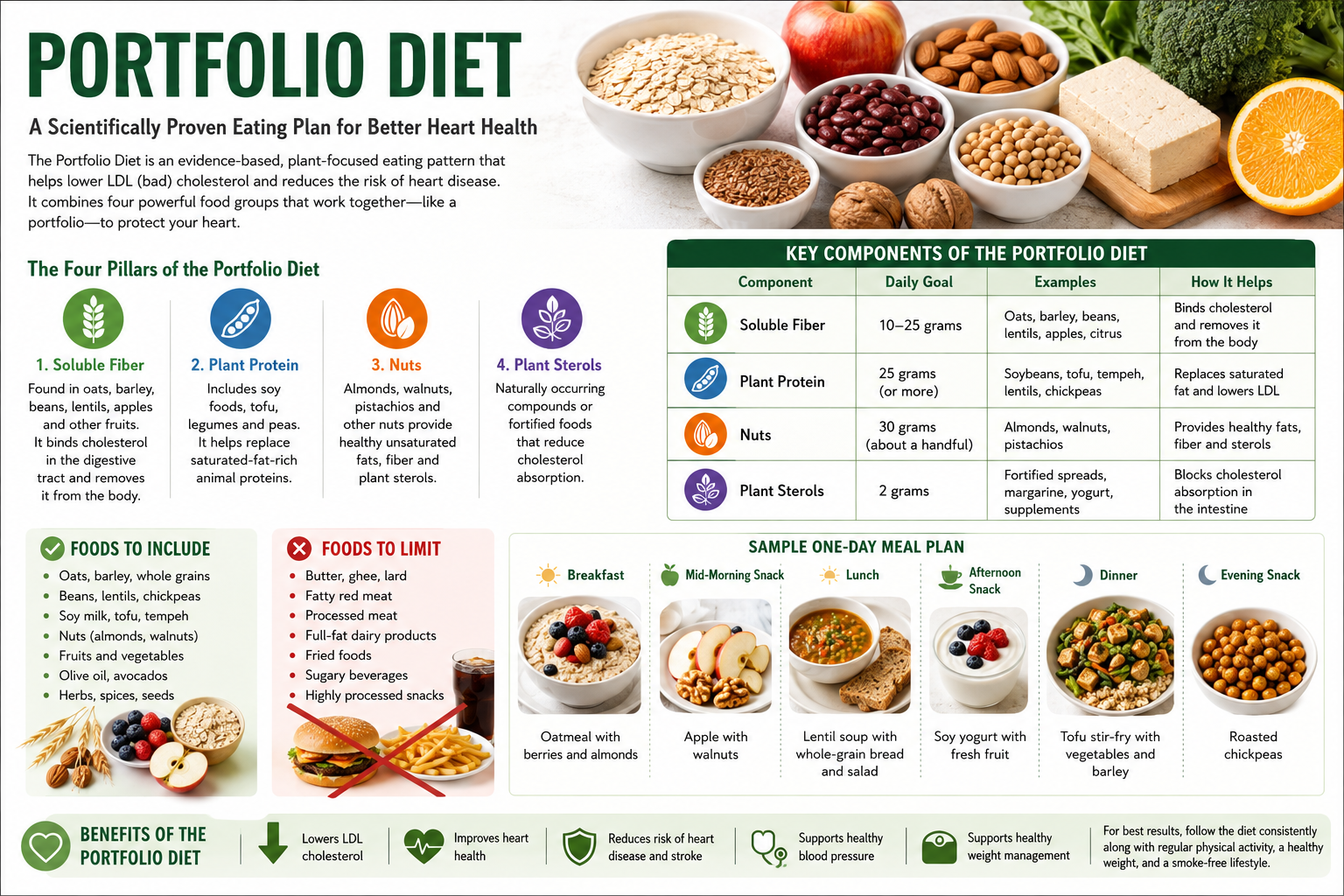
Portfolio Diet
Portfolio Diet
The Portfolio Diet is a plant-based dietary pattern designed to lower LDL (“bad”) cholesterol and support cardiovascular health. Instead of focusing on one “superfood,” it combines several cholesterol-lowering foods and nutrients in a single dietary pattern.
Key components
| Component | Examples | Potential benefit |
|---|---|---|
| Soluble/viscous fiber | Oats, barley, psyllium, beans, lentils | Helps reduce LDL cholesterol |
| Nuts and seeds | Almonds, walnuts, pistachios, flaxseed | Provides unsaturated fats and plant sterols |
| Plant protein | Soy, tofu, beans, lentils | Can replace saturated-fat-rich animal protein |
| Plant sterols | Fortified foods, some nuts/seeds | Reduces intestinal cholesterol absorption |
| Healthy fats | Avocado, olive/canola/mustard oil | Replaces saturated fats |
How it works
The Portfolio Diet targets several pathways involved in cholesterol metabolism. Soluble fiber can reduce cholesterol absorption and increase bile-acid excretion. Plant sterols compete with cholesterol for intestinal absorption, while replacing saturated fats with unsaturated fats can further improve the blood lipid profile.
Clinical research on the Portfolio Diet has demonstrated meaningful reductions in LDL cholesterol, particularly when adherence is high. It is therefore especially relevant for people looking for a dietary approach to heart disease prevention and cholesterol management.
A practical Indian-style Portfolio Diet
- Breakfast: Oats or barley porridge + fruit + ground flaxseed
- Mid-morning: A small handful of almonds or walnuts
- Lunch: Dal/rajma/chana + vegetables + whole-grain roti or brown rice
- Snack: Fruit or soy-based food
- Dinner: Tofu/soy, beans or lentils + vegetables + whole grains
- Daily: Include a source of soluble fiber and minimize butter, ghee, fatty meats and other foods high in saturated fat.
The Portfolio Diet does not necessarily require complete avoidance of animal foods. The main principle is to emphasize cholesterol-lowering plant foods while replacing foods high in saturated fat.
Portfolio Diet: A Heart-Healthy Diet to Lower LDL Cholesterol
Meta Title: Portfolio Diet: Foods, Benefits & LDL Cholesterol Reduction
Meta Description: Learn how the Portfolio Diet can help lower LDL cholesterol and support heart health. Discover key foods, benefits, an Indian-style meal plan, and practical tips.
What Is the Portfolio Diet?
The Portfolio Diet is a heart-healthy eating pattern developed to help lower LDL cholesterol, often called “bad” cholesterol. Rather than relying on a single food or supplement, the diet combines several cholesterol-lowering foods and nutrients into one dietary pattern.
The main components include soluble fiber, plant protein, nuts, seeds, and plant sterols. At the same time, the Portfolio Diet encourages replacing foods high in saturated fat with healthier unsaturated fats.
For people interested in heart disease prevention, cholesterol management, and cardiovascular health, the Portfolio Diet provides a practical plant-focused approach.
How Does the Portfolio Diet Lower Cholesterol?
The Portfolio Diet works through several complementary mechanisms.
Soluble fiber found in foods such as oats, barley, beans, lentils and psyllium can help reduce cholesterol absorption and increase the removal of cholesterol through bile acids.
Plant sterols can reduce the amount of cholesterol absorbed from the intestine. They are naturally present in small amounts in plant foods and are also added to some fortified products.
Nuts and seeds provide unsaturated fats, fiber and other beneficial nutrients. Replacing foods rich in saturated fat with nuts and other plant foods can contribute to improved LDL cholesterol levels.
Plant proteins, particularly soy protein and proteins from legumes, can replace animal proteins that may be accompanied by saturated fat.
Together, these dietary strategies create the “portfolio” approach—multiple nutritional interventions working toward the same cardiovascular goal.
Key Foods in the Portfolio Diet
A successful Portfolio Diet emphasizes a variety of plant foods.
| Portfolio component | Food examples | Role in heart health |
|---|---|---|
| Soluble fiber | Oats, barley, beans, lentils, psyllium | Helps lower LDL cholesterol |
| Nuts | Almonds, walnuts, pistachios | Provides unsaturated fats and fiber |
| Seeds | Flaxseed, chia, sunflower seeds | Provides fiber and healthy fats |
| Plant protein | Soy, tofu, tempeh, lentils, chickpeas | Healthy alternative to some animal proteins |
| Plant sterols | Fortified foods, nuts, seeds | Helps reduce cholesterol absorption |
| Whole plant foods | Fruits, vegetables, whole grains | Provides fiber and micronutrients |
Portfolio Diet and Heart Health
High LDL cholesterol is an important modifiable risk factor for atherosclerotic cardiovascular disease (ASCVD). Dietary changes that reduce LDL cholesterol can therefore form an important part of a comprehensive cardiovascular prevention strategy.
The Portfolio Diet is particularly useful because it combines several established dietary strategies rather than focusing on a single nutrient.
It can also encourage greater consumption of vegetables, fruits, legumes and whole grains while reducing reliance on foods high in saturated fat.
However, diet is only one component of cardiovascular risk reduction. Blood pressure, diabetes, smoking, physical activity, body weight, sleep and family history should also be considered.
People already taking cholesterol-lowering medication should not discontinue or reduce medication without medical advice.
Portfolio Diet for an Indian Diet
The principles of the Portfolio Diet can be adapted easily to Indian cuisine.
Breakfast
Choose oats or barley porridge with fruit and ground flaxseed. Alternatively, vegetable oats, dal-based dishes or whole-grain preparations can provide fiber and plant protein.
Lunch
A balanced lunch could include dal, rajma, chana or other legumes, vegetables and a moderate portion of whole-grain roti or brown rice.
Snacks
Choose a small portion of almonds or walnuts, fruit, roasted chickpeas or another minimally processed plant-based snack.
Dinner
Consider tofu, soy-based foods, lentils or beans combined with plenty of vegetables and whole grains.
Traditional Indian cooking can be modified by reducing the use of butter, ghee and other sources of saturated fat while using appropriate amounts of unsaturated vegetable oils.
Foods to Limit
The Portfolio Diet is not simply about adding healthy foods. It is also important to reduce foods that can increase saturated-fat intake.
Limit:
- Butter and large amounts of ghee
- Fatty and processed meats
- Deep-fried foods
- High-fat dairy products
- Bakery products containing saturated or trans fats
- Highly processed snack foods
- Excessive refined carbohydrates and added sugars
The goal is to replace, rather than simply add, less healthy foods. For example, replacing a high-saturated-fat breakfast with oats, nuts and fruit is more useful than simply adding oats to an otherwise unchanged diet.
Benefits of the Portfolio Diet
Potential advantages include:
- Lower LDL cholesterol: The combination of soluble fiber, plant sterols, nuts and plant proteins can help improve LDL cholesterol.
- Better dietary quality: The diet encourages fruits, vegetables, legumes and whole grains.
- Heart-health benefits: Lower LDL cholesterol is associated with reduced cardiovascular risk.
- Greater fiber intake: Legumes, oats, barley, fruits and vegetables can substantially increase dietary fiber.
- Plant-focused nutrition: The approach emphasizes nutrient-rich foods rather than highly processed foods.
How to Follow the Portfolio Diet Successfully
Start gradually. Increase legumes, oats, barley, vegetables, nuts and seeds while reducing saturated-fat-rich foods.
A practical approach is to make one or two changes at a time:
Week 1: Add oats or barley and increase vegetables.
Week 2: Add legumes or soy protein daily.
Week 3: Introduce a regular portion of nuts and seeds.
Week 4: Review sources of saturated fat and replace them with healthier alternatives.
Consistency is more important than perfection.
Portfolio Diet: Key Takeaway
The Portfolio Diet is a scientifically supported, plant-focused dietary pattern that combines several cholesterol-lowering strategies. By emphasizing soluble fiber, legumes, soy protein, nuts, seeds, plant sterols and healthy fats—and reducing saturated fat—it can be a valuable part of an overall strategy for lowering LDL cholesterol and supporting cardiovascular health.
For people with high cholesterol or established cardiovascular disease, the diet should complement—not automatically replace—individualized medical treatment and advice from a qualified healthcare professional.
References
- Jenkins DJA, Kendall CWC, Faulkner DA, et al. Effects of a dietary portfolio of cholesterol-lowering foods vs lovastatin on serum lipids and C-reactive protein. JAMA. 2003;290(4):502–510.
- Jenkins DJA, Kendall CWC, Marchie A, et al. Effects of a dietary portfolio of cholesterol-lowering foods given at 2 levels of intensity of dietary advice on serum lipids in hyperlipidemia. JAMA. 2006;306?
- Jenkins DJA, Kendall CWC, Nguyen TH, et al. Effect of a dietary portfolio of cholesterol-lowering foods given at 2 levels of intensity of dietary advice on serum lipids in hyperlipidemia. JAMA. 2006.
- U.S. Department of Agriculture and U.S. Department of Health and Human Services. Dietary Guidelines for Americans, 2020–2025.
- National Academies of Sciences, Engineering, and Medicine. Dietary Reference Intakes for Energy, Carbohydrate, Fiber, Fat, Fatty Acids, Cholesterol, Protein, and Amino Acids.
- Reynolds A, Mann J, Cummings J, Winter N, Mete E, Te Morenga L. Carbohydrate quality and human health: a series of systematic reviews and meta-analyses. The Lancet. 2019;393:434–445.
Portfolio Diet: A Heart-Healthy Diet to Lower LDL Cholesterol
Meta Title: Portfolio Diet: Foods, Benefits & LDL Cholesterol Reduction
Meta Description: Discover how the Portfolio Diet may help lower LDL cholesterol. Learn about its key foods, heart-health benefits, Indian meal options, and practical tips.
The Portfolio Diet is a plant-focused eating pattern designed to help lower LDL cholesterol, an important risk factor for cardiovascular disease. Rather than relying on one food, the diet combines several cholesterol-lowering components, including soluble fiber, plant protein, nuts, and plant sterols. Clinical evidence supports its effectiveness for improving LDL cholesterol and other cardiometabolic risk factors.
For additional information about heart-healthy diets and cholesterol management, readers can explore WikiHealthNews and Femelife.
What Is the Portfolio Diet?
The Portfolio Diet was developed around the idea that several dietary interventions can work together to improve cholesterol levels. Its main components are:
| Portfolio component | Food examples | Potential benefit |
|---|---|---|
| Soluble/viscous fiber | Oats, barley, psyllium, beans, lentils | Helps lower LDL cholesterol |
| Plant protein | Soy, tofu, pulses, chickpeas | Replaces some saturated-fat-rich foods |
| Nuts and seeds | Almonds, walnuts, flaxseed | Provides healthy unsaturated fats |
| Plant sterols | Fortified foods, some plant foods | Reduces intestinal cholesterol absorption |
| Whole plant foods | Vegetables, fruits, whole grains | Increases fiber and nutrient intake |
A systematic review and meta-analysis of controlled trials found that the Portfolio dietary pattern reduced LDL cholesterol by approximately 17% compared with a control diet in the analyzed trials.
Best Foods for the Portfolio Diet
Oats and barley are valuable sources of soluble fiber. Psyllium can also contribute viscous fiber. Evidence reviews have found strong support for soluble-fiber-rich foods such as oats, barley and psyllium in lowering LDL cholesterol.
Beans, lentils and chickpeas provide both plant protein and fiber. Soy foods such as tofu and unsweetened soy products can also be useful protein sources.
Almonds and walnuts provide unsaturated fats, fiber and other nutrients. Research has found that tree-nut consumption can modestly reduce LDL cholesterol.
Plant sterols and stanols, particularly when consumed through appropriately fortified foods, can further reduce LDL cholesterol.
Portfolio Diet for Indians
The Portfolio Diet can be easily adapted to Indian cuisine. A practical breakfast might include oats with fruit and ground flaxseed. Lunch can include dal, rajma or chana with vegetables and whole-wheat roti or a moderate serving of brown rice.
For snacks, choose fruit, roasted chickpeas or a small portion of unsalted almonds or walnuts. Dinner can include tofu, soy, lentils or beans with vegetables.
For better cholesterol control, reduce foods high in saturated fat such as excessive ghee, butter, fatty meats, deep-fried foods and high-fat processed foods.
Readers interested in healthy Indian diets can also explore the Indian nutrition resources available through WikiHealthNews.
Portfolio Diet and Heart Health
Lowering LDL cholesterol is an important component of cardiovascular risk reduction. The Portfolio Diet can complement other heart-healthy habits such as regular physical activity, maintaining a healthy weight, avoiding tobacco and controlling blood pressure and diabetes.
The diet should not be considered a substitute for prescribed cholesterol medication. People taking statins or other lipid-lowering medicines should discuss dietary or medication changes with their healthcare professional.
Conclusion
The Portfolio Diet combines soluble fiber, plant protein, nuts, seeds and plant sterols into a practical strategy for improving LDL cholesterol. Its emphasis on minimally processed plant foods also makes it adaptable to Indian meals and other cuisines.
For more cardiovascular and lifestyle information, visit WikiHealthNews and Femelife.
Frequently Asked Questions
1. Can the Portfolio Diet lower LDL cholesterol?
Yes. Controlled clinical trials and meta-analysis support a clinically meaningful LDL-lowering effect.
2. Is the Portfolio Diet vegetarian?
It is predominantly plant-based and can readily be followed as a vegetarian or vegan diet.
3. Are oats good for cholesterol?
Yes. Oats contain beta-glucan, a soluble fiber associated with LDL cholesterol reduction.
4. Can Indians follow the Portfolio Diet?
Yes. Dal, rajma, chana, soy, oats, barley, vegetables, fruits, nuts and seeds fit naturally into the dietary pattern.
5. Can the Portfolio Diet replace statins?
No. Medication decisions should be individualized with a healthcare professional.
FAQ Schema — JSON-LD
References
Absolutely. Here is the reference section with clickable links, ready to paste into WordPress. I also corrected the bibliographic details where necessary.
References
- Chiavaroli L, Nishi SK, Khan TA, et al. Portfolio Dietary Pattern and Cardiovascular Disease: A Systematic Review and Meta-analysis of Controlled Trials. Progress in Cardiovascular Diseases. 2018;61(1):43–53.
Read on PubMed - Schwingshackl L, Hoffmann G, Iqbal K, et al. Food groups and risk of coronary heart disease: a systematic review and meta-analysis of prospective studies. European Journal of Preventive Cardiology. 2017;24(14):1414–1427.
Read on PubMed - Del Gobbo LC, Falk MC, Feldman R, Lewis K, Mozaffarian D. Effects of tree nuts on blood lipids, apolipoproteins, and blood pressure: systematic review, meta-analysis, and dose-response of 61 controlled intervention trials. American Journal of Clinical Nutrition. 2015;102(6):1347–1356. (PubMed)
Read on PubMed - Fontané L, Pedro-Botet J, Garcia-Ribera S, et al. Use of phytosterol-fortified foods to improve LDL cholesterol levels: A systematic review and meta-analysis. Nutrition, Metabolism and Cardiovascular Diseases. 2023;33(8):1472–1480. doi:10.1016/j.numecd.2023.04.014. (PubMed)
Read on PubMed - U.S. Department of Agriculture and U.S. Department of Health and Human Services. Dietary Guidelines for Americans, 2020–2025. 9th Edition. 2020.
Official 2020–2025 Dietary Guidelines
Useful links for your article
- WikiHealthNews: WikiHealthNews
- Femelife: Femelife
- USDA Dietary Guidelines: Dietary Guidelines for Americans
Editorial note: The 2020–2025 Dietary Guidelines are now a previous edition; the current U.S. edition is 2025–2030. For an article specifically citing the evidence available during 2020–2025, retaining the 2020–2025 edition is appropriate. (dietaryguidelines.gov)
Author
Dr. Sujit Kumar Sahu
Consultant Interventional Cardiologist
Suggested byline:
Written by Dr. Sujit Kumar Sahu, Consultant Interventional Cardiologist
Medically Reviewed | Last Updated: August 20, 2026
The WikiHealthNews page also contains the Portfolio Diet article, including its Indian-style dietary recommendations, LDL-cholesterol discussion, references, and links to related cardiovascular content.
You can link the author name to the site’s author profile:
Dr. Sujit Kumar Sahu – Consultant Interventional Cardiologist
Important: I would not use “Dr. S. K. Sahu” if the official WikiHealthNews author page identifies him as Dr. Sujit Kumar Sahu. Use the full professional name consistently for the WordPress author profile, article byline, and author bio.