Salt and Teeth: How Does It Work?
Salt and Teeth: How Does It Work?
Now there are advertisements and upcoming news about salt gives protection to teeth. Does it work?
Salt has been a part of dental care regime for ages now. Rinsing your mouth with warm salt water is considered a good practice and our grandparents still recommend the same. Salt water mouthwash is given to patients of gum swelling or infections and also after oral surgeries because it is a natural disinfectant.
Salt was also one of the key ingredients in ancient tooth cleaning powders as it was considered an effective yet mild abrasive that could remove stains and dirt from teeth. However, it’s advised not to rub too much salt on your teeth too often, as that might erode the enamel.
Moreover, salt has been known to temporarily increase the pH levels of your mouth, making it difficult for the bacteria to thrive.
Salt and Teeth: How Does It Work?
Yes. I’d add one internal link to the existing Wiki Health News article on dental plaque and one external authoritative link, while keeping the introduction natural and SEO-friendly.
Salt and Teeth: How Does It Work?
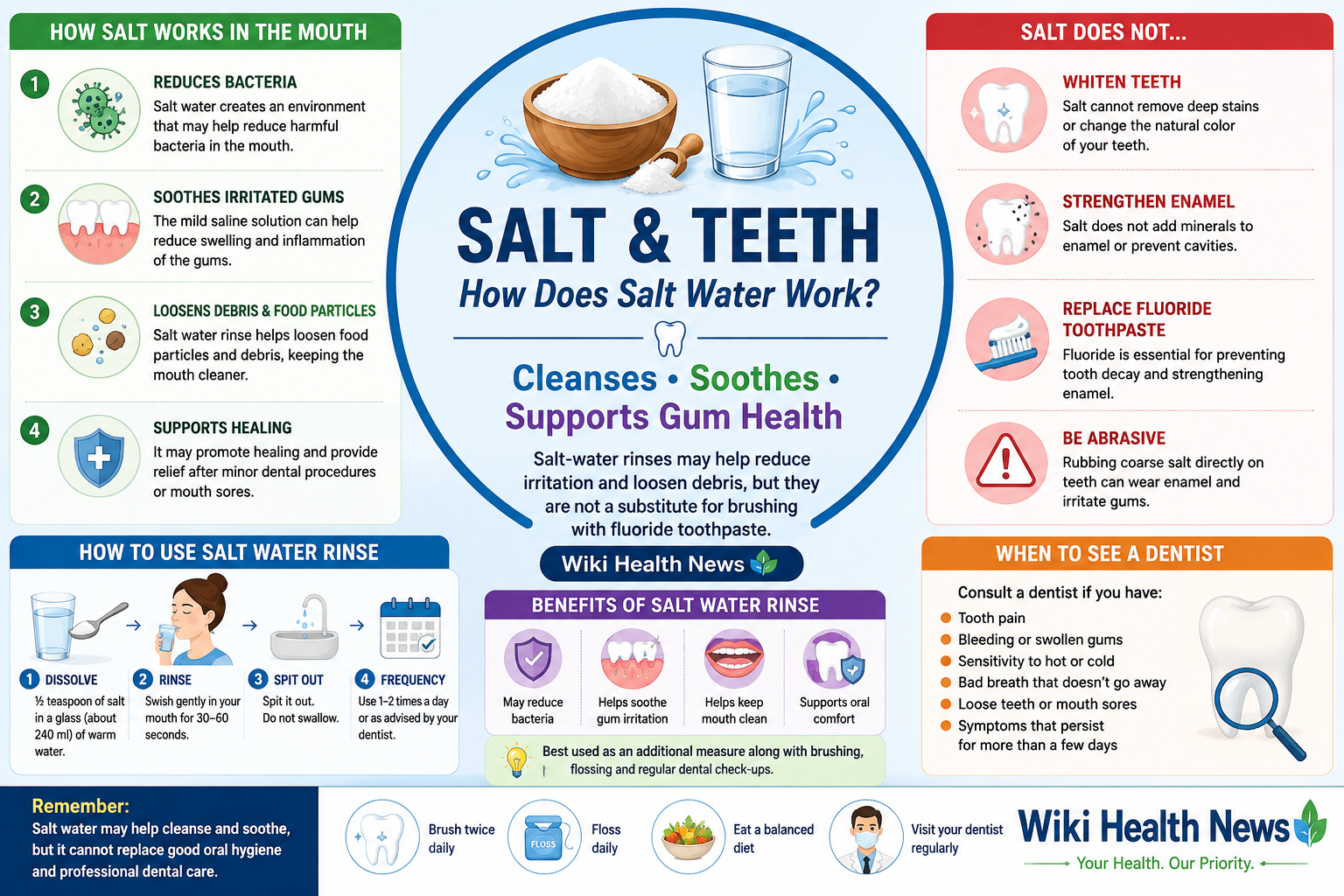
Salt has been used as a simple home remedy for oral discomfort for generations. Salt-water rinsing is commonly used to help keep the mouth clean, soothe irritated gums, and provide temporary relief after minor dental procedures. But how exactly does salt affect the teeth and gums, and is it safe to use regularly?
When salt dissolves in water, it creates a saline solution that can help loosen food particles and debris from the mouth. Rinsing with warm salt water may also help reduce swelling and irritation of the gums. Its cleansing action can be useful as an additional oral-hygiene measure, particularly when brushing or flossing is uncomfortable.
Good oral hygiene remains essential because dental plaque is a bacterial biofilm that can contribute to tooth decay and gum disease. Learn more about what forms dental plaque and how to prevent it on Wiki Health News. (wiki Health News)
However, salt is not a replacement for brushing with fluoride toothpaste. Fluoride plays an important role in preventing tooth decay and helping protect tooth enamel. The American Dental Association recommends brushing twice daily with fluoride toothpaste as part of routine oral care. For authoritative guidance, readers can visit the American Dental Association’s oral health resources.
Directly rubbing coarse salt onto the teeth may be abrasive and can irritate the gums if used excessively. Understanding the difference between a gentle salt-water rinse and applying salt directly to the teeth is therefore important.
This article explains how salt interacts with the mouth, its potential benefits, possible risks, and how to use a salt-water rinse safely.
“what forms dental plaque and how to prevent it” → Wiki Health News. (wiki Health News)
American Dental Association (ADA) → oral health guidance.
Author: Wiki Health News Editorial Team
Medical Reviewer: Dr. Sujit Kumar Sahu
Qualifications: MBBS, MD [Medicine], DrNB [Cardiology]
Affiliations: Apollo Hospitals, Chennai, India; KIMS-SS, BhubaneswarEditorial note: This article is intended for general health education and does not replace advice, diagnosis, or treatment from a qualified dental or medical professional.
References
- American Dental Association (ADA). Fluoride and Dental Health.
ADA – Fluoride - American Dental Association (ADA). Oral Health Topics.
ADA – Oral Health Topics - National Institute of Dental and Craniofacial Research (NIDCR). Oral Hygiene.
NIDCR – Oral Hygiene - NHS. How to Keep Your Teeth Clean.
NHS – How to Keep Your Teeth Clean - NHS. Dental Emergencies / Dental Abscess.
NHS – Dental Abscess and Urgent Dental Care - Mayo Clinic. Brushing Your Teeth: How Often and When?
Mayo Clinic – Brushing Your Teeth