Low Glycemic Index (GI) Diet
Low Glycemic Index (GI) Diet
Low Glycemic Index (GI) Diet: Foods, Benefits, Meal Planning and Health Guide
Low Glycemic Index (GI) Diet: An Evidence-Based Guide
The Low Glycemic Index (GI) Diet is an eating pattern that emphasizes carbohydrate-containing foods that produce a slower and more gradual rise in blood glucose. Rather than eliminating carbohydrates, the approach focuses on carbohydrate quality, fiber, portion size and overall meal composition.
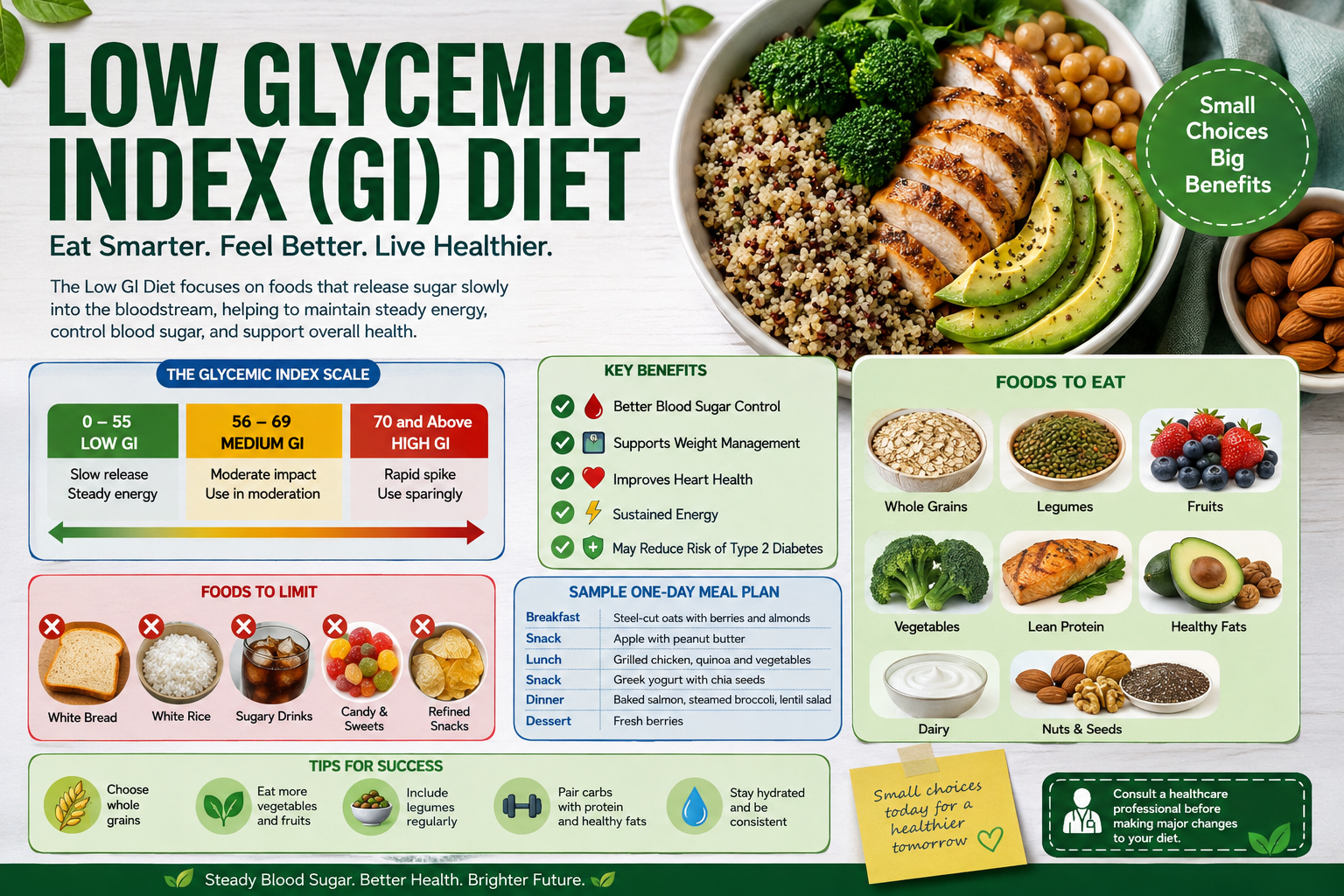
The glycemic index ranks carbohydrate-containing foods according to how quickly they raise blood glucose. A GI of 55 or below is generally considered low, 56–69 medium, and 70 or higher high. However, GI is not the only factor that determines the blood-glucose response to a meal. Portion size and the amount of carbohydrate consumed also matter, which is why glycemic load (GL) can provide additional information. (The Nutrition Source)
For readers interested in broader nutrition strategies, see the wiki Health News guide to a heart-healthy diet and the DASH Diet.
What Is the Glycemic Index?
The glycemic index is a measure of how rapidly and how much a carbohydrate-containing food raises blood glucose after eating. Foods that are digested and absorbed relatively quickly tend to have a higher GI, while foods containing more fiber or less processed carbohydrate may produce a slower response.
For example, minimally processed whole grains, legumes and many non-starchy vegetables generally fit well into a low-GI eating pattern. Highly refined carbohydrates such as white bread and many sugary foods can produce a faster rise in blood glucose. (The Nutrition Source)
Importantly, GI does not measure whether a food is healthy overall. A food can have a relatively low GI but still be high in calories, saturated fat or added sugar. Therefore, a healthy diet should emphasize overall nutritional quality rather than simply choosing foods based on a GI number.
Potential Benefits of a Low-GI Diet
1. Better Blood Sugar Control
Choosing lower-GI carbohydrate sources can help reduce rapid post-meal increases in blood glucose. This can be particularly useful for people managing diabetes or trying to improve overall glycemic control. Harvard’s Nutrition Source notes that low-GI foods are digested more slowly and can produce a more gradual increase in blood glucose. (The Nutrition Source)
A low-GI approach can complement, but does not replace, prescribed diabetes medications, glucose monitoring or medical advice.
2. Diabetes Prevention and Management
Dietary carbohydrate quality is important in diabetes prevention. Whole grains and fiber-rich foods tend to produce slower glucose absorption than many refined carbohydrate products. Research summarized by Harvard has associated higher-GI dietary patterns with increased type 2 diabetes risk, although diet quality involves many factors beyond GI alone. (The Nutrition Source)
For more information, readers can explore wiki Health News’ Diabetes Prevention: 10 Lifestyle Habits That Really Work.
3. Weight Management
Low-GI eating patterns may help with weight-management strategies when they encourage high-fiber, minimally processed foods and appropriate portions. Evidence suggests that reducing dietary GI can have benefits for weight-loss maintenance in some circumstances, but calorie intake, protein, physical activity, sleep and overall diet quality remain important. (The Nutrition Source)
4. Heart Health
A nutritious low-GI pattern can overlap with many principles of a heart-healthy diet: vegetables, fruits, legumes, whole grains, nuts, seeds and healthy unsaturated fats. A heart-healthy dietary pattern should also limit excess sodium, refined sugars, saturated fats and highly processed foods. (wiki Health News)
Best Low-GI Foods to Include
A practical low-GI diet can include:
- Legumes: lentils, chickpeas, beans and peas
- Whole grains: oats, barley and minimally processed whole grains
- Vegetables: leafy greens, broccoli, cauliflower, carrots and other non-starchy vegetables
- Fruits: apples, oranges, pears, berries and other whole fruits
- Nuts and seeds: almonds, walnuts, chia seeds and flaxseeds
- Protein foods: fish, eggs, tofu, beans, chicken and low-fat dairy
- Healthy fats: nuts, seeds, avocado and unsaturated vegetable oils
Legumes are particularly useful because they generally have a low GI and provide fiber and resistant starch. (The Nutrition Source)
Foods to Limit
A low-GI eating pattern generally limits foods that are highly refined or heavily processed, including:
- Sugary beverages
- Sweets and confectionery
- White bread and refined bakery products
- Highly processed breakfast cereals
- Large portions of refined rice or pasta
- Cakes, cookies and pastries
- Highly processed snack foods
This does not mean that every higher-GI food must be completely eliminated. Portion size and the overall meal matter.
Low-GI Indian Diet: Practical Choices
For an Indian-style diet, consider replacing refined carbohydrate choices with more fiber-rich alternatives. Examples include:
Breakfast: vegetable oats, besan chilla with vegetables, unsweetened curd with nuts, or a vegetable-based breakfast with a protein source.
Lunch: dal, vegetables, salad, curd and a moderate portion of whole-grain roti or another minimally processed grain.
Snack: whole fruit, roasted chana, nuts or unsweetened yogurt.
Dinner: vegetables with dal, fish, tofu, eggs or another lean protein source, accompanied by a controlled portion of whole grains.
Rice does not automatically have to be eliminated. GI varies according to rice variety, processing and preparation. Harvard notes that reported GI values for rice vary substantially, and processing can affect GI. (The Nutrition Source)
How to Lower the Glycemic Impact of a Meal
You can improve the overall glucose response of meals by combining carbohydrate foods with protein, fiber and healthy fats, choosing minimally processed foods and controlling portions.
For example, instead of eating a large bowl of refined rice alone, combine a smaller portion with dal, vegetables, salad and a protein source. This approach focuses on the complete meal rather than treating GI as a standalone number.
Cooking method, processing, food texture and ripeness can also influence GI. Highly processed or finely milled foods may be digested more rapidly than less processed versions. (The Nutrition Source)
GI vs. Glycemic Load: What Is the Difference?
Glycemic Index (GI) describes the relative effect of a carbohydrate-containing food on blood glucose.
Glycemic Load (GL) considers both the GI and the amount of available carbohydrate in a serving. Therefore, GL can sometimes provide a more practical picture of the effect of a typical portion. Harvard describes a GL of 10 or less as low, 11–19 as medium and 20 or more as high. (The Nutrition Source)
This distinction is important because a food with a moderate or high GI may still have a modest effect when eaten in a small portion.
Is a Low-GI Diet Suitable for Everyone?
A low-GI approach can be useful for many people, particularly those interested in improving carbohydrate quality or managing blood glucose. However, there is no single ideal diet for everyone.
People taking insulin or medicines that can cause hypoglycemia should discuss significant dietary changes with their healthcare professional because changing carbohydrate intake can affect medication requirements and glucose levels.
Pregnant women, children, older adults and people with kidney disease or other medical conditions may also need individualized dietary advice.
The Bottom Line
The Low Glycemic Index Diet is best understood as a strategy for choosing higher-quality carbohydrates, rather than a restrictive diet based entirely on GI numbers. Prioritize vegetables, legumes, whole or minimally processed grains, whole fruits, nuts, seeds and adequate protein while limiting sugary drinks and highly refined carbohydrates.
For long-term health, combine low-GI principles with appropriate portions, regular physical activity, adequate sleep and a balanced overall eating pattern. GI can be a useful tool, but overall diet quality remains more important than any single nutritional number. (The Nutrition Source)
Trusted References
- Harvard T.H. Chan School of Public Health — Carbohydrates and Blood Sugar / Glycemic Index. (The Nutrition Source)
- Harvard T.H. Chan School of Public Health — The Best Diet: Quality Counts. (The Nutrition Source)
- Harvard T.H. Chan School of Public Health — Simple Steps to Preventing Diabetes. (The Nutrition Source)
- Harvard T.H. Chan School of Public Health — Measuring the health value of carbohydrates. (Harvard Public Health)
- Foster-Powell K, Holt SHA, Brand-Miller JC. International tables of glycemic index and glycemic load values. American Journal of Clinical Nutrition. 2002;76:5–56. (The Nutrition Source)
Editorial transparency: This article is intended for health education and does not replace individualized medical or nutritional advice. For people with diabetes, medication-related dietary changes should be discussed with their healthcare professional.
Author: Medical Editor, wiki Health News-Dr. Sujit Kumar Sahu – Consultant Interventional Cardiologist
Medical Review: Dr. Sujit Kumar Sahu – Consultant Interventional Cardiologist
Last Updated: August 18, 2026
Content Type: Medical Health Education
Author: Medical Editor, wiki Health News-Dr. S.K.Sahu – Consultant Interventional Cardiologist
Medical Review: Dr. S.K.Sahu – Consultant Interventional Cardiologist
Last Updated: August 18, 2026