High-Fiber Diet-Benefits, Foods, and a Complete Guide for Better Health
High-Fiber Diet-Benefits, Foods, and a Complete Guide for Better Health
A high-fiber diet emphasizes foods rich in dietary fiber, a type of carbohydrate that the body cannot fully digest. Fiber supports digestive health, helps control blood sugar, lowers cholesterol, and promotes fullness, which can aid in weight management.


Benefits of a high-fiber diet
- Improves digestion and helps prevent constipation
- Supports heart health by lowering LDL (“bad”) cholesterol
- Helps regulate blood sugar levels
- Promotes healthy gut bacteria
- May help with weight management by increasing satiety
- May reduce the risk of colorectal cancer and other chronic diseases
High-fiber foods
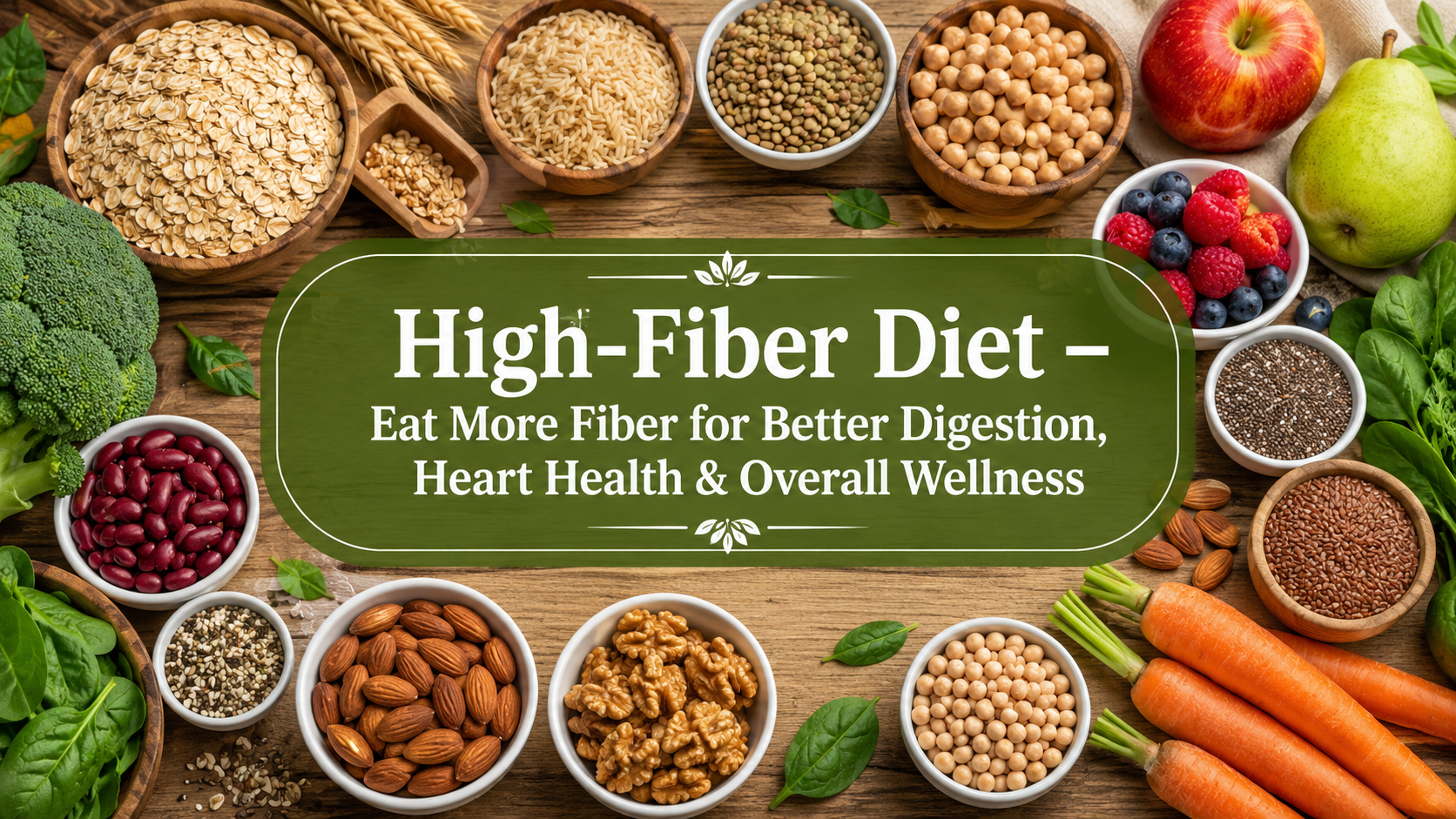
- Whole grains: Oats, brown rice, barley, quinoa, whole wheat bread
- Legumes: Lentils, black beans, chickpeas, kidney beans
- Fruits: Apples (with skin), pears, berries, oranges
- Vegetables: Broccoli, carrots, Brussels sprouts, sweet potatoes
- Nuts and seeds: Chia seeds, flaxseeds, almonds, pistachios
Daily fiber recommendations
- Women: About 25 grams/day
- Men: About 38 grams/day
- Adults over age 50 may need slightly less (about 21 g/day for women and 30 g/day for men).
Tips for increasing fiber
- Increase fiber gradually over several weeks.
- Drink plenty of water to help fiber work effectively.
- Choose whole fruits instead of fruit juice.
- Replace refined grains with whole grains.
- Add beans or lentils to soups, salads, and main dishes.
- Snack on nuts, seeds, or fresh fruit instead of processed snacks.
Sample one-day high-fiber menu
- Breakfast: Oatmeal topped with berries and chia seeds
- Snack: An apple and a handful of almonds
- Lunch: Lentil soup with a whole-grain roll and a mixed green salad
- Snack: Carrot sticks with hummus
- Dinner: Grilled salmon, quinoa, and roasted broccoli
- Dessert: Fresh pear
Aim to reach your fiber goal gradually to minimize gas or bloating. If you have digestive conditions such as inflammatory bowel disease, bowel narrowing, or recent gastrointestinal surgery, consult your healthcare provider before making major changes to your fiber intake.
High-Fiber Diet: Benefits, Best Foods, and How to Add More Fiber to Your Diet
A high-fiber diet is an eating pattern that emphasizes vegetables, fruits, whole grains, legumes, nuts, and seeds. Dietary fiber is a type of carbohydrate that is not completely digested by the body. Although it passes through the digestive system largely intact, fiber has important effects on digestion, cholesterol, blood sugar, appetite, and the health of the gut microbiome.
For most adults, increasing dietary fiber is a simple and effective way to improve overall nutrition and support long-term health.
What Is Dietary Fiber?
Dietary fiber is mainly found in plant foods and is broadly divided into soluble and insoluble fiber. Soluble fiber dissolves in water and forms a gel-like substance in the digestive tract. It can help slow digestion and may help reduce LDL cholesterol and control blood glucose. Insoluble fiber adds bulk to stool and helps promote regular bowel movements.
Many foods contain both types of fiber, so eating a variety of plant foods is the best approach.
Health Benefits of a High-Fiber Diet
1. Supports Digestive Health
Fiber increases stool bulk and helps maintain regular bowel movements. Adequate fiber, together with sufficient fluid intake, can help prevent constipation. Certain fibers are also fermented by beneficial gut bacteria, supporting a healthier intestinal environment.
2. Helps Protect Heart Health
Soluble fiber can contribute to lower LDL cholesterol levels. Replacing foods high in saturated fat and refined carbohydrates with fiber-rich foods such as oats, beans, fruits, vegetables, and whole grains can therefore be part of a heart-healthy eating pattern.
3. Helps Control Blood Sugar
Fiber-rich foods generally take longer to digest than refined carbohydrates. This can reduce rapid rises in blood glucose after meals. Legumes, whole grains, vegetables, and whole fruits are particularly useful choices.
4. Supports Healthy Weight Management
High-fiber foods often provide greater fullness for fewer calories. Vegetables, fruits, beans, lentils, and whole grains can help people feel satisfied after meals and may make it easier to maintain a healthy calorie intake.
5. Supports the Gut Microbiome
Some types of fiber are fermented by intestinal bacteria, producing compounds that can support intestinal health. Eating a diverse range of plant foods helps provide different types of fiber and other beneficial plant compounds.
Best High-Fiber Foods
| Food group | Examples |
|---|---|
| Whole grains | Oats, barley, brown rice, quinoa, whole-wheat products |
| Legumes | Lentils, chickpeas, kidney beans, black beans |
| Fruits | Apples, pears, oranges, berries, guava |
| Vegetables | Broccoli, carrots, peas, Brussels sprouts, sweet potatoes |
| Nuts | Almonds, pistachios, walnuts |
| Seeds | Chia, flax, sunflower and pumpkin seeds |
How Much Fiber Do You Need?
Fiber requirements vary with age and sex. A commonly used target is approximately 25 grams per day for women and 38 grams per day for men, although individual needs can differ.
Instead of trying to reach a high target immediately, increase fiber gradually. A sudden large increase may cause gas, abdominal discomfort, or bloating.
How to Increase Fiber Safely
Start the day with oatmeal or another whole-grain breakfast. Add beans or lentils to soups, curries, salads, or rice dishes. Choose whole fruit instead of fruit juice and leave edible fruit skins on when appropriate. Replace refined grains with whole grains and include vegetables with lunch and dinner.
Adequate water intake is also important because fiber absorbs water and works best when the diet contains sufficient fluids.
A Simple High-Fiber Day
Breakfast: Oatmeal with berries, chia seeds, and nuts.
Lunch: Lentil or chickpea curry with brown rice and a vegetable salad.
Snack: An apple, pear, or guava with a small handful of nuts.
Dinner: Mixed vegetables with beans, whole-grain roti, or quinoa.
Conclusion
A high-fiber diet is an important component of a balanced, heart-healthy eating pattern. Regularly consuming whole grains, legumes, vegetables, fruits, nuts, and seeds can support digestion, cholesterol management, blood sugar control, satiety, and gut health. The most sustainable approach is to increase fiber gradually while maintaining adequate hydration and choosing a wide variety of minimally processed plant foods.
People with certain gastrointestinal conditions or a history of bowel narrowing should discuss major dietary changes with a healthcare professional.
High-Fiber Diet — FAQs, Author Details, References & Internal Links
30 Frequently Asked Questions About a High-Fiber Diet
1. What is a high-fiber diet?
A high-fiber diet emphasizes plant foods such as vegetables, fruits, legumes, whole grains, nuts, and seeds. It provides substantial amounts of dietary fiber to support digestive and metabolic health.
2. How much fiber should adults eat daily?
A commonly used target is about 25 grams per day for women and 38 grams per day for men, although individual requirements vary according to age, sex, and overall diet.
3. What are the main benefits of eating more fiber?
Fiber can support bowel regularity, help maintain healthy cholesterol levels, improve fullness after meals, support blood-glucose control, and promote a healthy gut microbiome.
4. Which foods are highest in fiber?
Excellent sources include beans, lentils, chickpeas, oats, barley, whole grains, berries, pears, guava, vegetables, nuts, and seeds.
5. Is fiber good for heart health?
Yes. Soluble fiber can help reduce LDL cholesterol. A diet rich in fiber-containing plant foods can therefore form part of an overall heart-healthy dietary pattern.
6. Can a high-fiber diet lower cholesterol?
Increasing soluble fiber may help lower LDL cholesterol. Oats, barley, beans, lentils, fruits, and some seeds are useful sources.
7. Does fiber help with weight loss?
Fiber-rich foods can increase feelings of fullness and may help people consume fewer calories. However, weight management depends on the overall dietary pattern and energy balance.
8. Is fiber good for constipation?
Yes. Adequate fiber can increase stool bulk and improve bowel regularity. Fluid intake should also be adequate.
9. Can too much fiber cause gas?
Yes. Rapidly increasing fiber can cause gas, bloating, or abdominal discomfort. Increasing fiber gradually can reduce these symptoms.
10. Should I drink more water when increasing fiber?
Generally, yes. Adequate fluid helps fiber move through the digestive tract and can reduce constipation.
11. Are fruits high in fiber?
Many fruits provide useful amounts of fiber. Apples, pears, berries, oranges, guava, and other whole fruits are good choices.
12. Is fruit juice a good source of fiber?
Whole fruit is generally preferable because juicing removes much of the fiber while retaining naturally occurring sugars.
13. Are vegetables high in fiber?
Yes. Broccoli, peas, carrots, Brussels sprouts, sweet potatoes, and many leafy and other vegetables contribute fiber.
14. Are beans a good source of fiber?
Yes. Beans, chickpeas, peas, and lentils are among the most useful dietary sources of fiber and also provide plant protein.
15. Are oats high in fiber?
Yes. Oats provide soluble fiber, including beta-glucan, which has been studied for its effects on cholesterol.
16. Is brown rice better than white rice for fiber?
Brown rice generally contains more fiber because it retains more of the grain’s outer layers. Whole grains can therefore be useful when increasing dietary fiber.
17. Are nuts high in fiber?
Many nuts contain fiber as well as unsaturated fats, protein, vitamins, and minerals. Almonds and pistachios are examples of fiber-containing nuts.
18. Are chia seeds a good source of fiber?
Yes. Chia seeds contain a substantial amount of dietary fiber and can be added to oatmeal, yogurt, smoothies, or other foods.
19. Are flaxseeds high in fiber?
Yes. Flaxseeds provide dietary fiber and can be incorporated into cereals, yogurt, smoothies, and baked foods.
20. Can fiber help control blood sugar?
Fiber-rich foods, particularly those containing soluble and viscous fiber, can slow digestion and carbohydrate absorption. This may help support better blood-glucose control.
21. Can a high-fiber diet reduce the risk of diabetes?
Higher intake of fiber-rich foods, especially whole grains and other minimally processed plant foods, is associated with better metabolic health. However, fiber alone cannot prevent diabetes.
22. What is soluble fiber?
Soluble fiber dissolves in water and can form a gel-like substance in the digestive tract. Oats, barley, beans, lentils, and some fruits contain soluble fiber.
23. What is insoluble fiber?
Insoluble fiber does not dissolve readily in water and helps add bulk to stool. Whole grains, vegetables, and many fruits provide insoluble fiber.
24. Should fiber intake be increased suddenly?
No. Gradually increasing fiber is usually more comfortable and may reduce gas and bloating.
25. Can children eat a high-fiber diet?
Children should consume age-appropriate amounts of fiber as part of a balanced diet. Fruits, vegetables, whole grains, beans, and other plant foods are appropriate sources.
26. Is a high-fiber diet suitable for older adults?
Yes, provided it is appropriate for the individual’s health and digestive condition. Adequate fluids and gradual dietary changes are particularly important.
27. Can fiber help gut bacteria?
Certain fibers act as substrates for beneficial intestinal microorganisms. Eating a variety of plant foods can provide different types of fermentable fiber.
28. Can people with digestive problems eat a high-fiber diet?
It depends on the condition. Some gastrointestinal disorders may require temporary or individualized fiber adjustments. Anyone with significant digestive symptoms should seek medical advice before making major dietary changes.
29. What is the easiest way to increase fiber?
Add one fiber-rich food at a time: oatmeal at breakfast, beans or lentils at lunch, vegetables at dinner, and whole fruit or nuts as snacks.
30. What is the healthiest high-fiber diet?
The healthiest approach is usually a varied diet based on minimally processed plant foods, including vegetables, fruits, legumes, whole grains, nuts, and seeds, combined with adequate hydration and an overall balanced nutritional pattern.
Author Details
Author: Dr. S.K.Sahu
Professional designation: [MD/MBBS/DrNB]
Specialty: [Cardiology]
Affiliation: [Femelife Hospital/ Apollo Hospitals, Chennai]
Location: [Chennai]/India]
Medical review: [Dr.Nabaneeta Padhy]
Last reviewed: August 2026
Editorial note: Author credentials, affiliations, registration numbers, and reviewer information should be replaced with verified details before publication. Do not publish placeholder credentials.
Yes. I’ve converted the references into clickable links to the original or authoritative sources. Note that the 2020–2025 Dietary Guidelines are now a previous edition; the current U.S. Dietary Guidelines are 2025–2030, but your cited 2020–2025 edition remains available from the official site. (Dietary Guidelines)
References — High-Fiber Diet
- U.S. Department of Agriculture and U.S. Department of Health and Human Services. Dietary Guidelines for Americans, 2020–2025. 9th Edition. December 2020.
Dietary Guidelines for Americans, 2020–2025 — Official USDA/HHS publication - National Academies of Sciences, Engineering, and Medicine. Dietary Reference Intakes for Energy, Carbohydrate, Fiber, Fat, Fatty Acids, Cholesterol, Protein, and Amino Acids. National Academies Press, 2005.
National Academies Press — Dietary Reference Intakes collection - Reynolds A, Mann J, Cummings J, Winter N, Mete E, Te Morenga L. Carbohydrate quality and human health: a series of systematic reviews and meta-analyses. The Lancet. 2019;393(10170):434–445.
The Lancet — Carbohydrate quality and human health - Anderson JW, Baird P, Davis RH, et al. Health benefits of dietary fiber. Nutrition Reviews. 2009;67(4):188–205.
Nutrition Reviews — Health benefits of dietary fiber
PubMed — Health benefits of dietary fiber - Slavin JL. Dietary fiber and body weight. Nutrition. 2005;21(3):411–418. doi:10.1016/j.nut.2004.08.018.
PubMed — Dietary fiber and body weight - Brown L, Rosner B, Willett WW, Sacks FM. Cholesterol-lowering effects of dietary fiber: a meta-analysis. The American Journal of Clinical Nutrition. 1999;69(1):30–42. doi:10.1093/ajcn/69.1.30.
The American Journal of Clinical Nutrition — Cholesterol-lowering effects of dietary fiber - World Health Organization. Healthy Diet. Updated January 26, 2026.
World Health Organization — Healthy Diet - Harvard T.H. Chan School of Public Health, The Nutrition Source. Fiber.
Harvard T.H. Chan School of Public Health — Fiber
Recommended Reference-Link Format for WordPress
- Dietary Guidelines for Americans, 2020–2025 — link the title directly to the official Dietary Guidelines website.
- Dietary Reference Intakes — link to National Academies Press.
- Reynolds et al., The Lancet — link to the journal article.
- Anderson et al., Nutrition Reviews — link to PubMed or the journal.
- Slavin, Dietary fiber and body weight — link to PubMed.
- Brown et al., American Journal of Clinical Nutrition — link to the original journal article.
- WHO Healthy Diet — link to the current WHO fact sheet.
- Harvard Nutrition Source: Fiber — link to Harvard’s educational resource.
Suggested Citation Note
References last reviewed: August 2026. Links should be periodically checked because publishers and government websites may update or relocate documents.
Important Editorial Update
The U.S. Dietary Guidelines for Americans, 2020–2025 cited above is no longer the current U.S. edition. The official Dietary Guidelines website states that the 2025–2030 Dietary Guidelines for Americans is the current edition. For a newly published article, consider citing the current edition alongside the 2020–2025 document where historically appropriate. (Dietary Guidelines)