What Is Cancer? A Simple Guide for Patients
What Is Cancer? A Simple Guide for Patients
Cancer is one of the most widely recognized health conditions, but the word “cancer” describes many different diseases rather than one single illness. Cancers can develop in almost any part of the body and differ in how quickly they grow, how they spread and how they respond to treatment.
What Is Cancer?
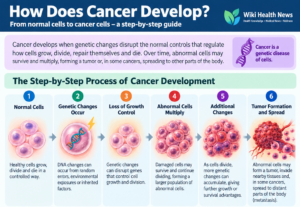
Cancer develops when cells acquire changes in their DNA that cause them to grow or divide abnormally. Normally, the body carefully controls cell growth, division and cell death. When these controls become disrupted, abnormal cells may continue multiplying when they should stop.
Some abnormal cells remain localized. Others can invade surrounding tissues or travel to distant parts of the body through the bloodstream or lymphatic system. This spread is called metastasis.
How Does Cancer Develop?
Cancer usually develops gradually as cells accumulate genetic changes. These changes can affect genes responsible for controlling cell growth, DNA repair and cell death.
Some genetic changes are inherited from a parent, while others develop during a person’s lifetime. Environmental exposures, lifestyle factors, infections and random changes that occur as cells divide can all contribute to cancer development.
What Is a Tumor?
A tumor is an abnormal mass of tissue caused by excessive cell growth. Tumors may be benign or malignant.
| Benign Tumor | Malignant Tumor |
|---|---|
| Usually does not invade nearby tissues | Can invade surrounding tissues |
| Does not normally spread to distant organs | Can spread to distant organs |
| May still cause symptoms depending on its size and location | Can interfere with normal organ function |
Not all cancers form solid tumors. Leukemia, for example, is a cancer of blood-forming tissues and generally does not produce a typical solid tumor.
Common Types of Cancer
Cancer can arise in almost any tissue or organ. Some commonly diagnosed cancers include:
- Breast cancer
- Lung cancer
- Colorectal cancer
- Prostate cancer
- Cervical cancer
- Skin cancer
- Oral cancer
- Liver cancer
- Stomach cancer
- Pancreatic cancer
- Kidney cancer
- Bladder cancer
- Thyroid cancer
- Leukemia
- Lymphoma
- Multiple myeloma
What Causes Cancer?
There is usually no single cause of cancer. Cancer risk can be influenced by a combination of genetic, environmental and lifestyle factors.
Important Risk Factors Include:
- Tobacco use
- Excessive alcohol consumption
- Overweight and obesity
- Physical inactivity
- Some infections, including certain types of HPV and hepatitis viruses
- Excessive exposure to ultraviolet radiation
- Certain occupational or environmental exposures
- Family history and inherited genetic mutations
- Increasing age
What Are the Symptoms of Cancer?
Cancer symptoms vary considerably depending on the type and location of the disease. Some cancers may cause symptoms early, while others may remain unnoticed until they become more advanced.
Possible warning signs include:
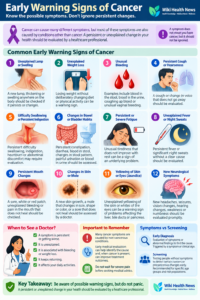
- An unexplained lump or swelling
- Unexplained weight loss
- Persistent or unexplained fatigue
- Unusual bleeding or discharge
- A persistent cough or change in voice
- Persistent difficulty swallowing
- Changes in bowel or bladder habits
- A sore that does not heal
- Persistent or unexplained pain
- Changes in a mole or other skin lesion
These symptoms do not necessarily mean that a person has cancer. Many have other, more common causes. However, persistent or unexplained symptoms should be discussed with a healthcare professional.
How Is Cancer Diagnosed?
Doctors use different tests depending on the suspected cancer. Evaluation may include:
- Medical history and physical examination
- Blood and urine tests
- Ultrasound
- CT scans
- MRI scans
- PET or PET-CT scans
- Endoscopic examinations
- Biopsy
- Pathology and molecular testing
A biopsy is often important because it allows a pathologist to examine cells or tissue under a microscope and determine whether cancer is present. Additional testing may help identify the cancer subtype and guide treatment.
What Are the Stages of Cancer?
Cancer staging describes how extensive a cancer is in the body. For many solid tumors, staging considers factors such as the size or extent of the primary tumor, involvement of nearby lymph nodes and spread to distant organs.
The exact staging system varies by cancer type. In many cancers, stages are broadly described from Stage I through Stage IV, although the details differ between cancers.
How Is Cancer Treated?
Cancer treatment depends on the type of cancer, stage, molecular characteristics, overall health and individual circumstances.
Common treatment approaches include:
- Surgery: Removal of the cancer when appropriate.
- Radiation therapy: Uses high-energy radiation to destroy or control cancer cells.
- Chemotherapy: Uses medicines that target rapidly dividing cancer cells.
- Targeted therapy: Targets specific molecular changes involved in cancer growth.
- Immunotherapy: Helps the immune system recognize and attack cancer cells.
- Hormone therapy: Used for certain cancers that depend on hormones for growth.
- Stem-cell transplantation: Used in selected blood cancers and other conditions.
Some patients receive a combination of treatments. Cancer care is increasingly personalized according to the biology of the individual cancer.
Can Cancer Be Prevented?
Not all cancers can be prevented, but many cancer cases may be reduced by addressing modifiable risk factors.
- Avoid tobacco in all forms.
- Limit alcohol consumption.
- Maintain a healthy body weight.
- Stay physically active.
- Eat a balanced diet rich in vegetables, fruits, whole “`
🔗 Related Cancer Information
Cancer risk can be influenced by genetic, environmental and lifestyle factors. Read more about Cancer Risk Factors and ways to reduce your risk.
Common warning signs are discussed in our detailed guide to Early Warning Signs of Cancer .
Learn more about recommended Cancer Screening Tests and how screening differs from diagnostic testing.
If cancer is suspected, doctors may use imaging, laboratory tests and biopsy. Read our guide to Cancer Diagnosis .
Cancer treatment may include surgery, radiation therapy, chemotherapy, immunotherapy and targeted therapy. Learn more about Cancer Treatment Options .
Many cancer risks can be reduced through evidence-based lifestyle and public-health measures. See our guide to Cancer Prevention .
📚 References & Trusted Sources
- World Health Organization (WHO). Cancer. WHO Cancer Fact Sheet .
- National Cancer Institute (NCI). What Is Cancer? National Cancer Institute .
- National Cancer Institute (NCI). Understanding Cancer. NCI Cancer Information .
- World Health Organization (WHO). Cancer Prevention, Early Detection and Treatment. WHO Cancer Prevention and Treatment .
- National Cancer Institute (NCI). Cancer Screening Overview. NCI Screening Information .