How does cancer develop
How Does Cancer Develop? A Simple Guide for Patients
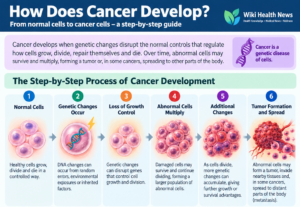
Our body is made up of trillions of cells. Normally, cells grow, divide and die in a carefully controlled manner. This allows tissues and organs to maintain their normal structure and function.
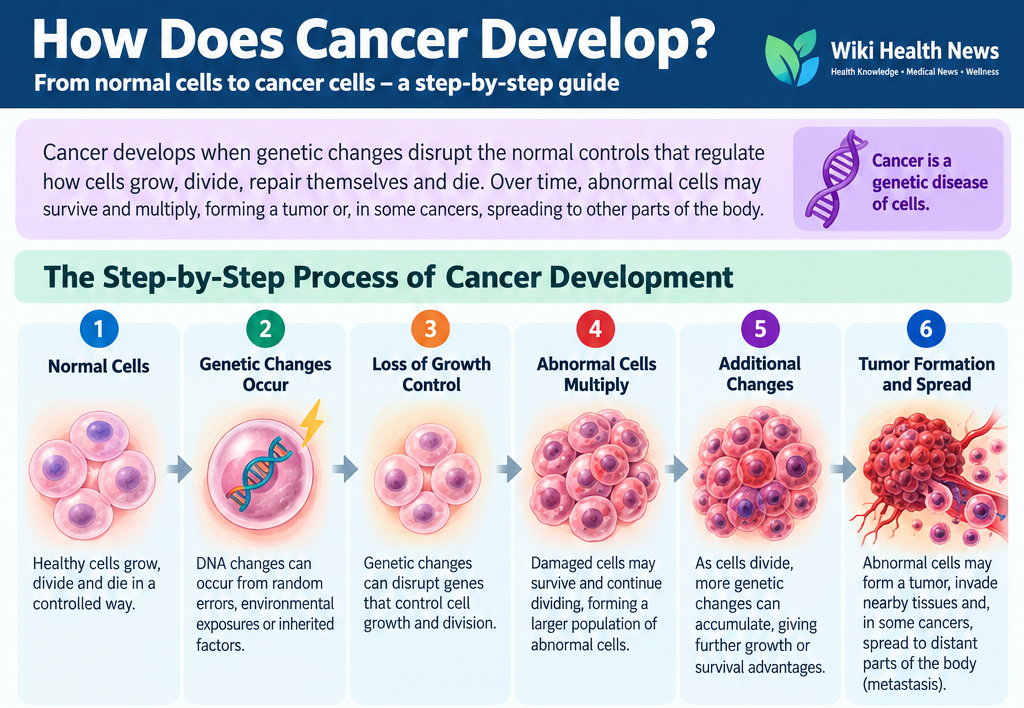
Cancer develops when this carefully regulated system becomes disrupted. The changes usually involve genes that control cell growth, cell division, DNA repair and cell survival. Cancer is therefore often described as a genetic disease of cells, although this does not mean that every cancer is inherited from parents.
How Do Normal Cells Behave?
Healthy cells follow signals that tell them when to grow, divide, perform their specialized function and eventually die. Damaged cells are often repaired or removed by the body’s natural control systems.
These controls are important because uncontrolled cell growth can damage the normal organization and function of tissues.
How Does Cancer Develop Step by Step?
Changes can occur in the DNA of a cell. Some arise from natural errors during cell division, some result from exposure to cancer-causing agents, and some are inherited from a parent.
Certain genetic changes can affect genes responsible for controlling cell growth and division. The cell may begin receiving signals to grow when it should not.
Some genetic changes can interfere with mechanisms that normally remove damaged or abnormal cells. These cells may survive longer than they should.
As abnormal cells continue dividing, they may produce a larger population of cells carrying cancer-associated changes.
Cancer development is usually a multistep process. As cells divide, additional genetic changes can accumulate, giving some cells further growth or survival advantages.
In many solid cancers, abnormal cells can form a mass called a tumor. Tumors may be benign or malignant. A malignant tumor has the ability to invade surrounding tissues and potentially spread to distant sites.
What Genetic Changes Can Cause Cancer?
Several important groups of genes can be involved in cancer development. The National Cancer Institute identifies proto-oncogenes, tumor suppressor genes and DNA repair genes as major categories involved in cancer-related genetic changes.
| Gene Type | Normal Role | What Can Happen in Cancer? |
|---|---|---|
| Proto-oncogenes | Help regulate normal cell growth and division. | Certain alterations can turn them into oncogenes that promote excessive cell growth or survival. |
| Tumor suppressor genes | Help slow cell growth, repair abnormalities or prevent inappropriate cell division. | Loss or inactivation of these controls can allow abnormal cells to grow unchecked. |
| DNA repair genes | Help identify and repair DNA damage. | Defects can allow additional genetic changes to accumulate. |
Where Do Cancer-Causing Genetic Changes Come From?
Genetic changes associated with cancer can arise in several ways. They are not all inherited.
1. Random Errors During Cell Division
Whenever cells divide, their DNA must be copied. Occasionally, mistakes occur during this process. Some of these changes may contribute to cancer if they affect important genes.
2. Environmental Exposures
Some environmental agents can damage DNA or otherwise contribute to cancer development. Examples include tobacco smoke and ultraviolet radiation. Other carcinogenic exposures include certain chemicals and forms of radiation.
3. Inherited Genetic Changes
Some people inherit a genetic change that increases their risk of developing particular cancers. However, inheriting a cancer-related gene change does not mean that cancer will definitely develop.
Most cancer-causing genetic changes occur during a person’s lifetime rather than being inherited.
4. Certain Infections
Some infections can contribute to cancer development. Examples include certain types of human papillomavirus (HPV), hepatitis B virus, hepatitis C virus and Helicobacter pylori.
Why Does Cancer Risk Increase With Age?
Cancer risk generally increases with age because cells have had more time to accumulate genetic changes and because some cellular repair mechanisms become less effective with aging.
This does not mean that cancer is inevitable with aging. Many older adults never develop cancer, and cancer can also occur in younger people.
The accumulation of genetic changes over time is one reason that cancer is more common in older populations.
Can Abnormal Cells Become Cancer Before a Tumor Forms?
Yes. In some tissues, cells may pass through abnormal stages before an invasive cancer develops.
Two terms that patients may encounter are hyperplasia and dysplasia.
- Hyperplasia: An increase in the number of cells, which may still appear relatively normal under a microscope.
- Dysplasia: Cells become abnormal in appearance and organization. Some forms of dysplasia can increase the risk of developing cancer, although not every dysplastic change becomes cancer.
- Carcinoma in situ: Abnormal cells remain confined to their original tissue layer and have not invaded nearby tissue. Some forms may progress to invasive cancer if untreated.
The sequence and significance of these changes vary according to the type of tissue and cancer.
How Does Cancer Spread?
Some cancers can invade nearby tissues and spread to distant parts of the body. This process is called metastasis.
Cancer cells may enter blood vessels or lymphatic vessels, travel to another part of the body and establish new areas of cancer growth.
Can the Immune System Prevent Cancer?
The immune system can recognize and eliminate many abnormal cells. However, some cancer cells develop ways to avoid immune detection or interfere with immune responses.
This understanding has helped scientists develop immunotherapy, a group of treatments designed to help the immune system recognize or attack cancer cells more effectively.
Does One DNA Mutation Cause Cancer?
Usually, cancer development involves multiple genetic and cellular changes rather than a single mutation. As abnormal cells multiply, additional changes can accumulate and produce progressively different populations of cells within a tumor.
This process is one reason cancers can be biologically complex and why two people with the same broad cancer diagnosis may have tumors with different molecular characteristics.
Can Cancer Development Be Prevented?
Not all cancers can be prevented. However, avoiding certain modifiable risk factors can reduce the risk of several cancers.
- Avoid tobacco use.
- Maintain a healthy body weight.
- Stay physically active.
- Follow a balanced diet.
- Limit or avoid alcohol.
- Protect skin from excessive ultraviolet radiation.
- Follow appropriate vaccination recommendations, including HPV and hepatitis B vaccination when indicated.
- Participate in recommended cancer screening programs.
WHO estimates that a substantial proportion of cancers can be prevented through evidence-based prevention strategies and reduction of established risk factors.
Key Takeaway
Cancer develops through a multistep process. Genetic changes can disrupt normal controls over cell growth, division, DNA repair and cell death. These changes may arise spontaneously during cell division, from environmental exposures, from certain infections or from inherited genetic factors. Additional changes can accumulate over time, allowing abnormal cells to survive, multiply, invade nearby tissues and, in some cancers, spread to distant organs.
📚 References & Trusted Sources
- National Cancer Institute (NCI). What Is Cancer? NCI — What Is Cancer? .
- National Cancer Institute (NCI). The Genetics of Cancer. NCI — The Genetics of Cancer .
- National Cancer Institute (NCI). Cancer Prevention Overview. NCI — Cancer Prevention .
- World Health Organization (WHO). Cancer. WHO — Cancer Fact Sheet .
- World Health Organization. Preventing and Treating Cancer. WHO — Preventing and Treating Cancer .
- National Cancer Institute (NCI). How Genetic Changes Lead to Cancer. NCI — Genetic Changes and Cancer .

Medical Disclaimer: This article is intended for general patient education and does not replace consultation with a qualified healthcare professional. If you have persistent symptoms, an abnormal test result or concerns about cancer, consult your doctor for individualized evaluation and advice.