Early Warning Signs of Cancer
Early Warning Signs of Cancer: Symptoms You Should Know
Cancer does not always cause obvious symptoms in its early stages. When symptoms do occur, they vary according to the type of cancer, where it develops and how it affects surrounding tissues.
Some symptoms may be caused by common conditions such as infections, inflammation, benign tumors or other illnesses. Therefore, a symptom does not mean that a person has cancer. However, persistent or unexplained symptoms should be discussed with a healthcare professional. The National Cancer Institute advises medical evaluation when symptoms do not improve after a couple of weeks. :contentReference[oaicite:1]{index=1}
Why Is It Important to Recognize Warning Signs?
Early diagnosis means identifying cancer after symptoms have appeared but before the disease becomes more advanced. WHO notes that early diagnosis can improve the chance of successful treatment and reduce delays in care. :contentReference[oaicite:2]{index=2}
Common Early Warning Signs of Cancer
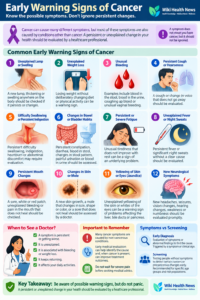
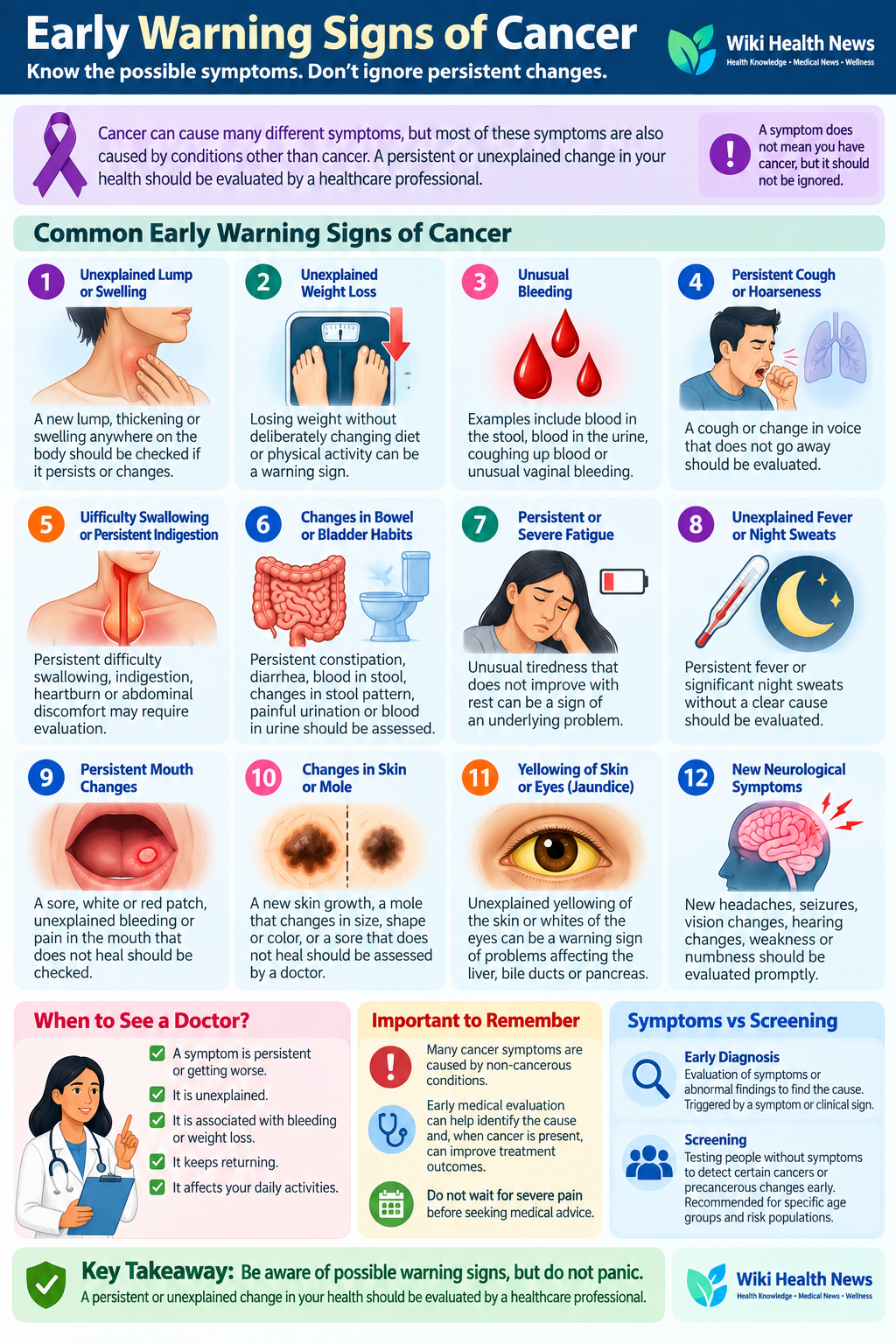
A new lump, thickening or swelling anywhere on the body should be evaluated if it persists or changes. Examples include a breast lump, a lump in the neck or armpit, or a persistent swelling elsewhere.
Losing weight without deliberately changing diet or physical activity can have many causes. Persistent unexplained weight loss should be evaluated, particularly when accompanied by other symptoms.
Unexpected bleeding can occur with many conditions. Examples that warrant medical assessment include blood in the stool, blood in the urine, coughing up blood, unusual vaginal bleeding or unexpected nipple discharge.
A cough or change in voice that does not go away should be evaluated, especially when it is persistent, recurrent or associated with other symptoms such as coughing up blood or unexplained weight loss.
Persistent difficulty swallowing, unexplained indigestion, heartburn, abdominal discomfort or a continuing feeling of fullness may require medical evaluation.
Changes such as persistent constipation, diarrhea, blood in the stool, changes in stool pattern, painful urination, difficulty urinating or blood in the urine should be assessed when unexplained or persistent.
Severe fatigue that persists despite adequate rest can have many causes, including anemia, infection, sleep disorders, metabolic conditions and cancer. Persistent unexplained fatigue deserves medical evaluation.
Persistent fever or significant night sweats without an obvious cause can occur with infections and other illnesses, but they can also occur with certain cancers. Persistent symptoms should be evaluated.
A sore, ulcer, white or red patch, unexplained bleeding, pain or numbness in the mouth that does not heal should be assessed, particularly in people with tobacco, alcohol or other relevant risk factors.
A new skin growth, a sore that does not heal, or a change in the size, shape, color or appearance of an existing mole should be checked by a healthcare professional.
Jaundice, which causes yellowing of the skin or whites of the eyes, can have many causes. It may occur with diseases affecting the liver, bile ducts, pancreas or blood and requires medical assessment.
New headaches, seizures, vision changes, hearing changes, weakness or other neurological symptoms have many possible causes. New or persistent neurological symptoms should be evaluated promptly.
Warning Signs by Body System
| Body Area | Possible Warning Signs |
|---|---|
| Breast | New lump, thickening, skin changes, nipple changes or unusual discharge. |
| Mouth | Persistent ulcer, white or red patch, unexplained bleeding, pain or numbness. |
| Lungs | Persistent cough, hoarseness, coughing up blood or unexplained shortness of breath. |
| Digestive system | Persistent indigestion, difficulty swallowing, abdominal symptoms, bowel habit changes or blood in stool. |
| Urinary system | Blood in urine, persistent urinary symptoms or unexplained changes in urination. |
| Skin | New growth, changing mole or sore that does not heal. |
| General | Unexplained weight loss, persistent fatigue, fever or night sweats. |
When Should You See a Doctor?
Consider medical evaluation when a symptom is:
- Persistent or getting worse.
- Unexplained by an obvious cause.
- Associated with bleeding.
- Associated with unexplained weight loss.
- Associated with a persistent lump or swelling.
- Repeatedly returning without a clear explanation.
- Significantly affecting eating, swallowing, breathing, bowel, bladder or daily activities.
Does Pain Always Occur With Cancer?
No. Cancer does not always cause pain, particularly during its early stages. This is one reason that a person should not wait for pain before seeking medical advice about a persistent unexplained change.
Pain can occur with some cancers, particularly when a tumor affects nearby tissues, nerves or organs. The presence or absence of pain cannot by itself determine whether cancer is present.
Symptoms Are Not the Same as Screening
It is important to distinguish early diagnosis from cancer screening.
| Early Diagnosis | Screening |
|---|---|
| Evaluation of a person who has symptoms or signs that could indicate disease. | Testing people who generally have no symptoms to detect certain cancers or precancerous changes. |
| Triggered by an abnormal symptom or clinical finding. | Based on evidence about a particular cancer, age group and risk population. |
| Aims to establish the cause quickly and begin appropriate care. | Aims to identify disease earlier, before symptoms appear. |
WHO emphasizes that screening is appropriate only for certain cancers and populations; it is not the same as checking every person for every type of cancer. :contentReference[oaicite:3]{index=3}
Can Cancer Be Detected Before Symptoms Appear?
Yes. Certain cancers can be detected through evidence-based screening programs before symptoms develop. Screening is different from diagnostic testing and is generally offered according to specific age and risk criteria.
In India, breast, cervical and lip/oral cavity cancers are important targets for early detection and screening strategies because early detection can improve the opportunity for effective treatment. :contentReference[oaicite:4]{index=4}
What Should You Do If You Notice a Warning Sign?
- Do not panic. Most individual symptoms have many possible causes.
- Record the symptom. Note when it started, how often it occurs and whether it is getting better or worse.
- Arrange medical evaluation if the symptom persists, recurs or is unexplained.
- Bring relevant medical information, including medications, previous diagnoses and family history.
- Follow recommended investigations if your doctor believes further evaluation is needed.
Key Takeaway
Persistent unexplained changes in your health deserve attention. Possible cancer warning signs include new lumps, unexplained weight loss, unusual bleeding, persistent cough or hoarseness, bowel or bladder changes, difficulty swallowing, persistent fatigue, skin or mole changes, mouth lesions and unexplained fever or night sweats. These symptoms do not mean that you have cancer. However, timely medical evaluation can help identify the cause and, when cancer is present, support earlier diagnosis.
Frequently Asked Questions
What is the most common early warning sign of cancer?
There is no single most common warning sign for all cancers. Symptoms depend on the type and location of cancer. Possible warning signs include lumps, unexplained weight loss, unusual bleeding, persistent cough, bowel changes and skin changes.
Does an unexplained lump always mean cancer?
No. Lumps can result from infections, cysts, benign tumors and other conditions. A persistent or changing lump should nevertheless be examined by a healthcare professional.
Is unexplained weight loss a sign of cancer?
It can be, but unexplained weight loss has many possible causes. Persistent unintentional weight loss should be evaluated by a doctor.
Can cancer occur without symptoms?
Yes. Some cancers cause few or no symptoms during their early stages. This is one reason evidence-based screening programs are important for certain cancers and populations.
Does cancer always cause pain?
No. Cancer may not cause pain, particularly during its early stages. Pain should not be required before seeking medical evaluation of a persistent unexplained symptom.
How long should a cough last before I see a doctor?
A persistent cough that does not improve should be medically evaluated, especially if it is accompanied by blood, unexplained weight loss, chest symptoms or other concerning changes.
What skin changes should be checked?
A new skin growth, a mole that changes in appearance, or a sore that does not heal should be assessed by a healthcare professional.
Can blood in the stool mean cancer?
Blood in the stool can have many causes, including hemorrhoids, fissures, inflammation and other conditions. It can also occur with colorectal cancer, so unexplained or persistent rectal bleeding should be evaluated.
What is the difference between screening and diagnosis?
Screening is performed in people who generally have no symptoms to look for specific cancers or precancerous changes. Diagnosis evaluates symptoms or abnormal findings to determine their cause.
Should I wait until symptoms become severe?
No. Persistent or unexplained symptoms should be evaluated rather than waiting for them to become severe.
Can fatigue be a sign of cancer?
Yes, cancer can cause significant fatigue, but fatigue is much more commonly caused by other conditions. Persistent or severe unexplained fatigue should be assessed.
Can cancer be cured if detected early?
Many cancers have better treatment outcomes when detected early. However, the effect of early diagnosis varies according to cancer type, stage and available treatment.
📚 References & Trusted Sources
- National Cancer Institute (NCI). Symptoms of Cancer. NCI — Symptoms of Cancer .
- National Cancer Institute (NCI). Diagnosis and Staging. NCI — Diagnosis and Staging .
- World Health Organization (WHO). Cancer. WHO — Cancer Fact Sheet .
- World Health Organization (WHO). Promoting Cancer Early Diagnosis. WHO — Early Diagnosis .
- International Agency for Research on Cancer (IARC). Recommendations for Screening and Early Detection of Common Cancers in India. IARC — Cancer Screening and Early Detection in India .

Medical Disclaimer: This article is intended for general patient education and does not replace consultation with a qualified healthcare professional. Symptoms described here are not specific to cancer. If you develop a persistent, unexplained or concerning symptom, consult a qualified healthcare professional for appropriate evaluation.