Air Pollution and Its Effects on Human Health
Air Pollution and Its Effects on Human Health
Air pollution is one of the biggest environmental challenges affecting human health worldwide. Rapid urbanisation, increasing traffic, industrial emissions and the burning of fossil fuels have contributed to declining air quality in many cities. From breathing difficulties to serious heart and lung diseases, polluted air can affect almost every organ in the human body.
Although air pollution is often associated with outdoor smog, indoor air pollution can also pose significant health risks. Understanding its causes, health effects and prevention strategies is essential for protecting ourselves and our families.
The World Health Organization estimates that ambient and household air pollution together are associated with approximately 6.7 million premature deaths annually worldwide. This makes air pollution a major global public health concern.
What Is Air Pollution?
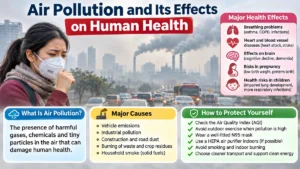
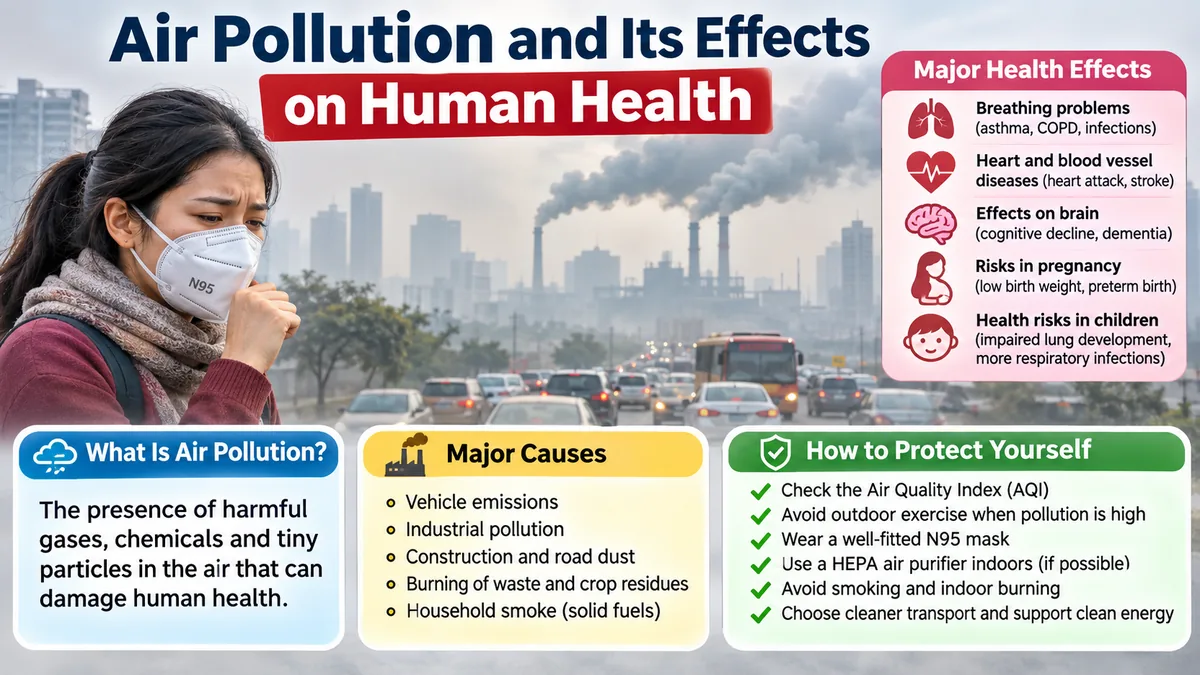
Air pollution refers to the presence of harmful gases, chemicals and microscopic particles in the atmosphere at concentrations that can damage human health and the environment.
Some of the most important air pollutants include:
- PM2.5: Fine particles smaller than 2.5 micrometres that can penetrate deep into the lungs and enter the bloodstream.
- PM10: Inhalable particles that can enter the respiratory tract.
- Nitrogen dioxide (NO₂): A gas mainly released from vehicle engines and industrial activities.
- Sulphur dioxide (SO₂): Produced mainly by burning sulphur-containing fuels.
- Carbon monoxide (CO): A toxic gas produced by incomplete combustion.
- Ground-level ozone (O₃): A harmful pollutant formed through chemical reactions involving sunlight.
Major Causes of Air Pollution
Air pollution comes from several human activities as well as natural sources.
- Vehicle emissions: Cars, buses, trucks and motorcycles release harmful gases and particles.
- Industrial emissions: Factories and power plants release smoke, particulate matter and toxic gases.
- Construction activities: Building projects and road dust contribute to airborne particles.
- Burning of waste: Open burning of garbage and agricultural residues releases harmful pollutants.
- Household pollution: Cooking with wood, coal and other solid fuels can cause indoor air pollution.
- Deforestation: Loss of vegetation can worsen environmental conditions and reduce natural pollutant removal.
How Does Air Pollution Affect Human Health?
Polluted air can affect several organs and body systems. The respiratory and cardiovascular systems are particularly vulnerable.
1. Respiratory Problems
When polluted air enters the lungs, harmful particles and gases can irritate the airways and trigger inflammation. Long-term exposure may reduce lung function and increase the risk of chronic respiratory diseases.
- Bronchial asthma and worsening of existing asthma.
- Chronic obstructive pulmonary disease (COPD).
- Frequent respiratory infections.
- Persistent cough and breathlessness.
- Increased risk of lung cancer.
2. Heart and Cardiovascular Diseases
Air pollution does not affect only the lungs. Fine particulate matter can trigger inflammation, oxidative stress and dysfunction of blood vessels. These changes may increase cardiovascular risk.
Long-term exposure has been associated with:
- High blood pressure.
- Coronary artery disease.
- Heart attacks (myocardial infarction).
- Stroke.
- Abnormal heart rhythms.
- Worsening of existing heart failure.
3. Effects on the Brain
Research suggests that prolonged exposure to air pollution may contribute to neuroinflammation and adverse effects on brain health. Studies have reported associations with cognitive decline, dementia and impaired neurological development.
4. Effects on Children and Pregnant Women
Children are particularly vulnerable because their lungs and immune systems are still developing. Exposure to polluted air during pregnancy and childhood may have lasting health consequences.
- Impaired lung development in children.
- Increased risk of childhood asthma.
- Respiratory infections.
- Low birth weight.
- Increased risk of premature birth.
5. Effects on Overall Health
Air pollution can cause irritation of the eyes, nose and throat. Long-term exposure has also been associated with type 2 diabetes, adverse pregnancy outcomes and certain cancers. Its effects may extend beyond the respiratory system through inflammation and other biological mechanisms.
Common Symptoms of Air Pollution Exposure
- Persistent coughing.
- Eye, nose and throat irritation.
- Wheezing and breathlessness.
- Chest tightness.
- Headaches.
- Increased asthma symptoms.
- Reduced exercise tolerance.
Severe breathlessness, persistent chest pain or sudden neurological symptoms require immediate medical attention.
How Can You Protect Yourself from Air Pollution?
Although individuals cannot control all sources of pollution, several practical steps can reduce personal exposure.
- Check the AQI: Monitor the Air Quality Index before planning outdoor activities.
- Avoid outdoor exercise: Reduce strenuous outdoor activities when pollution levels are high.
- Wear an N95 mask: A properly fitted N95 respirator can help reduce exposure to airborne particles.
- Improve indoor air quality: Consider a suitable HEPA air purifier where feasible.
- Avoid indoor smoke: Do not smoke or burn waste and biomass inside homes.
- Keep your home ventilated: Ventilate when outdoor air quality is better.
- Choose cleaner transport: Use public transport, walk or cycle when air quality and safety permit.
How Can We Reduce Air Pollution?
Protecting public health requires collective action by individuals, communities, industries and governments.
- Promoting renewable and cleaner energy sources.
- Reducing industrial emissions.
- Improving public transportation systems.
- Encouraging electric and low-emission vehicles.
- Preventing open burning of waste and crop residues.
- Expanding urban green spaces.
- Strengthening air quality monitoring and environmental regulations.
Conclusion
Air pollution is a serious but preventable environmental health risk. It contributes to respiratory diseases, cardiovascular complications and other long-term health problems. Children, older adults, pregnant women and people with existing medical conditions are particularly vulnerable.
Monitoring air quality, reducing exposure and supporting cleaner environments can help protect our health. Clean air is essential for a healthier population and a safer future for the next generation.
This article is intended for general health education and awareness. It does not replace professional medical advice, diagnosis or treatment. Consult a qualified healthcare professional if you experience persistent or severe symptoms.