Balanced diet
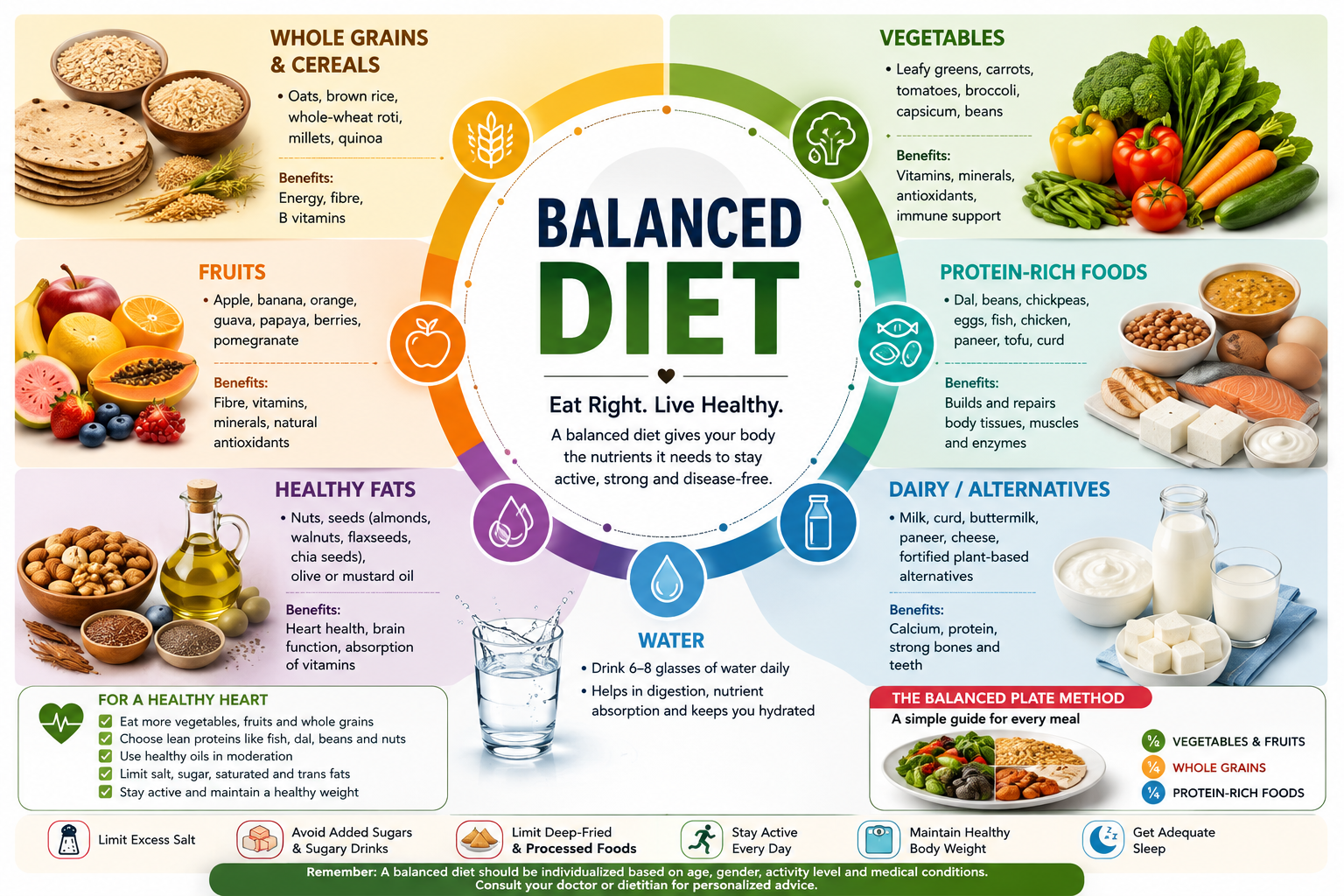
Balanced Diet
A balanced diet provides the body with the right amounts of carbohydrates, proteins, healthy fats, vitamins, minerals, fibre, and water. It supports energy, healthy body weight, immunity, muscle function, brain health, and cardiovascular health.
Key components
| Food group | Good sources | Main benefit |
|---|---|---|
| Whole grains & cereals | Oats, brown rice, whole-wheat roti, millets | Energy + fibre |
| Vegetables | Leafy greens, carrots, tomatoes, broccoli | Vitamins, minerals, antioxidants |
| Fruits | Apple, guava, orange, papaya, berries | Fibre + micronutrients |
| Protein | Dal, beans, eggs, fish, chicken, paneer, curd | Muscle and tissue repair |
| Healthy fats | Nuts, seeds, olive/mustard oil | Heart and brain health |
| Dairy/alternatives | Milk, curd, fortified alternatives | Calcium + protein |
| Water | Water, soups, unsweetened beverages | Hydration |
Simple plate method
A practical approach is to make ½ of the plate vegetables and fruits, ¼ whole grains, and ¼ protein-rich foods, while using healthy oils in moderate amounts.
For heart health
Prefer:
- Vegetables and fruits every day
- Whole grains and high-fibre foods
- Pulses, beans, nuts and seeds
- Fish and other lean protein sources
- Unsaturated vegetable oils
Limit:
- Excess salt
- Added sugars and sugary drinks
- Deep-fried foods
- Processed meats
- Refined carbohydrates
- Foods high in saturated and trans fats
Important: A balanced diet should be individualized according to age, activity level, body weight, pregnancy status, and conditions such as diabetes, kidney disease, or cardiovascular disease.
What is a balanced diet?
A balanced diet is one that gives your body the nutrients it needs to function correctly. To get the proper nutrition from your diet, you should consume the majority of your daily calories in:
fresh fruits
fresh vegetables
whole grains
legumes
nuts
lean proteins