Mushrooms and Cancer: Can Eating Mushrooms Help Prevent Cancer?
Mushrooms and Cancer: Can Eating Mushrooms Help Prevent Cancer?
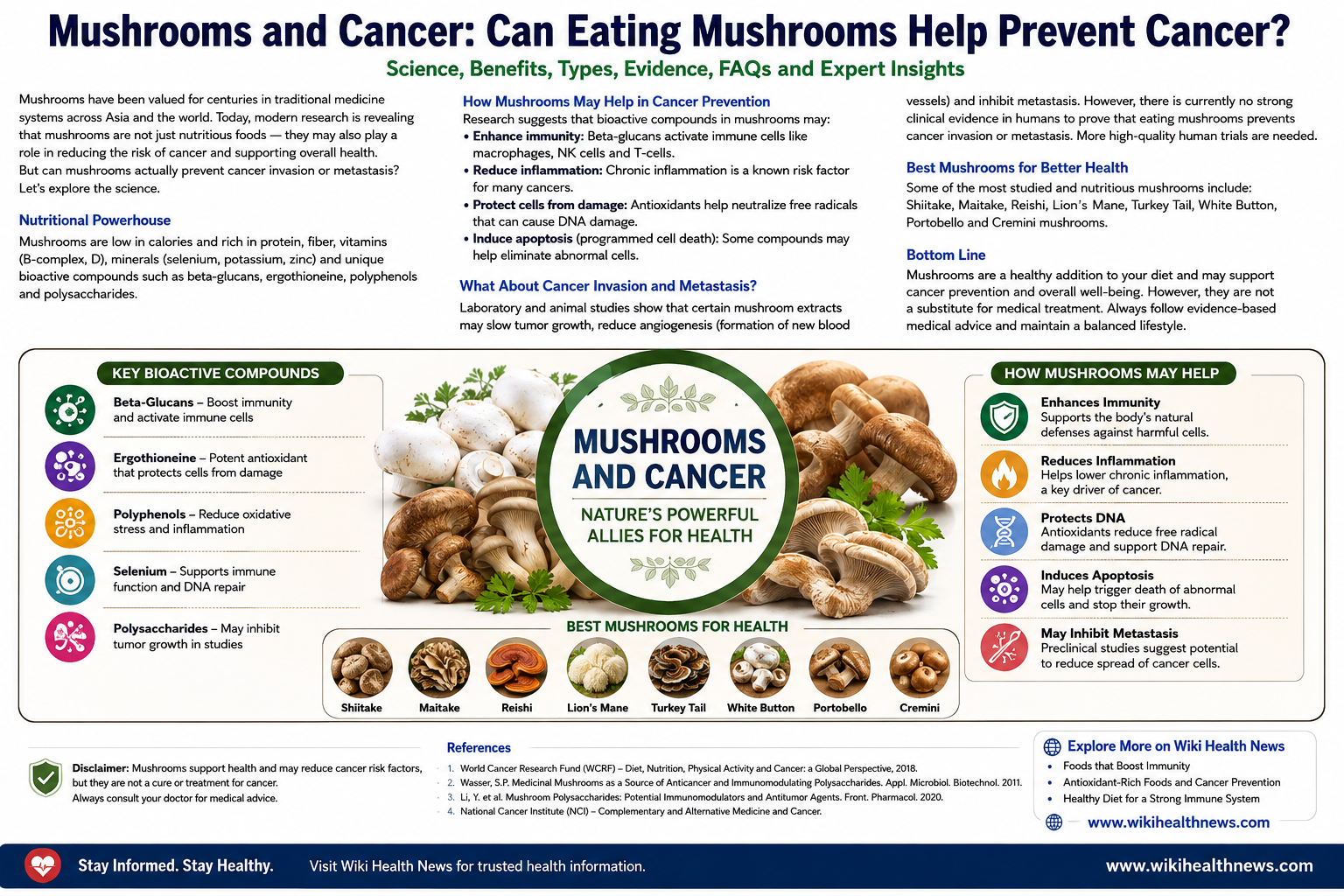
Mushrooms are nutritious foods containing protein, fiber, vitamins, minerals and several biologically active compounds. Growing research has examined whether regular mushroom consumption may be associated with a lower risk of cancer. However, it is important to distinguish cancer prevention research from claims that mushrooms can treat cancer or stop cancer invasion and metastasis.
How Might Mushrooms Support Cancer Prevention?
Edible mushrooms contain compounds including β-glucans, ergothioneine, selenium, polyphenols and polysaccharides. These substances have antioxidant, immunomodulatory and anti-inflammatory properties that may be relevant to cancer biology.
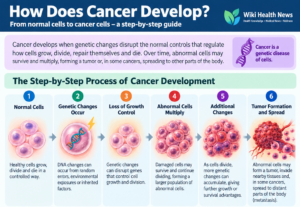
β-glucans can influence immune responses, while antioxidants may help protect cells against oxidative stress. Chronic inflammation and oxidative DNA damage are among several biological processes associated with cancer development. Laboratory research has also investigated mushroom compounds for effects on abnormal-cell growth, apoptosis and other pathways involved in tumor biology.
These mechanisms are scientifically interesting, but laboratory findings do not automatically mean that eating mushrooms prevents cancer in humans.
What Does the Human Evidence Show?
A 2021 systematic review and meta-analysis of 17 observational studies found that people with higher mushroom consumption had a lower observed risk of total cancer compared with those consuming the least. The pooled relative risk was 0.66 (95% CI 0.55–0.78). A lower observed risk of breast cancer was also reported. However, the researchers emphasized important limitations, including substantial variation between studies and the predominance of case-control studies.
Other research has produced more cautious findings. A large prospective analysis involving more than 110,000 U.S. adults found no significant association between mushroom consumption and total cancer or most individual cancer sites.
Research has also explored gastric cancer. A pooled analysis involving 3,900 gastric cancer cases and 7,792 controls found an association between higher mushroom consumption and lower gastric cancer risk, although observational evidence cannot establish that mushrooms caused the reduction.
Can Mushrooms Prevent Cancer Invasion or Metastasis?
There is currently insufficient clinical evidence to say that eating mushrooms prevents cancer invasion or metastasis. Some mushroom-derived compounds have demonstrated potentially antitumor effects in laboratory and experimental studies, but these findings should not be interpreted as proof that mushrooms can stop cancer from spreading in patients.
Mushrooms can therefore be considered a healthy component of a balanced, plant-rich diet, rather than an anticancer treatment.
Which Mushrooms Can Be Included in the Diet?
Common edible varieties include:
- Shiitake
- Maitake
- Oyster mushrooms
- White button mushrooms
- Cremini mushrooms
- Portobello mushrooms
- Lion’s mane mushrooms
Choose commercially cultivated, food-grade mushrooms and avoid unidentified wild mushrooms because some species can be toxic.
Bottom Line
Mushrooms provide valuable nutrients and bioactive compounds and may be associated with a lower risk of some cancers. Nevertheless, evidence remains insufficient to claim that mushrooms prevent cancer, eliminate tumors or stop metastasis. A cancer-prevention strategy should instead focus on an overall healthy lifestyle, including a balanced diet, physical activity, healthy weight, avoiding tobacco, limiting alcohol and following appropriate cancer-screening recommendations.
For more evidence-based health information, explore Wiki Health News.
Frequently Asked Questions
1. Can eating mushrooms prevent cancer?
Mushrooms may be associated with lower cancer risk in some observational studies, but they have not been proven to prevent cancer.
2. Can mushrooms stop cancer from spreading?
No. There is insufficient human clinical evidence that eating mushrooms prevents cancer invasion or metastasis.
3. Which mushroom is best for cancer prevention?
No specific mushroom has been established as a proven cancer-prevention food. A variety of edible mushrooms can contribute to a nutritious diet.
4. Are mushroom supplements better than fresh mushrooms?
Not necessarily. Evidence for concentrated mushroom supplements is different from evidence on ordinary dietary mushroom consumption, and supplements should not replace standard cancer prevention or treatment.
5. Can cancer patients eat mushrooms?
Many cancer patients can include properly prepared edible mushrooms in their diet, but individual dietary needs vary. Patients undergoing cancer treatment should discuss dietary supplements or major dietary changes with their oncology team.
References
- Ba DM, Ssentongo P, Beelman RB, et al. Higher Mushroom Consumption Is Associated with Lower Risk of Cancer: A Systematic Review and Meta-Analysis of Observational Studies. Advances in Nutrition. 2021;12(5):1691–1704.
- Zhang M, et al. Mushroom Consumption and Risk of Total and Site-Specific Cancer in Two Large U.S. Prospective Cohorts. Cancer Prevention Research. 2019.
- Ba DM, et al. Mushroom consumption and risk of gastric cancer: a pooled analysis and combined meta-analysis. European Journal of Cancer Prevention. 2023.
- Li Q, et al. Dietary mushroom intake may reduce the risk of breast cancer: evidence from a meta-analysis of observational studies. PLoS ONE. 2014.
Medical disclaimer: This article is for educational purposes and does not diagnose, prevent or treat cancer. People with cancer should follow their oncology team’s treatment recommendations.
Read More