Smoking Affects Fertility: How Tobacco Use Can Reduce Fertility in Men and Women
Smoking Affects Fertility: How Tobacco Use Can Reduce Fertility in Men and Women
Smoking is widely recognized as a major cause of cardiovascular and respiratory disease, but its effects extend to the reproductive system. Tobacco smoke contains thousands of chemicals, including nicotine, carbon monoxide, heavy metals, and other toxic compounds that can interfere with reproductive hormones, damage sperm and eggs, impair blood flow, and increase the risk of infertility. Importantly, fertility can be affected in both women and men, and exposure to secondhand smoke may also have reproductive consequences.
For couples trying to conceive, stopping smoking is one of the important modifiable steps that can improve overall reproductive and preconception health.
How Does Smoking Affect Female Fertility?
Female fertility depends on healthy ovarian function, ovulation, fallopian tubes, hormonal regulation, and an appropriate uterine environment. Smoking can adversely affect several of these processes.
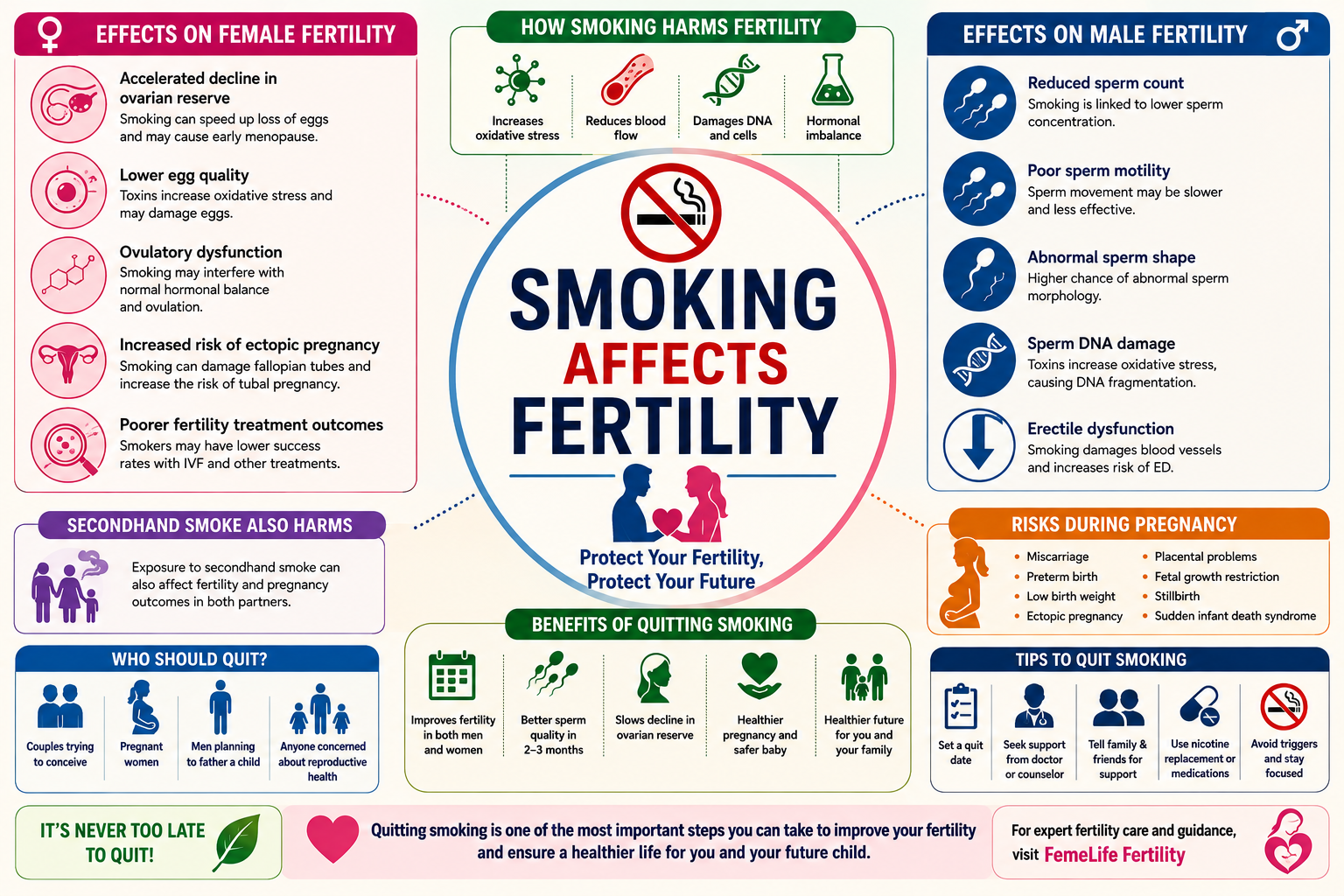
1. Accelerated Decline in Ovarian Reserve
Smoking is associated with faster loss of ovarian follicles. Toxic substances in cigarette smoke can increase oxidative stress, potentially damaging ovarian tissue and accelerating reproductive aging.
Women who smoke may therefore experience an earlier decline in fertility and may reach menopause earlier than nonsmokers.
2. Damage to Eggs
Oxidative stress and toxic chemicals from tobacco smoke may damage oocytes. Because egg quality naturally declines with age, smoking can compound this age-related decline.
This is particularly important for women who are postponing pregnancy, because smoking may further reduce the reproductive window.
3. Ovulatory Dysfunction
Smoking may interfere with normal endocrine signaling and ovarian function. Although not every smoker develops ovulatory problems, tobacco exposure can contribute to impaired reproductive function.
4. Increased Risk of Ectopic Pregnancy
Smoking is associated with an increased risk of ectopic pregnancy, in which a fertilized egg implants outside the uterine cavity, most commonly in a fallopian tube. Tobacco exposure may impair the normal function of the fallopian tubes and alter embryo transport.
An ectopic pregnancy can be life-threatening and requires urgent medical treatment.
5. Reduced IVF Success
Smoking is associated with poorer outcomes in assisted reproductive treatment. Smokers may have reduced ovarian response, fewer viable embryos, and lower chances of successful pregnancy compared with nonsmokers, although outcomes vary according to age and other factors.
Stopping smoking before fertility treatment is therefore strongly advisable.
How Does Smoking Affect Male Fertility?
Male reproductive health can also be significantly affected by tobacco exposure.
1. Reduced Sperm Quality
Smoking has been associated with adverse changes in sperm concentration, motility and morphology. Oxidative stress can damage sperm cells and their DNA.
Healthy sperm require appropriate production within the testes, and toxic exposures can interfere with this process.
2. Sperm DNA Damage
One of the important concerns is increased sperm DNA fragmentation. Sperm carrying substantial DNA damage may have reduced reproductive potential and may contribute to impaired embryo development.
3. Erectile Dysfunction
Smoking damages blood vessels and endothelial function. Because normal erections depend on adequate penile blood flow, chronic tobacco use can increase the risk of erectile dysfunction.
This may indirectly reduce the probability of conception by making intercourse more difficult.
4. Hormonal Effects
Smoking may affect reproductive hormones and testicular function. The magnitude of these effects varies among individuals and is influenced by smoking intensity, duration and other health factors.
What About Secondhand Smoke?
Fertility concerns are not limited to people who actively smoke. Secondhand tobacco smoke exposes nonsmokers to many of the same toxic substances found in cigarette smoke.
Reducing exposure at home, at work and in other environments is therefore important for couples planning pregnancy.
Does Smoking Affect Pregnancy?
Yes. Smoking during pregnancy is associated with serious maternal and fetal risks, including:
- Miscarriage
- Ectopic pregnancy
- Placental complications
- Preterm birth
- Low birth weight
- Fetal growth restriction
- Stillbirth
- Sudden infant death syndrome
- Impaired fetal development
Because pregnancy can occur before it is recognized, stopping smoking before conception is preferable.
Can Fertility Improve After Quitting Smoking?
Quitting smoking is beneficial at any stage. It removes continued exposure to tobacco toxins and can improve cardiovascular and general health.
In men, sperm production takes approximately two to three months, so improvements in sperm-related parameters may take time after cessation. Female reproductive aging cannot be completely reversed, but quitting removes an important avoidable reproductive risk.
The earlier a person quits, the better.
Smoking and Fertility Treatment
People undergoing IVF, IUI or other fertility treatments should discuss tobacco exposure with their fertility specialist. Smoking cessation should ideally begin before treatment.
A comprehensive fertility assessment may include ovarian-reserve testing, ovulation assessment, semen analysis, tubal evaluation and other investigations depending on the couple’s circumstances.
How Can Smokers Quit?
Successful smoking cessation may require more than willpower. Evidence-based approaches include:
- Setting a specific quit date
- Identifying smoking triggers
- Behavioral counseling
- Support from family and healthcare professionals
- Nicotine-replacement therapy when appropriate
- Prescription smoking-cessation medication when appropriate
- Avoiding tobacco-related triggers
- Developing strategies for cravings and stress
Pregnant women should discuss smoking-cessation medications with their healthcare professional before using them.
Key Takeaway
Smoking can reduce fertility in both women and men. It can accelerate ovarian aging, affect egg quality, increase ectopic-pregnancy risk, impair sperm concentration and motility, increase sperm DNA damage, and contribute to erectile dysfunction.
The good news is that smoking is a modifiable fertility risk factor. Quitting before attempting conception can improve overall reproductive health and reduce pregnancy-related risks. Couples experiencing difficulty conceiving should seek professional fertility evaluation rather than assuming smoking is the only cause.
For additional information on women’s reproductive health and fertility, visit FemeLife Fertility and Wiki Health News for evidence-based health information.
References
- American Society for Reproductive Medicine. Tobacco or marijuana use and infertility: a committee opinion. Fertility and Sterility.
- Practice Committee of the American Society for Reproductive Medicine. Optimizing natural fertility: a committee opinion. Fertility and Sterility.
- Centers for Disease Control and Prevention. Smoking, Pregnancy, and Babies.
- World Health Organization. Tobacco and reproductive health.
- U.S. Food and Drug Administration. Smoking Cessation Products.
- American College of Obstetricians and Gynecologists. Tobacco and Nicotine Cessation During Pregnancy.
Smokers are more likely to have fertility problems than non-smokers. Smoking causes harmful chemicals to spread throughout entire body and all organs. This can lead to fertility problems. Due to the toxins from cigarettes, smokers are more likely to suffer from miscarriage than non-smokers. In addition, smoking increases several health risks during pregnancy, such as preterm labour and ectopic pregnancy.
Ovulation problems, Genetic issues, Damage to reproductive organs, Damage to eggs or premature menopause, Increased risk of cancer and increased risk of miscarriage.
Men that smoke cigarettes are at an increased risk for the following male fertility problems like lower sperm count and sperm motility problems (motility is the ability of sperm to swim towards and penetrate the egg)
Hormonal issues and erectile dysfunction also can occur in smokers.
Couples seeking treatment for fertility should stop smoking at least three months before attempting in vitro fertilization, because new sperms need at least that much time to be produced from germ cell to full maturity.
Smoking Affects Fertility — 30 Important Points
- Smoking can reduce fertility in both women and men.
- Tobacco smoke contains nicotine, carbon monoxide, heavy metals and numerous toxic chemicals.
- These chemicals can increase oxidative stress, which may damage reproductive cells.
- Smoking may accelerate the natural decline in ovarian reserve.
- Female smokers may experience earlier menopause than nonsmokers.
- Smoking can adversely affect egg quality.
- Tobacco exposure may interfere with normal ovarian and hormonal function.
- Smoking is associated with an increased risk of difficulty conceiving.
- Smoking can damage the normal function of the fallopian tubes.
- Tobacco use increases the risk of ectopic pregnancy.
- Smoking can adversely affect the uterine environment.
- Female smokers may have poorer outcomes with some assisted reproductive treatments.
- Smoking can reduce sperm concentration in men.
- It may reduce sperm motility, making it harder for sperm to reach the egg.
- Smoking can increase the proportion of abnormal sperm morphology.
- Tobacco exposure may increase sperm DNA fragmentation.
- Oxidative stress is an important mechanism behind tobacco-related sperm damage.
- Smoking can impair testicular reproductive function.
- Smoking increases the risk of erectile dysfunction by damaging vascular function.
- Erectile dysfunction may indirectly reduce the likelihood of natural conception.
- Secondhand smoke can expose nonsmokers to reproductive toxins.
- Smoking during pregnancy increases the risk of miscarriage.
- Maternal smoking increases the risk of preterm birth.
- Smoking during pregnancy is associated with fetal growth restriction and low birth weight.
- Smoking is associated with an increased risk of stillbirth.
- Quitting smoking before conception is preferable to quitting after pregnancy begins.
- Improvements in sperm-related parameters may take several weeks to months after smoking cessation.
- Fertility treatment should ideally be undertaken after addressing modifiable risks such as tobacco exposure.
- Counseling, behavioral support and appropriate smoking-cessation treatments can improve the likelihood of quitting.
- Stopping smoking is one of the most important modifiable steps couples can take to protect reproductive health.
30 FAQs About Smoking and Fertility
1. Can smoking cause infertility?
Yes. Smoking can reduce fertility in both men and women and may increase the time required to achieve pregnancy.
2. Does smoking affect female fertility?
Yes. Smoking may accelerate ovarian aging, affect egg quality, impair tubal function and increase the risk of ectopic pregnancy.
3. Does smoking affect male fertility?
Yes. Smoking has been associated with reduced sperm concentration and motility, abnormal sperm morphology and increased sperm DNA damage.
4. Can smoking reduce egg quality?
Yes. Tobacco-related oxidative stress and toxic chemicals may damage ovarian tissue and oocytes.
5. Can smoking reduce ovarian reserve?
Smoking is associated with a faster decline in ovarian reserve and reproductive aging.
6. Can smoking cause early menopause?
Women who smoke tend to experience menopause earlier than nonsmokers.
7. Does smoking affect ovulation?
Smoking may interfere with ovarian and endocrine function, potentially affecting normal reproductive processes.
8. Can smoking cause ectopic pregnancy?
Yes. Smoking is associated with an increased risk of ectopic pregnancy, possibly partly because tobacco exposure can impair fallopian-tube function.
9. Does smoking affect IVF success?
Smoking can negatively affect several aspects of assisted reproduction and is associated with poorer reproductive outcomes in many studies.
10. Should I stop smoking before IVF?
Yes. Stopping smoking before fertility treatment is strongly advisable and should be discussed with the fertility specialist.
11. Can smoking affect sperm count?
Yes. Smoking has been associated with reduced sperm concentration in some studies.
12. Does smoking reduce sperm motility?
Yes. Tobacco exposure can adversely affect sperm movement, which is important for successful fertilization.
13. Can smoking damage sperm DNA?
Yes. Increased oxidative stress associated with smoking may contribute to sperm DNA fragmentation.
14. Can smoking cause abnormal sperm?
Smoking has been associated with an increased proportion of abnormal sperm morphology.
15. Can smoking cause erectile dysfunction?
Yes. Smoking damages blood vessels and endothelial function and is an important modifiable risk factor for erectile dysfunction.
16. Can erectile dysfunction affect fertility?
Yes. Difficulty achieving or maintaining an erection can reduce the frequency or effectiveness of intercourse and therefore make conception more difficult.
17. Does secondhand smoke affect fertility?
Potentially. Secondhand tobacco smoke contains many of the same harmful substances found in mainstream cigarette smoke and may adversely affect reproductive health.
18. Does vaping affect fertility?
The long-term reproductive effects of e-cigarettes are still being studied. Because many vaping products contain nicotine and other chemicals, they should not be assumed to be harmless to reproductive health.
19. Can smoking cause miscarriage?
Smoking during pregnancy increases the risk of miscarriage.
20. Does smoking affect the baby during pregnancy?
Yes. Maternal smoking can increase the risks of fetal growth restriction, low birth weight, preterm birth, stillbirth and other adverse outcomes.
21. Is it better to quit smoking before pregnancy?
Yes. Ideally, smoking cessation should occur before conception, reducing tobacco exposure during the earliest stages of pregnancy.
22. Can fertility improve after quitting smoking?
Quitting eliminates continued exposure to tobacco toxins and may improve reproductive health. However, some effects, particularly age-related loss of ovarian reserve, cannot simply be reversed.
23. How long after quitting smoking should I try to conceive?
There is no universal waiting period solely because of smoking cessation. Couples should stop smoking as early as possible and discuss individual circumstances with their healthcare professional.
24. How long does it take for sperm to recover after quitting?
Sperm production is continuous, and a new cycle of sperm development takes roughly two to three months. Improvements may therefore take several months, although individual responses vary.
25. Can smoking affect pregnancy even if the woman quits after becoming pregnant?
Yes. The sooner smoking stops, the better. Quitting at any point during pregnancy can reduce continued exposure and is beneficial.
26. Is smoking the only cause of infertility?
No. Infertility can result from female factors, male factors, combined factors or unexplained causes. Age, ovulation disorders, tubal disease, endometriosis and sperm abnormalities are among many possible causes.
27. Should a male smoker have a semen analysis?
If a couple has difficulty conceiving, a semen analysis is an important component of male fertility evaluation, regardless of smoking status.
28. How can someone quit smoking while trying to conceive?
Behavioral counseling, a structured quit plan, trigger management and professional support can help. Medication options should be discussed with a healthcare professional, particularly during pregnancy.
29. Does smoking affect fertility in older women more severely?
Smoking may compound the natural age-related decline in fertility. Because ovarian reserve and egg quality already decrease with age, avoiding tobacco exposure becomes particularly important.
30. What is the most important message about smoking and fertility?
Smoking is a preventable risk factor for impaired reproductive health. Quitting improves overall health and can reduce tobacco-related risks before conception, during pregnancy and throughout the reproductive years.