Understanding Dengue Fever Complications
Dengue fever is a mosquito-borne viral infection that affects millions of people each year. Transmitted primarily by the Aedes aegypti mosquito, dengue is prevalent in tropical and subtropical regions around the world. As climate change continues to expand the habitats of these mosquitoes, the incidence of dengue fever is on the rise, making it crucial to understand its symptoms, complications, and preventive measures.
What is Dengue Fever?
Dengue fever is caused by the dengue virus, which has four distinct serotypes: DENV-1, DENV-2, DENV-3, and DENV-4. Infection with one serotype generally provides lifelong immunity against that specific type but not against the others. This means that individuals can experience dengue multiple times, potentially leading to more severe illness upon subsequent infections.
Symptoms of Dengue Fever
Dengue fever typically manifests 4 to 10 days after being bitten by an infected mosquito. Symptoms can range from mild to severe and may include:
- High fever (up to 104°F or 40°C)
- Severe headache
- Pain behind the eyes
- Joint and muscle pain
- Nausea and vomiting
- Fatigue
- Skin rash
Most cases are mild and resolve within a week. However, some individuals may progress to severe dengue, which can lead to serious health complications.
Complications of Dengue Fever
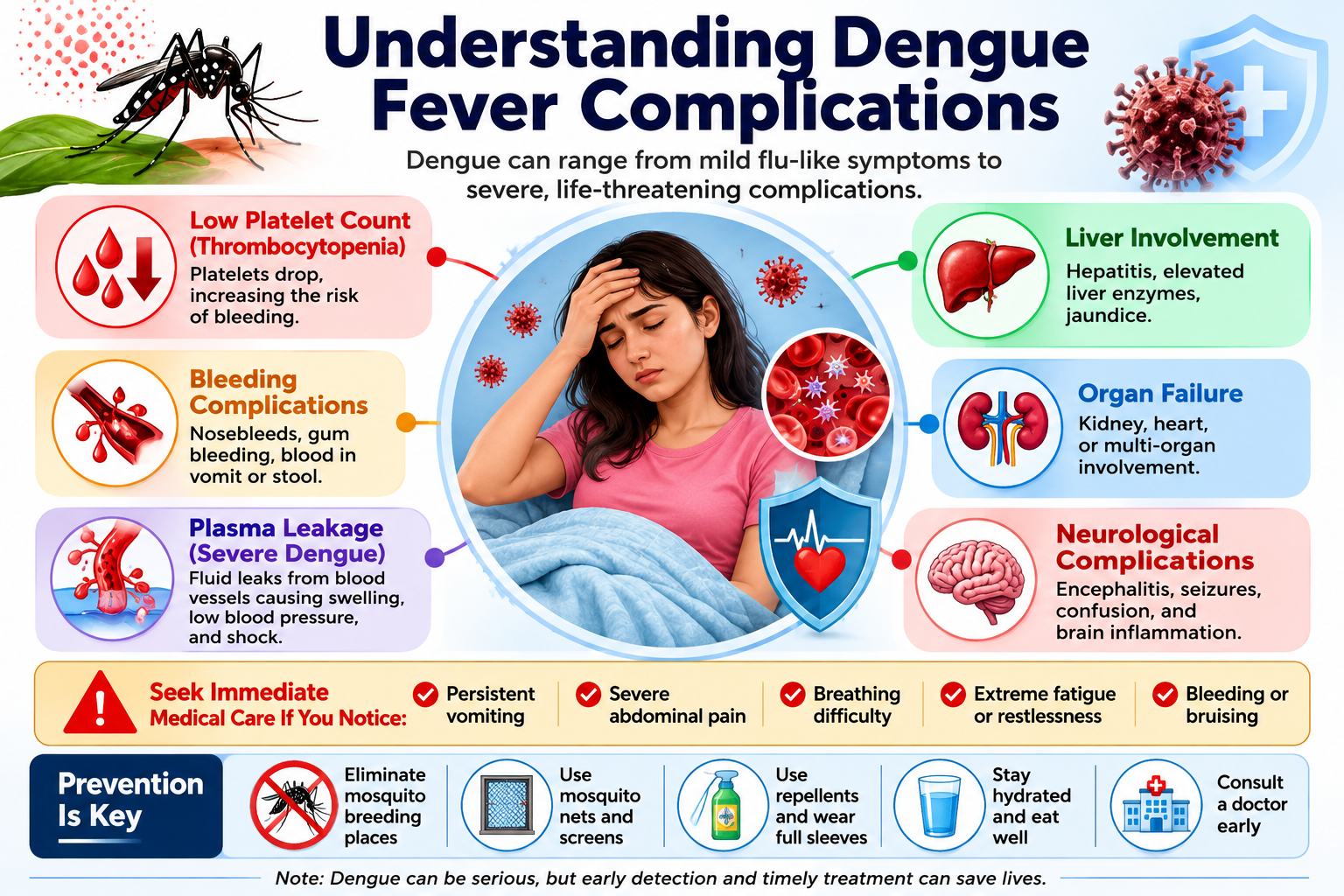
While many people recover from dengue fever without any complications, about 5% of cases can progress to severe dengue, previously known as dengue hemorrhagic fever or dengue shock syndrome. Severe dengue can be life-threatening and is characterized by the following complications:
1. Hemorrhagic Manifestations
Severe dengue can lead to bleeding from the nose, gums, or under the skin. This bleeding occurs due to a drop in platelet count, which is critical for blood clotting. The presence of bleeding complications indicates a more serious infection and requires immediate medical attention.
2. Plasma Leakage
One of the most dangerous complications of severe dengue is plasma leakage. This occurs when the blood plasma seeps into surrounding tissues, leading to fluid accumulation and a significant drop in blood pressure. This condition can result in shock, which is a medical emergency.
3. Organ Dysfunction
Severe dengue can also lead to organ impairment, including liver failure and respiratory distress. Symptoms of organ dysfunction may include abdominal pain, persistent vomiting, and confusion. Prompt medical intervention is essential to manage these complications.
4. Severe Abdominal Pain
Some patients experience severe abdominal pain, which can be a sign of internal bleeding or fluid accumulation in the abdominal cavity. This symptom should not be ignored, as it may require urgent medical evaluation.
5. Neurological Complications
In rare cases, dengue can lead to neurological issues such as encephalitis, seizures, and Guillain-Barré syndrome, a condition where the immune system attacks the nerves. These complications can have long-lasting effects on health.
Here’s a simple table on dengue fever prevention that outlines key strategies and tips:
Prevention Strategy Description Eliminate Standing Water Remove containers that hold water (e.g., buckets, flower pots) where mosquitoes can breed. Use Mosquito Repellent Apply repellents containing DEET, picaridin, or oil of lemon eucalyptus on exposed skin. Install Screens Fit windows and doors with screens to keep mosquitoes out. Wear Protective Clothing Dress in long-sleeved shirts and long pants, preferably treated with insect repellent. Use Mosquito Nets Sleep under mosquito nets, especially in areas where dengue is common. Insecticide Use Use insecticides to spray areas where mosquitoes are prevalent, especially indoors. Community Clean-Up Participate in local efforts to clean up areas with standing water and promote awareness. Avoid Peak Mosquito Hours Stay indoors during peak mosquito activity (early morning and late afternoon). Vaccination Get vaccinated if recommended and available in your region. Prevention of Dengue fever Feel free to customize or expand this table based on your specific needs!
Diagnosis of Dengue Fever
Diagnosing dengue fever is primarily based on clinical symptoms and patient history. Laboratory tests can confirm the presence of the virus or its antibodies. Common diagnostic methods include:
- NS1 Antigen Test: Detects the dengue virus in the blood during the early phase of infection.
- IgM and IgG Antibody Tests: These tests help determine if a person is currently infected or has had a previous infection.
Treatment of Dengue Fever
Currently, there is no specific antiviral treatment for dengue fever. Management focuses on symptomatic relief and monitoring for complications. Key aspects of treatment include:
- Hydration: Maintaining fluid balance is crucial. Oral rehydration solutions and intravenous fluids may be necessary, especially in severe cases.
- Pain Relief: Acetaminophen (paracetamol) is often recommended for fever and pain relief, while non-steroidal anti-inflammatory drugs (NSAIDs) like ibuprofen should be avoided as they may increase the risk of bleeding.
- Monitoring: Patients with severe dengue require close monitoring in a hospital setting to manage complications effectively.
Prevention of Dengue Fever
Preventing dengue fever relies heavily on mosquito control and personal protection measures:
1. Mosquito Control
- Eliminate Breeding Sites: Mosquitoes breed in stagnant water. Regularly empty, clean, or cover containers that hold water.
- Insecticides: Use insecticides to kill adult mosquitoes and their larvae in high-risk areas.
2. Personal Protection
- Use Insect Repellent: Apply insect repellent containing DEET, picaridin, or oil of lemon eucalyptus on exposed skin.
- Wear Protective Clothing: Light-colored, long-sleeved shirts and long pants can help reduce mosquito bites.
- Mosquito Nets: Sleeping under a mosquito net, especially in high-risk areas, can offer added protection.
3. Community Awareness
Raising awareness in communities about dengue prevention is vital. Educational programs can help people recognize the symptoms of dengue and understand the importance of early medical intervention.
Conclusion
Dengue fever is a significant public health concern that requires awareness, prevention, and timely intervention. Understanding the symptoms and potential complications of dengue can help individuals seek appropriate medical care. By adopting effective preventive measures and working towards community awareness, we can combat the spread of dengue fever and protect vulnerable populations. If you suspect you have dengue fever, consult a healthcare provider promptly to ensure proper diagnosis and management.
Stay informed, stay safe, and take action to protect yourself and your loved ones from dengue fever.
Read more
Fertility Diet To Improve Egg Quality
Understanding Dengue Fever Complications — 30 FAQs
Frequently Asked Questions
1. What is dengue fever?
Dengue is a viral infection transmitted mainly by infected Aedes mosquitoes. Most infections are mild or asymptomatic, but some can progress to severe dengue. (World Health Organization)
2. What are the common symptoms of dengue?
Common symptoms include high fever, headache, pain behind the eyes, muscle and joint pain, nausea, vomiting, rash and fatigue. (World Health Organization)
3. What is severe dengue?
Severe dengue is dengue associated with severe plasma leakage causing shock or respiratory distress, severe bleeding, or severe organ impairment. It can be life-threatening and generally requires hospital care. (CDC)
4. When can dengue complications occur?
Warning signs and complications often develop around the time the fever falls, commonly during the critical phase around days 3–7 of illness. A falling temperature does not necessarily mean that the patient is recovering. (IRIS)
5. What is plasma leakage in dengue?
Plasma leakage occurs when increased vascular permeability allows fluid to move from the bloodstream into surrounding tissues or body cavities. Severe leakage can cause low blood pressure, shock and respiratory problems. (IRIS)
6. Can dengue cause shock?
Yes. Severe plasma leakage can reduce circulating blood volume and result in dengue shock. Shock is a medical emergency requiring prompt assessment and careful fluid management. (CDC)
7. Does dengue cause low platelet counts?
Yes. Thrombocytopenia, or a low platelet count, is common during dengue infection. However, platelet count alone does not determine whether dengue is severe; the patient’s overall clinical condition and warning signs are important. (CDC)
8. Can dengue cause bleeding?
Yes. Severe dengue may cause clinically significant bleeding. Bleeding can involve the gums or nose, gastrointestinal tract and other sites. (World Health Organization)
9. What are the warning signs of severe dengue?
Important warning signs include severe or persistent abdominal pain, persistent vomiting, fluid accumulation, mucosal bleeding, altered mental status, liver enlargement and evidence of increasing hematocrit with plasma leakage. (CDC)
10. Can dengue cause abdominal pain?
Yes. Intense or persistent abdominal pain is an important warning sign and should prompt immediate medical assessment, particularly when it occurs as the fever decreases. (World Health Organization)
11. Can dengue cause persistent vomiting?
Yes. Persistent vomiting is a recognized warning sign of potentially severe dengue and can contribute to dehydration and difficulty maintaining adequate fluid intake. (World Health Organization)
12. Can dengue affect the liver?
Yes. Dengue can cause liver involvement, including hepatitis and marked elevation of liver enzymes. Severe liver impairment is one of the recognized forms of severe organ involvement. (CDC)
13. Can dengue cause jaundice?
Jaundice can occur with significant liver involvement. Yellowing of the skin or eyes in a person with dengue warrants medical evaluation. (World Health Organization)
14. Can dengue affect the kidneys?
Yes. Acute renal failure can occur in dengue and is considered an important complication requiring medical management. (CDC)
15. Can dengue cause breathing difficulty?
Yes. Severe plasma leakage may produce fluid accumulation and respiratory distress. Difficulty breathing is an emergency warning sign requiring immediate medical attention. (World Health Organization)
16. Can dengue affect the heart?
Severe dengue can involve the heart, including myocarditis. CDC clinical guidance lists myocarditis among forms of severe organ impairment requiring hospital management. (CDC)
17. Can dengue cause neurological complications?
Neurological complications can occur, although they are uncommon. Severe dengue may involve altered mental status, encephalitis and other neurological manifestations. (CDC)
18. Can dengue cause confusion or drowsiness?
Yes. Altered mental status, including irritability or drowsiness, is recognized as a warning sign. It requires prompt medical assessment. (CDC)
19. Can dengue cause multi-organ failure?
Severe dengue can cause severe organ impairment involving organs such as the liver, kidneys, heart or nervous system. Multiple organs may be affected in critical illness. (CDC)
20. Is dengue more dangerous after a second infection?
A subsequent infection with a different dengue serotype is associated with a greater risk of severe dengue. (World Health Organization)
21. Who is at higher risk of severe dengue?
Higher-risk groups include people experiencing a subsequent dengue infection, pregnant women, young children and older adults. Certain co-existing medical conditions may also influence the need for hospital management. (World Health Organization)
22. Is a falling fever a sign that dengue is cured?
Not necessarily. The critical phase can begin around the time the fever subsides, and warning signs may appear during this period. Patients should continue monitoring for concerning symptoms. (IRIS)
23. When should a person with dengue go to the hospital?
Immediate medical care is appropriate for warning signs such as severe abdominal pain, persistent vomiting, bleeding, rapid breathing, breathing difficulty, altered mental status, severe weakness or signs of shock. (World Health Organization)
24. Can dengue be treated at home?
Many patients with uncomplicated dengue can be managed as outpatients with medical advice, adequate fluids, rest and appropriate symptom management. Patients with warning signs or severe disease require closer monitoring and often hospitalization. (CDC)
25. Is there a specific medicine that cures dengue?
There is currently no specific antiviral treatment routinely used to cure dengue. Treatment focuses on supportive care, monitoring and appropriate management of complications. (World Health Organization)
26. Which painkillers should be avoided in dengue?
Aspirin and non-steroidal anti-inflammatory drugs such as ibuprofen should generally be avoided because they can increase bleeding risk. Paracetamol (acetaminophen) is commonly used for fever and pain, according to medical advice. (World Health Organization)
27. Why is hydration important in dengue?
Maintaining appropriate fluid intake helps prevent dehydration, particularly during fever and vomiting. However, patients with severe dengue require careful clinical assessment because excessive or inappropriate fluid administration can also be harmful. (IRIS)
28. Can dengue complications be prevented?
Early recognition of warning signs, appropriate monitoring and timely medical treatment can reduce the risk of fatal outcomes from severe dengue. Preventing mosquito bites and eliminating mosquito breeding sites also reduces transmission. (World Health Organization)
29. How can dengue be prevented?
Prevention includes avoiding mosquito bites, using repellents, wearing clothing that covers the body, using window screens or mosquito nets, and removing stagnant water where mosquitoes can breed. (World Health Organization)
30. Can dengue complications be fatal?
Yes. Severe dengue can cause shock, severe bleeding or severe organ impairment and can be fatal without timely appropriate care. Early recognition and proper clinical management substantially improve outcomes. (World Health Organization)
Key Emergency Message
Seek urgent medical care if a person with suspected or confirmed dengue develops severe abdominal pain, persistent vomiting, bleeding, rapid breathing or difficulty breathing, extreme weakness, restlessness, drowsiness, pale/cold skin, reduced urine output, or other signs of deterioration. (World Health Organization)
References
- World Health Organization (WHO). Dengue and severe dengue. Updated information and fact sheet. (World Health Organization)
WHO: Dengue and severe dengue - World Health Organization (WHO). WHO guidelines for clinical management of arboviral diseases: dengue, chikungunya, Zika and yellow fever. 2025. (World Health Organization)
WHO Clinical Management Guidelines, 2025 - Centers for Disease Control and Prevention (CDC). Dengue Case Management: Pocket Guide. 2024. (CDC)
CDC Dengue Case Management Pocket Guide - World Health Organization. Dengue: Guidelines for Diagnosis, Treatment, Prevention and Control. WHO/TDR. (World Health Organization)
WHO Dengue Guidelines - World Health Organization. Public health advice on dengue fever. 26 June 2025. (World Health Organization)
WHO Public Health Advice on Dengue - World Health Organization. Dengue Outbreak Toolbox. Updated September 2024. (World Health Organization)
WHO Dengue Outbreak Toolbox
You can add a natural backlink to Wiki Health News in the dengue article using keyword-rich anchor text.
For more information about dengue symptoms, warning signs, diagnosis, treatment and prevention, read the detailed guide on Dengue Fever: Symptoms, Complications and Prevention at Wiki Health News.
Best placement
Place this paragraph after the introduction or immediately before the 30 FAQs. It creates a natural internal/external-site backlink without keyword stuffing.
The medical information in the FAQ can also be supported by WHO and India’s National Center for Vector Borne Diseases Control guidance. (World Health Organization)
Suggested anchor text: Dengue Fever: Symptoms, Complications and Prevention
Medical disclaimer: This FAQ is for educational purposes and does not replace examination, laboratory testing or treatment by a qualified healthcare professional. Dengue can deteriorate rapidly, particularly around the time fever subsides.