Salt and Heart Health: How Too Much Sodium Affects Blood Pressure
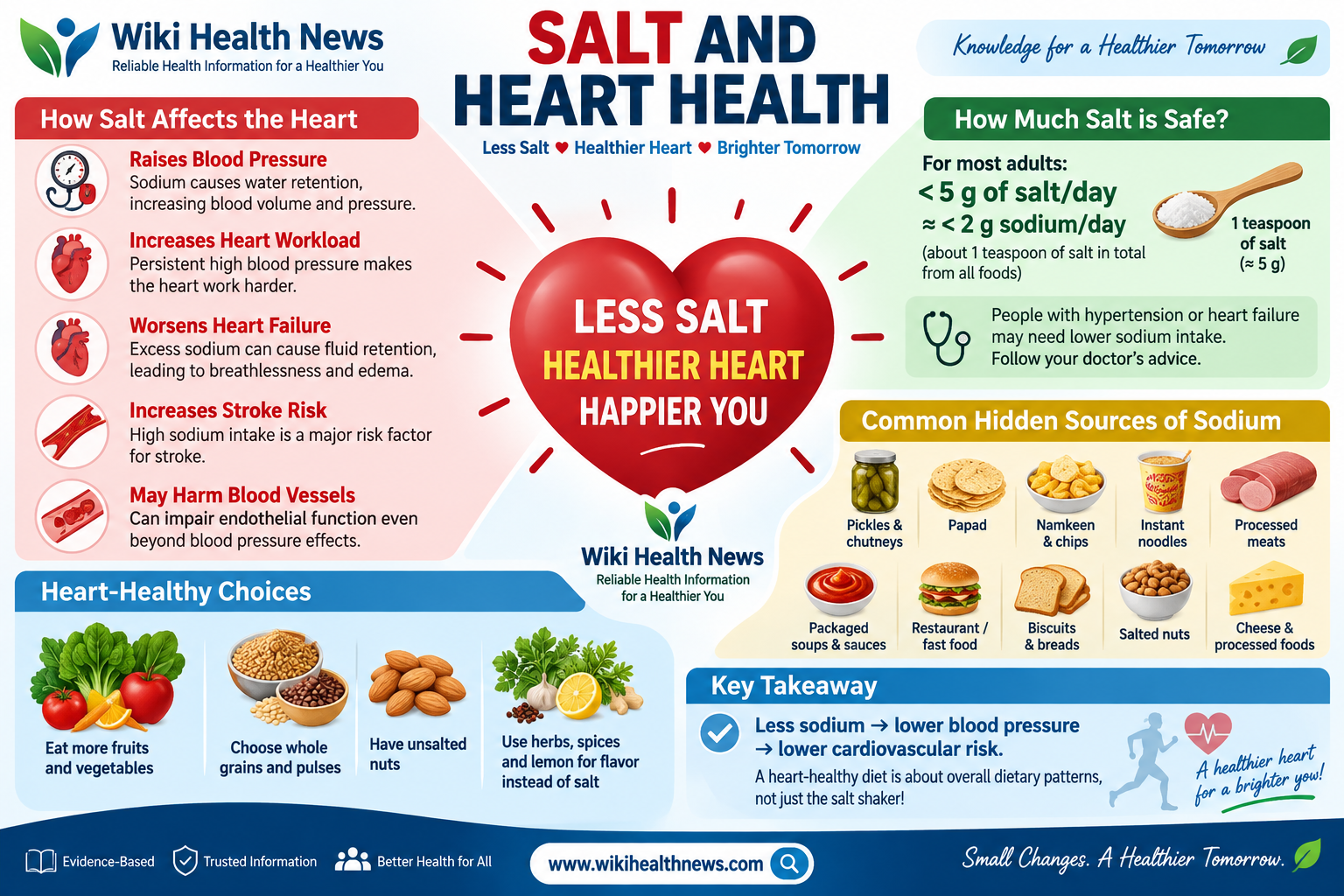
Salt and Heart Health
Salt—mainly sodium chloride—has a major effect on cardiovascular health. Excess sodium can increase blood pressure and, over time, raise the risk of heart attack, stroke, heart failure, and kidney disease.
How salt affects the heart
- Raises blood pressure – Sodium causes the body to retain water, increasing blood volume and vascular pressure.
- Increases cardiovascular workload – Persistent hypertension makes the heart work harder and can lead to left ventricular hypertrophy.
- Worsens heart failure – Excess sodium can promote fluid retention, causing edema, breathlessness and congestion.
- Increases stroke risk – High sodium intake contributes substantially to hypertension, one of the strongest modifiable stroke risk factors.
- May adversely affect blood vessels – High sodium intake may impair endothelial function even beyond its effect on blood pressure.
How much salt is appropriate?
For most adults, a practical target is:
<5 g of salt/day ≈ <2 g sodium/day
That is roughly 1 teaspoon of salt in total from all foods, including salt added during cooking and salt already present in packaged foods.
People with hypertension or heart failure may benefit from more stringent sodium restriction depending on their clinical situation and treating physician’s advice.
Below is a ~400-word SEO-friendly article suitable for Wiki Health News, with Dr. Sujit Kumar Sahu as author.
Salt and Heart Health: How Sodium Affects Your Heart
Salt is an essential part of our diet, but consuming too much can negatively affect heart health. The main component of salt is sodium, which helps maintain fluid balance, nerve function, and muscle activity. However, excessive sodium intake can increase blood pressure and contribute to cardiovascular disease.
How Does Salt Affect Blood Pressure?
When you consume too much sodium, the body tends to retain more water. This increases the amount of fluid circulating through the blood vessels and can raise blood pressure. Over time, persistent high blood pressure puts extra strain on the heart and blood vessels.
Uncontrolled hypertension is an important risk factor for heart attack, stroke, heart failure, and kidney disease. People who already have high blood pressure, heart disease, kidney disease, or diabetes may need to be particularly careful about their sodium intake.
How Much Salt Is Too Much?
The World Health Organization recommends that adults consume less than 5 grams of salt per day, equivalent to less than about 2,000 mg of sodium. This includes salt added during cooking, at the table, and sodium naturally present or added to packaged foods.
The challenge is that much of the salt in modern diets may come from processed and restaurant foods rather than the salt shaker.
Common Hidden Sources of Salt
Foods that can contain substantial amounts of sodium include:
- Pickles and chutneys
- Papad and salted snacks
- Instant noodles and soups
- Packaged and processed foods
- Processed meats
- Sauces and ready-made meals
- Fast food and restaurant dishes
Reading nutrition labels can help identify foods with high sodium content.
Simple Ways to Reduce Salt Intake
Reducing salt does not mean giving up flavorful food. Try using herbs, spices, lemon, garlic, ginger, and other natural seasonings instead of relying heavily on salt. Limit highly processed foods and choose fresh vegetables, fruits, whole grains, pulses, and minimally processed foods more often.
Avoid routinely adding extra salt to food at the table, and gradually reducing salt can help your taste buds adapt to less salty flavors.
The Bottom Line
Less salt can mean better blood pressure control and better heart health. A balanced diet, regular physical activity, maintaining a healthy weight, avoiding tobacco, and monitoring blood pressure are all important components of cardiovascular prevention.
If you have hypertension or cardiovascular disease, discuss your individual sodium and dietary needs with your doctor or a qualified dietitian.
Author
Dr. Sujit Kumar Sahu
Consultant Interventional Cardiologist
Dr. Sujit Kumar Sahu is a cardiologist with expertise in cardiovascular disease prevention, hypertension, coronary artery disease, and interventional cardiology.
Medical Disclaimer: This article is for general health education and does not replace individualized medical advice, diagnosis, or treatment from a qualified healthcare professional.
30 FAQs: Salt and Heart Health
1. Is salt bad for the heart?
Salt is not inherently bad when consumed in appropriate amounts, but excessive sodium intake can increase blood pressure and cardiovascular risk.
2. How does salt affect blood pressure?
Excess sodium can cause the body to retain more fluid, increasing blood volume and contributing to higher blood pressure.
3. Can eating too much salt cause heart disease?
A high-sodium diet can contribute to hypertension, which is a major risk factor for heart disease, heart attack, and stroke. (CDC)
4. How much salt should an adult eat per day?
WHO recommends that adults consume less than 5 grams of salt per day, equivalent to less than 2,000 mg of sodium. (World Health Organization)
5. How much sodium should I consume daily?
The American Heart Association recommends no more than 2,300 mg of sodium per day, with an ideal goal of no more than 1,500 mg for most adults, particularly those with high blood pressure. (www.heart.org)
6. Is salt the same as sodium?
No. Salt is primarily sodium chloride. Sodium is one component of salt and is also present in many other ingredients and food additives.
7. What is the difference between salt and sodium?
Salt contains sodium and chloride. Nutrition labels generally list sodium, not the total amount of salt.
8. What foods are high in sodium?
Common sources include packaged foods, processed meats, instant foods, sauces, soups, salty snacks, restaurant meals, pickles, and some breads and cheeses. (World Health Organization)
9. Can Indian foods contain too much salt?
Yes. Pickles, papad, namkeen, packaged snacks, instant noodles, sauces, processed foods, and heavily salted restaurant dishes can significantly increase sodium intake.
10. Is table salt the biggest source of sodium?
Not necessarily. A substantial amount of dietary sodium can come from packaged, processed, and restaurant foods rather than salt added at the table. (www.heart.org)
11. Can reducing salt lower blood pressure?
Yes. Reducing dietary sodium can help lower blood pressure, particularly in people with hypertension. (www.heart.org)
12. Should people with high blood pressure reduce salt?
Yes. Sodium reduction is an important lifestyle measure for people with high blood pressure and should be combined with other recommended treatments and lifestyle changes.
13. Can a low-salt diet help prevent heart attacks?
Reducing excessive sodium intake can help control blood pressure, which may reduce cardiovascular risk.
14. Is sea salt healthier than regular table salt?
Sea salt is not automatically healthier. Both can contain substantial amounts of sodium, so the total amount consumed matters.
15. Is Himalayan pink salt better for the heart?
Himalayan pink salt should not be considered a heart-health food. It still contains sodium and should be consumed sparingly.
16. Can I eat salt if I have heart failure?
People with heart failure may need to limit sodium depending on their individual condition and treatment plan. Follow the sodium target recommended by your cardiologist.
17. Does salt cause water retention?
Yes. Excess sodium can contribute to fluid retention, although the degree varies between individuals.
18. Can too much salt worsen swelling?
Excess sodium can promote fluid retention and may worsen swelling in some people, particularly those with certain heart, kidney, or liver conditions.
19. How can I reduce salt in my diet?
Use less salt during cooking, avoid adding extra salt at the table, limit processed foods, compare nutrition labels, and use herbs, spices, lemon, garlic, and other seasonings for flavor.
20. What are good alternatives to salt for flavor?
Herbs, spices, garlic, ginger, lemon, vinegar, pepper, coriander, cumin, and other salt-free seasonings can add flavor without substantially increasing sodium.
21. Should I stop adding salt to food?
Reducing added salt is a useful step, but also pay attention to sodium already present in packaged and prepared foods.
22. How can I check how much sodium I am eating?
Read the nutrition label and check the sodium per serving. Remember to account for the number of servings you actually consume.
23. Can foods that don’t taste salty contain sodium?
Yes. Some foods, including bread and other frequently consumed foods, may contribute meaningful amounts of sodium even when they do not taste particularly salty. (CDC)
24. Does potassium help balance the effects of sodium?
Adequate dietary potassium can help lower blood pressure, but it does not mean that high sodium intake is harmless. (CDC)
25. Which foods are naturally rich in potassium?
Fruits, vegetables, beans, pulses, nuts, seeds, and some dairy foods can provide potassium. People with kidney disease or certain medications should ask their doctor before deliberately increasing potassium intake.
26. Is a low-sodium diet necessary for everyone?
Everyone can benefit from avoiding excessive sodium, but the appropriate target may differ according to age, health conditions, medications, and individual circumstances.
27. Can children eat the same amount of salt as adults?
No. WHO recommends lower sodium intake for children, adjusted according to their energy requirements. (World Health Organization)
28. Does reducing salt help people who don’t have hypertension?
Reducing excessive sodium intake can support healthy blood pressure and cardiovascular health even in people without diagnosed hypertension.
29. How quickly can reducing salt affect blood pressure?
Blood pressure can respond relatively quickly to changes in sodium intake, although the response varies between individuals. The 2025 AHA/ACC guideline supports sodium reduction as an effective strategy for lowering blood pressure. (JACC)
30. What is the most important message about salt and heart health?
Avoid excessive sodium, choose more fresh and minimally processed foods, read food labels, and maintain a heart-healthy lifestyle. If you have hypertension, heart failure, kidney disease, or another medical condition, discuss your individual sodium target with your healthcare professional.
References
- World Health Organization (WHO). Healthy diet — sodium and potassium recommendations. WHO recommends less than 5 g of salt per day (less than 2 g sodium) for adults. (World Health Organization)
- World Health Organization (WHO). Reducing sodium intake to reduce blood pressure and risk of cardiovascular diseases in adults. (World Health Organization)
- American Heart Association (AHA). How Much Sodium Should I Eat Per Day? Current AHA guidance recommends no more than 2,300 mg sodium daily and an ideal goal of 1,500 mg for most adults. (www.heart.org)
- American Heart Association (AHA). Shaking the Salt Habit to Lower High Blood Pressure. (www.heart.org)
- Centers for Disease Control and Prevention (CDC). Tips for Reducing Sodium Intake. Updated July 30, 2026. (CDC)
- Centers for Disease Control and Prevention (CDC). Effects of Sodium and Potassium. Updated August 14, 2026. (CDC)
- 2025 AHA/ACC/AANP/AAPA/ABC/ACCP/ACPM/AGS/AMA/ASPC/NMA/PCNA/SGIM Guideline for the Prevention, Detection, Evaluation and Management of High Blood Pressure in Adults. (AHA Journals)
SALT & HEART HEALTH 🧂❤️
Too much sodium can raise blood pressure and increase cardiovascular risk. Learn how much salt you need, discover hidden sources of sodium, and follow simple ways to reduce salt for a healthier heart.
WHO recommends <5 g salt/day for adults | AHA: ≤2,300 mg sodium/day
Wiki Health News — Trusted Health Information for a Healthier Tomorrow
Author: Dr. Sujit Kumar Sahu, Consultant Interventional Cardiologist.