Lipoprotein(a) [Lp(a)]: Test, Normal Levels, Heart Disease Risk & Treatment
![Lipoprotein(a) [Lp(a)]](https://wikihealthnews.com/wp-content/uploads/2026/08/Understanding_Lipoproteina_Cardiovascular_Risk-scaled-e1787719701457.png)
The Hidden Cholesterol Risk Factor You Should Know About-Lipoprotein(a) [Lp(a)]
Lipoprotein(a) [Lp(a)]: An Important Marker of Cardiovascular Risk
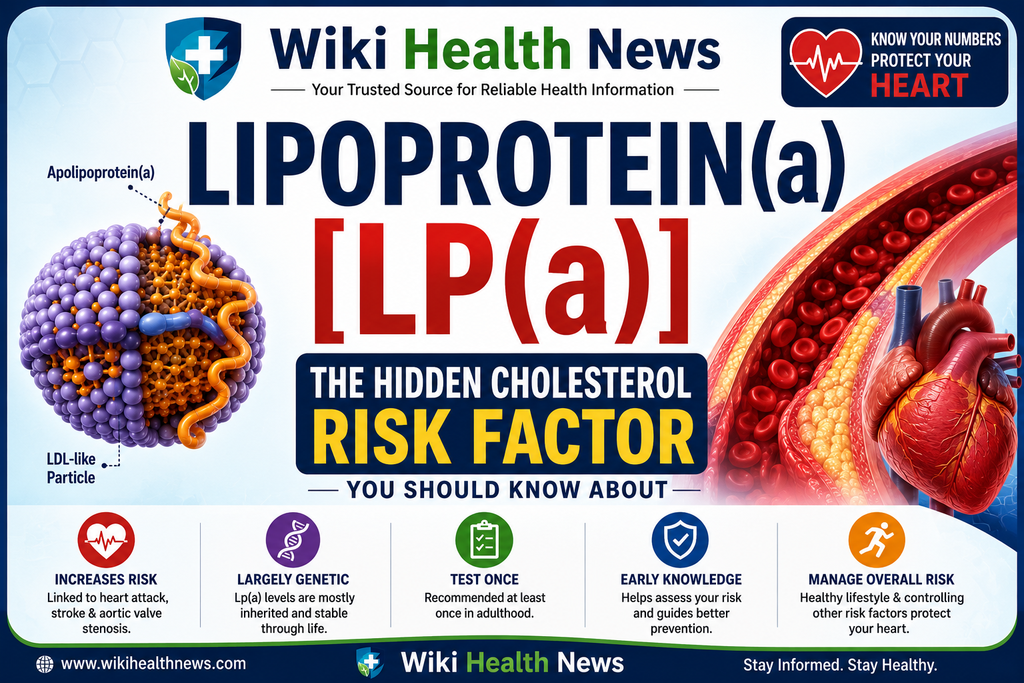
Lipoprotein(a), commonly written as Lp(a), is a cholesterol-rich lipoprotein that has become increasingly important in modern cardiovascular risk assessment. Unlike many conventional cholesterol measurements, Lp(a) is largely determined by genetics and usually remains relatively stable throughout life.
Elevated Lp(a) is associated with an increased risk of atherosclerotic cardiovascular disease (ASCVD), including coronary artery disease, heart attack and ischemic stroke. It is also associated with an increased risk of calcific aortic valve stenosis. Current international recommendations support measuring Lp(a) at least once during adulthood to identify people who may have inherited cardiovascular risk. (professional.heart.org)
For readers interested in broader cholesterol management, see the Wiki Health News guide to Cholesterol and Heart Disease and Low Cholesterol Diet Tips for Heart Health.
What Is Lipoprotein(a)?
Lp(a) is a lipoprotein particle that resembles LDL cholesterol but contains an additional protein called apolipoprotein(a). Its structure gives Lp(a) potentially important atherogenic, inflammatory and pro-thrombotic properties.
Research indicates that lifelong exposure to high Lp(a) contributes causally to cardiovascular disease. Importantly, a person can have an elevated Lp(a) level even when their standard cholesterol profile appears relatively acceptable. (Escardio)
This is one reason Lp(a) can be particularly useful when cardiovascular disease occurs earlier than expected or when there is a strong family history of premature heart disease.
Why Is High Lp(a) Important?
High Lp(a) can contribute to plaque formation and cardiovascular risk independently of traditional risk factors. The relationship between Lp(a) and cardiovascular risk appears to be continuous, meaning that risk generally increases as Lp(a) concentration increases rather than suddenly beginning at one precise value. (EAS)
Elevated Lp(a) may be especially important in people who also have:
- High LDL cholesterol
- Hypertension
- Diabetes
- Smoking exposure
- Obesity
- Chronic kidney disease
- A strong family history of premature cardiovascular disease
- Previously diagnosed coronary artery disease
The combined effect of multiple risk factors can substantially increase overall cardiovascular risk.
What Is a Normal Lp(a) Level?
Lp(a) may be reported in mg/dL or nmol/L. These units should not be converted using a single fixed mathematical factor because Lp(a) particle size varies between individuals and assays. The European Atherosclerosis Society advises against relying on a standard conversion factor. (EAS)
A practical interpretation is:
| Lp(a) Level | General Interpretation |
|---|---|
| <30 mg/dL (<75 nmol/L) | Generally considered lower risk |
| 30–50 mg/dL (75–125 nmol/L) | Intermediate/grey zone |
| >50 mg/dL (>125 nmol/L) | Risk-enhancing level |
| ≥100 mg/dL (≥250 nmol/L) | Very high level; substantially increased estimated risk |
The 2026 American Heart Association/American College of Cardiology dyslipidemia guidance considers Lp(a) ≥125 nmol/L (50 mg/dL) a cardiovascular risk-enhancing factor. (professional.heart.org)
These values should not be interpreted in isolation. Your doctor should consider the Lp(a) result together with LDL-C, blood pressure, diabetes status, smoking, family history, age and existing cardiovascular disease.
Who Should Get an Lp(a) Test?
Current guidance supports measuring Lp(a) at least once in adulthood because levels are predominantly genetically determined and generally stable over time. (professional.heart.org)
Testing can be particularly informative for people with:
- Premature coronary artery disease
- A family history of premature heart attack or stroke
- Familial hypercholesterolemia
- Cardiovascular disease that seems disproportionate to conventional risk factors
- Recurrent cardiovascular events despite appropriate treatment
- A family member known to have elevated Lp(a)
Because high Lp(a) can run in families, identifying an elevated result may also provide a reason to discuss testing with appropriate relatives.
For additional information about cardiovascular laboratory testing, read Blood Tests for Heart Disease.
Can Lifestyle Changes Lower Lp(a)?
This is an important distinction: healthy lifestyle habits may not substantially lower genetically determined Lp(a).
However, lifestyle modification remains extremely important because it reduces the other cardiovascular risks that can amplify the consequences of elevated Lp(a).
A heart-protective strategy includes:
- Regular aerobic and resistance exercise
- Maintaining a healthy body weight
- A diet rich in vegetables, fruits, whole grains, legumes and nuts
- Limiting saturated and trans fats
- Avoiding tobacco
- Controlling blood pressure
- Managing diabetes and blood glucose
- Achieving an appropriate LDL-C level
- Getting adequate sleep and managing stress
See the Wiki Health News resource on How to Prevent Heart Disease for practical prevention strategies.
How Is High Lp(a) Treated?
At present, there is no universally approved medication specifically prescribed solely to lower Lp(a) for routine cardiovascular prevention. Therefore, management focuses heavily on reducing overall cardiovascular risk, particularly through appropriate LDL-C lowering and control of other modifiable risk factors. The EAS specifically supports more intensive management of conventional risk factors when Lp(a) is elevated. (EAS)
Statins remain important when clinically indicated because they reduce LDL-C and cardiovascular events, even though they are not primarily Lp(a)-lowering drugs. PCSK9 inhibitors can reduce Lp(a) to some extent while substantially lowering LDL-C, but treatment decisions depend on the patient’s overall cardiovascular risk and treatment indications.
Several investigational RNA-based therapies targeting apolipoprotein(a) are being studied. However, whether pharmacologically lowering Lp(a) itself translates into improved cardiovascular outcomes remains an important clinical question under investigation. (EAS)
Lp(a) and Aortic Valve Disease
Lp(a) is not only associated with coronary artery disease. High concentrations have also been linked with calcific aortic valve stenosis, a condition in which the aortic valve becomes thickened and calcified over time.
People with elevated Lp(a) and symptoms such as exertional breathlessness, chest discomfort, dizziness or fainting should undergo appropriate cardiovascular evaluation.
Key Takeaway
Lipoprotein(a) [Lp(a)] is an important inherited cardiovascular risk marker that can remain hidden when only a standard lipid profile is performed. Current guidelines recommend measuring Lp(a) at least once during adulthood.
A high Lp(a) result does not mean that a heart attack is inevitable. Instead, it provides valuable information that can help identify people who may benefit from earlier and more intensive cardiovascular risk reduction, particularly appropriate LDL-C lowering and comprehensive management of blood pressure, diabetes, smoking and lifestyle factors.
If your Lp(a) is elevated, discuss the result with a cardiologist rather than focusing on the number alone. The most appropriate treatment depends on your complete cardiovascular risk profile.
Author Card
Dr. Sujit Kumar Sahu
Consultant Interventional Cardiologist | Founder & Healthcare Leader | Chief Editor, Wiki Health News
Qualifications:
MBBS, MD (Medicine), DNB (Cardiology)
Professional Fellowships & Certifications:
- FESC – Fellow of the European Society of Cardiology
- FACC – Fellow of the American College of Cardiology
- FSCAI – Fellow of the Society for Cardiovascular Angiography and Interventions
- ICCPR-CRFC – Cardiovascular Rehabilitation Foundations Certification, International Council of Cardiovascular Prevention and Rehabilitation
Dr. Sujit Kumar Sahu is a Consultant Interventional Cardiologist with clinical interests in coronary artery disease, preventive cardiology, lipid disorders, hypertension, heart failure, coronary angiography, coronary angioplasty and comprehensive cardiovascular risk assessment. His professional profile is available on Wiki Health News. (wikihealthnews.com)
References and Authoritative Sources
- American Heart Association – 2026 Guideline on the Management of Dyslipidemia: Lp(a) measurement at least once during adulthood and its role as a cardiovascular risk-enhancing factor. (professional.heart.org)
American Heart Association – 2026 Dyslipidemia Guideline - European Society of Cardiology – 2025 Focused Update of the ESC/EAS Dyslipidaemia Guidelines: Updated recommendations regarding Lp(a) and cardiovascular risk. (Escardio)
ESC – 2025 Focused Update - European Atherosclerosis Society – Lp(a) Consensus Statement: Evidence regarding Lp(a), ASCVD, aortic stenosis, risk assessment and management. (EAS)
European Atherosclerosis Society – Lp(a) Consensus - European Society of Cardiology – Lipidology Update: Lp(a) measurement at least once in adulthood and its use as a cardiovascular risk modifier. (Escardio)
European Society of Cardiology – Lipidology Update - Wiki Health News – Blood Tests for Heart Disease: Overview of Lp(a), ApoB, hs-CRP, troponin and other cardiovascular investigations. (wikihealthnews.com)
Wiki Health News – Blood Tests for Heart Disease
Medical Disclaimer: This article is intended for general health education and does not replace individualized medical advice, diagnosis or treatment. Lp(a) results should be interpreted in the context of the individual’s overall cardiovascular risk. Patients with elevated Lp(a), premature cardiovascular disease or a strong family history should discuss appropriate evaluation and preventive treatment with a qualified healthcare professional.
FAQs About Lipoprotein(a) [Lp(a)]
Lipoprotein(a), or Lp(a), is a cholesterol-rich lipoprotein particle that resembles LDL cholesterol but contains an additional protein called apolipoprotein(a). High Lp(a) is associated with increased cardiovascular risk.
2. Why is Lp(a) important for heart health?
High Lp(a) can contribute to atherosclerosis and cardiovascular disease, increasing the risk of coronary artery disease, heart attack and ischemic stroke. It is also associated with calcific aortic valve stenosis.
Yes. Lp(a) levels are largely genetically determined and tend to remain relatively stable throughout life. A family history of premature cardiovascular disease may therefore be an important reason to consider testing.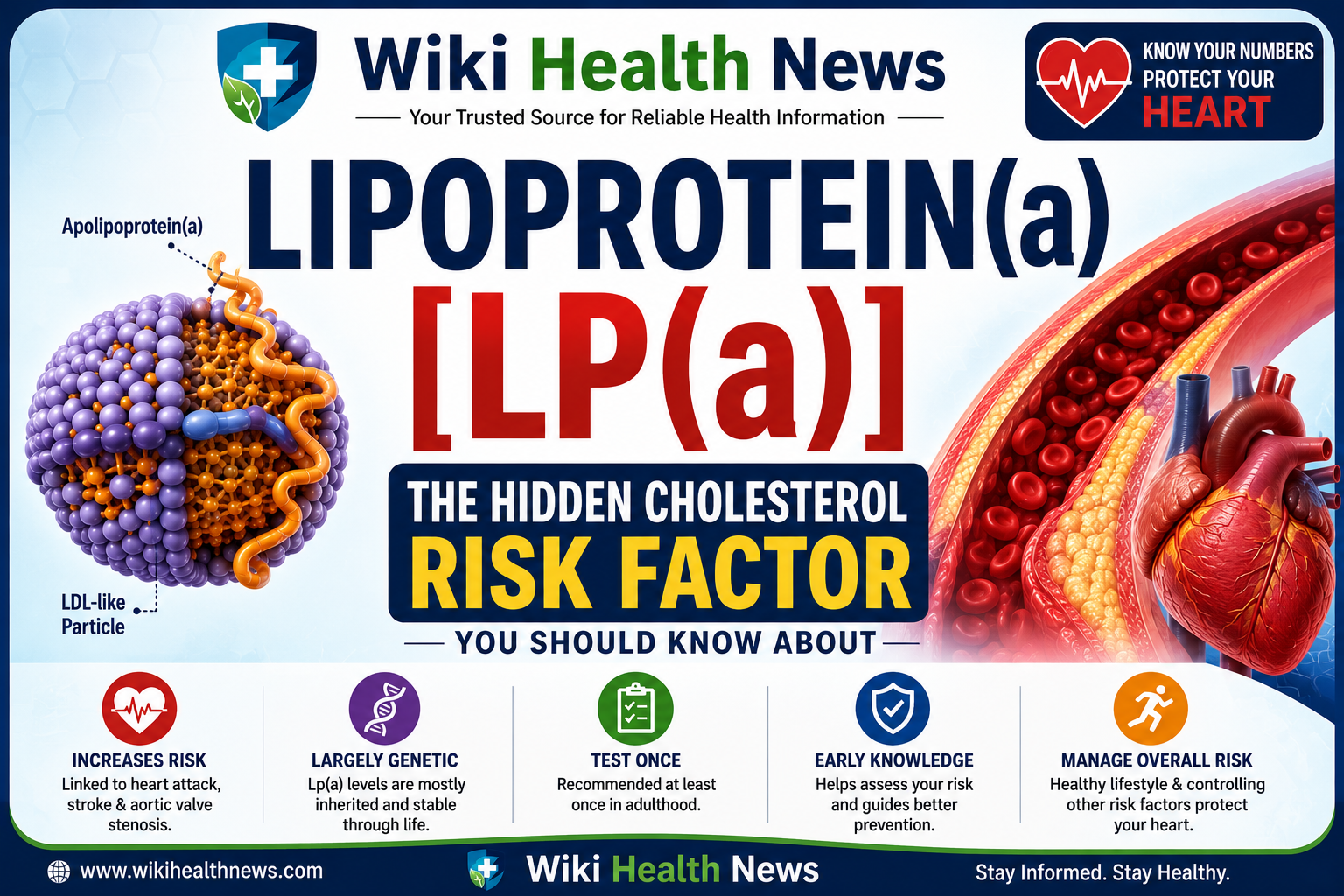
4. What is considered a high Lp(a) level?
An Lp(a) concentration of approximately ≥50 mg/dL or ≥125 nmol/L is generally considered a risk-enhancing level. Interpretation should consider the laboratory method and the person’s overall cardiovascular risk.
Levels below approximately 30 mg/dL (75 nmol/L) are generally considered lower risk, although there is no single value that completely separates low-risk from high-risk individuals.![What is Lipoprotein(a) [Lp(a)]](https://wikihealthnews.com/wp-content/uploads/2026/08/What-is-Lipoproteina-Lpa.png)
6. Can Lp(a) be high even when LDL cholesterol is normal?
Yes. A person can have normal or near-normal LDL-C but elevated Lp(a). This is one reason Lp(a) can identify cardiovascular risk that may not be apparent from a standard lipid profile.
7. Should everyone have an Lp(a) test?
Current cardiovascular guidance supports measuring Lp(a) at least once during adulthood, particularly because it is largely genetically determined and relatively stable.
8. Who should especially consider Lp(a) testing?
Testing is particularly useful in people with premature heart disease, a strong family history of premature cardiovascular disease, familial hypercholesterolemia, or cardiovascular disease that seems disproportionate to traditional risk factors.
9. How is Lp(a) tested?
Lp(a) is measured through a blood test. It can be ordered as part of cardiovascular risk assessment and may be reported in mg/dL or nmol/L.
10. Can Lp(a) levels change over time?
Lp(a) is generally stable over a person’s lifetime because genetics plays a major role. However, certain medical conditions, hormonal changes and other factors can influence measurements, so interpretation should be individualized.
11. Can diet lower Lp(a)?
Dietary changes generally have limited effects on genetically determined Lp(a). Nevertheless, a heart-healthy diet remains important because it can improve LDL cholesterol, blood pressure, glucose control and overall cardiovascular risk.
12. Can exercise lower Lp(a)?
Regular physical activity may not substantially reduce Lp(a) itself, but it is strongly recommended for overall cardiovascular health. Exercise helps improve fitness, weight management, blood pressure and metabolic health.
13. Can statins lower Lp(a)?
Statins are primarily used to lower LDL cholesterol and reduce cardiovascular events. They do not specifically treat elevated Lp(a), and Lp(a) may remain elevated despite statin therapy.
14. What should I do if my Lp(a) is high?
Do not panic. An elevated Lp(a) is a risk marker, not a diagnosis of heart disease. Discuss your result with your doctor and focus on comprehensive risk reduction, including appropriate LDL-C management, blood pressure control, diabetes prevention or treatment, exercise, healthy diet and smoking avoidance.
15. Can PCSK9 inhibitors lower Lp(a)?
PCSK9 inhibitors can reduce Lp(a) to some extent while producing substantial LDL-C reduction. They are prescribed according to an individual’s overall cardiovascular risk and approved treatment indications rather than simply because Lp(a) is elevated.
16. Is there a medicine specifically designed to lower Lp(a)?
Several Lp(a)-targeted therapies are under clinical development, including RNA-based approaches. However, routine treatment specifically to lower Lp(a) remains an evolving area of cardiovascular medicine, and outcome evidence continues to develop.
17. Does high Lp(a) mean I will have a heart attack?
No. High Lp(a) increases risk but does not mean a cardiovascular event is inevitable. Managing other modifiable risk factors can substantially improve overall cardiovascular risk.
18. Can high Lp(a) cause stroke?
Elevated Lp(a) is associated with increased risk of atherosclerotic cardiovascular disease and ischemic stroke, particularly when combined with other risk factors.
19. Does high Lp(a) affect the aortic valve?
Yes. Elevated Lp(a) has been associated with calcific aortic valve stenosis, a condition in which the aortic valve becomes thickened and calcified.
20. Should family members be tested if my Lp(a) is high?
Because Lp(a) is strongly influenced by genetics, discussing Lp(a) testing with appropriate first-degree relatives may be reasonable, particularly when there is a family history of premature cardiovascular disease. Your healthcare professional can advise which family members should be tested.
Key takeaway: Lp(a) is an important inherited cardiovascular risk marker that may remain hidden on a routine cholesterol test. Knowing your Lp(a) level can help you and your clinician develop a more complete strategy for preventing heart disease.
20 Key Points About Lipoprotein(a) [Lp(a)]
- Lp(a) is a cholesterol-rich lipoprotein that resembles LDL cholesterol and contains an additional protein called apolipoprotein(a).
- Genetics is the major determinant of Lp(a) levels, so elevated Lp(a) often runs in families.
- Lp(a) levels are relatively stable throughout life, making a single measurement useful for many adults.
- High Lp(a) is an independent cardiovascular risk factor, even when standard LDL cholesterol appears acceptable.
- Elevated Lp(a) is associated with increased risk of coronary artery disease and heart attack.
- High Lp(a) is also associated with an increased risk of ischemic stroke.
- Lp(a) is linked to calcific aortic valve stenosis, a condition involving progressive thickening and calcification of the aortic valve.
- A routine lipid profile does not usually include Lp(a), so a separate blood test is required.
- Current guidance supports measuring Lp(a) at least once during adulthood to identify inherited cardiovascular risk.
- Lp(a) testing is particularly relevant when there is a family history of premature heart disease or stroke.
- An elevated Lp(a) level can occur even when LDL-C and total cholesterol are not very high.
- An Lp(a) level of approximately ≥50 mg/dL (≥125 nmol/L) is generally considered a cardiovascular risk-enhancing level.
- Lp(a) can be reported in mg/dL or nmol/L. These units should not be converted using a simple universal conversion factor.
- Lifestyle changes may not significantly lower Lp(a) because its concentration is largely genetically determined.
- Nevertheless, regular exercise, a heart-healthy diet, weight management and avoidance of smoking remain essential for reducing overall cardiovascular risk.
- When Lp(a) is elevated, controlling LDL cholesterol, blood pressure, diabetes and other modifiable risk factors becomes particularly important.
- Statins are not specifically Lp(a)-lowering drugs, but they remain important when indicated because lowering LDL-C reduces cardiovascular events.
- PCSK9 inhibitors can reduce Lp(a) to some degree while producing substantial LDL-C reduction in appropriate patients.
- Several Lp(a)-targeted therapies are under investigation, including RNA-based treatments designed to reduce apolipoprotein(a) production.
- High Lp(a) does not mean that a heart attack is inevitable. Knowing the level early allows clinicians to assess overall cardiovascular risk and develop a more intensive prevention strategy when appropriate.
Key Takeaway
Lipoprotein(a) [Lp(a)] is a largely inherited and often overlooked cardiovascular risk marker. Testing at least once in adulthood can reveal hidden risk and help guide earlier heart-disease prevention.

Dr. Sujit Kumar Sahu – Consultant Interventional Cardiologist
Author Card
Dr. Sujit Kumar Sahu
Consultant Interventional Cardiologist | Founder & Healthcare Leader | Chief Editor, Wiki Health News
Qualifications
- MBBS – Bachelor of Medicine & Bachelor of Surgery
- MD (Medicine) – Doctor of Medicine
- DNB (Cardiology) – Diplomate of National Board in Cardiology
Professional Fellowships & Certifications
- FESC – Fellow of the European Society of Cardiology
- FACC – Fellow of the American College of Cardiology
- FSCAI – Fellow of the Society for Cardiovascular Angiography and Interventions
- ICCPR-CRFC – Cardiovascular Rehabilitation Foundations Certification, International Council of Cardiovascular Prevention and Rehabilitation
Areas of Expertise
- Interventional Cardiology
- Coronary Angioplasty (PCI)
- Preventive Cardiology
- Lipid & Cardiovascular Risk Management
- Heart Failure Management
- Arrhythmia Management
- Echocardiography
Editorial Note:
Dr. Sujit Kumar Sahu contributes evidence-based cardiovascular health information to Wiki Health News, with a focus on heart disease prevention, lipid disorders, interventional cardiology and patient education.