Apolipoprotein B (ApoB): What It Is, Why It Matters, and When to Test

Apolipoprotein B (ApoB): What It Is, Why It Matters, and When to Test
Apolipoprotein B (ApoB) is an important blood marker used to assess the number of cholesterol-carrying particles that can contribute to atherosclerosis, heart attack, and stroke. Unlike LDL cholesterol (LDL-C), which measures the amount of cholesterol inside LDL particles, ApoB provides an estimate of the number of circulating atherogenic lipoprotein particles. Current 2026 ACC/AHA guidance considers ApoB measurement reasonable in selected adults, particularly when cardiovascular risk remains uncertain despite LDL-C or non-HDL-C assessment. (JACC)
What Is ApoB?
ApoB is the main structural protein found on several atherogenic lipoproteins, including LDL, VLDL, IDL, and lipoprotein(a) [Lp(a)]. There is essentially one ApoB molecule per atherogenic particle, making ApoB a useful marker of the overall number of these particles circulating in the blood. (PubMed)
This distinction is important because two people can have the same LDL-C but different numbers of LDL particles. When cholesterol content per particle is relatively low, LDL-C may appear acceptable even though the number of atherogenic particles remains high.
Why Is ApoB Important for Heart Health?
Atherosclerosis develops when LDL and other ApoB-containing lipoproteins enter and accumulate within the arterial wall. This process contributes to plaque formation and progression over time. (OUP Academic)
ApoB can therefore provide additional information about cardiovascular risk, especially when LDL-C and the number of atherogenic particles do not agree. Recent evidence has found that higher ApoB is associated with increased risks of myocardial infarction and atherosclerotic cardiovascular disease, even across different LDL-C levels. (American College of Cardiology)
ApoB vs LDL Cholesterol
| Marker | What it mainly reflects |
|---|---|
| LDL-C | Amount of cholesterol carried within LDL particles |
| ApoB | Number of ApoB-containing atherogenic particles |
| Non-HDL-C | Cholesterol carried by all non-HDL particles |
LDL-C remains a central marker for cardiovascular prevention and treatment. However, ApoB may be particularly helpful when LDL-C does not fully represent a person’s atherogenic particle burden.
Who May Benefit From an ApoB Test?
ApoB testing may be especially useful in people with:
- High triglycerides
- Type 2 diabetes or cardiometabolic disease
- Established atherosclerotic cardiovascular disease
- Obesity or metabolic abnormalities
- Possible familial lipid disorders
- LDL-C that appears controlled but persistent cardiovascular risk
The 2026 ACC/AHA dyslipidemia guideline specifically notes that ApoB measurement can help guide further treatment decisions after LDL-C and/or non-HDL-C goals have been achieved in selected high-risk patients. (JACC)
How Is ApoB Tested?
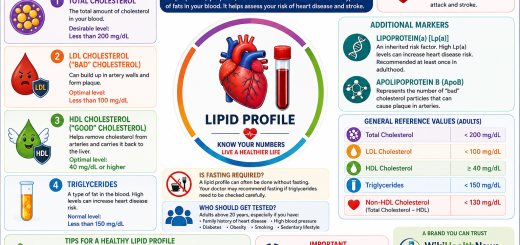
ApoB is measured using a routine blood test. It can generally be incorporated into cardiovascular risk assessment alongside a lipid profile, which measures total cholesterol, LDL-C, HDL-C, and triglycerides.
For a broader explanation of cholesterol testing, see the Lipid Profile Test: Cholesterol, LDL, HDL & Triglycerides on Wiki Health News. (wiki Health News)
ApoB results should not be interpreted in isolation. Doctors consider the result together with age, blood pressure, diabetes status, smoking, family history, LDL-C, triglycerides, Lp(a), and previous cardiovascular disease.
How Can ApoB Be Reduced?
ApoB can often be lowered through a combination of lifestyle measures and, when indicated, medication. A heart-healthy eating pattern emphasizing vegetables, fruits, whole grains, legumes, nuts, seeds, and unsaturated fats can help improve the lipid profile. Regular physical activity, weight management, avoidance of tobacco, and control of diabetes and blood pressure are also important.
When medication is required, statins and other lipid-lowering therapies may be prescribed according to the person’s overall cardiovascular risk.
Key Takeaway
ApoB is a useful measure of atherogenic particle burden and can provide information that LDL-C alone may miss. It is particularly valuable in selected people with diabetes, elevated triglycerides, cardiometabolic disease, established cardiovascular disease, or discordance between LDL-C and overall cardiovascular risk. Testing and treatment decisions should be individualized by a qualified healthcare professional. (JACC)
ApoB should be interpreted together with LDL cholesterol, HDL cholesterol and triglycerides. A complete guide to lipid profiles can help readers understand these measurements and their importance in cardiovascular risk assessment.
Cardiovascular risk assessment is particularly important throughout a woman’s life. Readers can explore additional information about women’s heart health and preventive strategies.
References
- American College of Cardiology/American Heart Association. 2026 Guideline on the Management of Dyslipidemia. (JACC)
- Mach F, et al. 2025 Focused Update of the 2019 ESC/EAS Guidelines for the Management of Dyslipidaemias. European Heart Journal. 2025;46:4359–4378. (OUP Academic)
- Prabhakaran D, et al. Apolipoprotein B – An ideal biomarker for atherosclerosis? Indian Heart Journal. 2024. (PubMed)
- Johannesen CD, et al. Excess Apolipoprotein B and Cardiovascular Risk. Journal of the American College of Cardiology. 2024;83:2262–2273. (American College of Cardiology)
- Wiki Health News. Lipid Profile Test: Cholesterol, LDL, HDL & Triglycerides. (wiki Health News)
Medical disclaimer: This article is for general educational purposes and does not replace individualized medical advice, diagnosis, or treatment.

![Lipoprotein(a) [Lp(a)]](https://wikihealthnews.com/wp-content/uploads/2026/08/Understanding_Lipoproteina_Cardiovascular_Risk-scaled-e1787719701457-520x245.png)